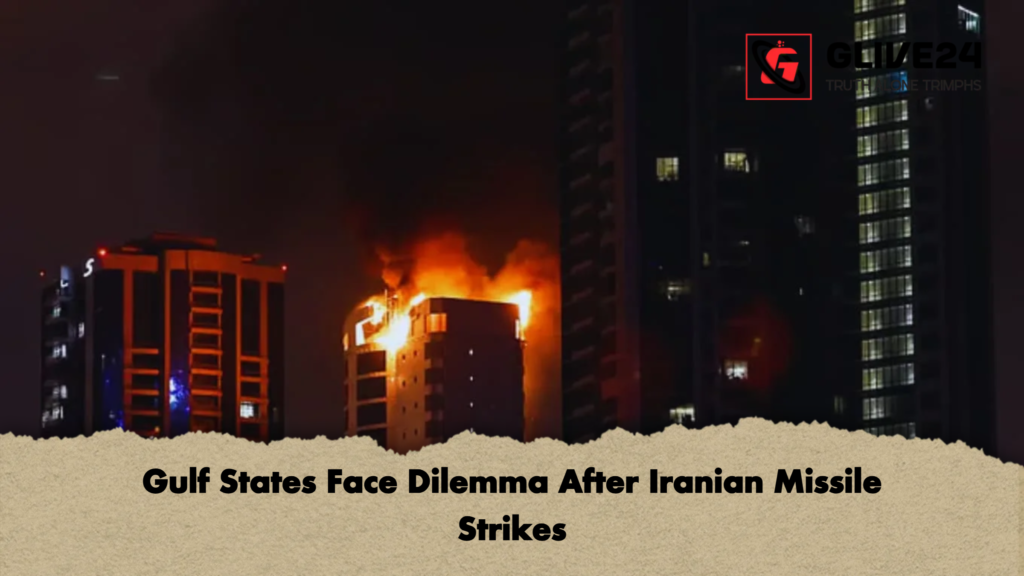
Iranian missile attacks on Doha, Abu Dhabi, Dubai, and Manama have done more than just shatter glass and concrete walls; they have abruptly dismantled the carefully cultivated image of stability that these Gulf states have maintained for decades. Nations such as Qatar, the United Arab Emirates (UAE), and Bahrain had long sought to remain insulated from the region’s other conflicts, but Tehran’s strikes have forced them into a precarious strategic position.
The Gulf countries now face a difficult choice: retaliate, potentially fighting on Israel’s side and risking direct confrontation, or refrain from responding and watch as their cities continue to come under attack. Monica Marks, a Middle East politics professor at New York University’s Abu Dhabi campus, observed that witnessing missile strikes on cities like Manama, Doha, and Dubai is as extraordinary and unimaginable for locals as a hypothetical missile attack on Charlotte, Seattle, or Miami would be for Americans.
The crisis escalated after Israel and the United States launched a joint strike in Iran last Saturday, killing Supreme Leader Ayatollah Ali Khamenei and several top military officials. Subsequent attacks on military and governmental infrastructure, including a school where over 150 people—mostly children—were killed, provoked Tehran to retaliate with missiles and drones targeting American military facilities and Israeli interests across the Gulf.
Saturday evening’s strikes in the UAE resulted in at least three fatalities and 58 injuries. Key buildings and airports in Dubai were damaged by missile debris, while high-rise structures in Manama and Kuwait City also suffered impacts. Smoke was reported in several areas of Doha. Saudi Arabia confirmed that missiles struck Riyadh and parts of the country’s eastern region.
Casualties and damage across the Gulf are summarised in the table below:
| Country / City | Fatalities | Injured | Infrastructure Impact |
|---|---|---|---|
| UAE | 3 | 58 | Buildings and airports damaged |
| Qatar | 0 | 16 | Structural damage, smoke reported |
| Bahrain | 0 | 4 | High-rise buildings impacted |
| Oman | 0 | 5 | Minor structural damage |
| Kuwait | 0 | 32 | Airport damaged |
| Saudi Arabia (Riyadh & Eastern Province) | 0 | Unknown | Urban and energy infrastructure affected |
The Gulf Cooperation Council (GCC) states had been actively attempting to prevent escalation. Weeks before the attacks, Oman facilitated indirect negotiations between Tehran and Washington. Just hours before the strikes, Omani Foreign Minister Badr Al-Busaidi described a peaceful resolution as “within reach,” noting that Iran had agreed to curb its enriched uranium stockpile.
Analysts warn that Gulf states’ most vulnerable infrastructures—electricity grids, water purification plants, and energy facilities—are now under direct threat. Marks notes that, without climate control and potable water, the extreme heat and aridity of the Gulf would render cities nearly uninhabitable, while energy infrastructure failure would cripple national functioning.
King’s College London lecturer Rob Geist Pinfold observes that the region may be entering a new phase of interstate warfare. “Previously, proxy and ‘grey zone’ conflicts dominated, but now we are witnessing a direct escalation between nation-states,” he explained.
Currently, the Gulf states are rapidly recalibrating their strategies. While non-engagement remains their preferred option, the continuing missile strikes on densely populated urban centres are steadily narrowing their choices. The next moves will depend heavily on Iran’s actions, and the fragile peace in the region hangs in the balance.