
Khabor Wala Desk
Published: 9th March 2026, 3:55 AM
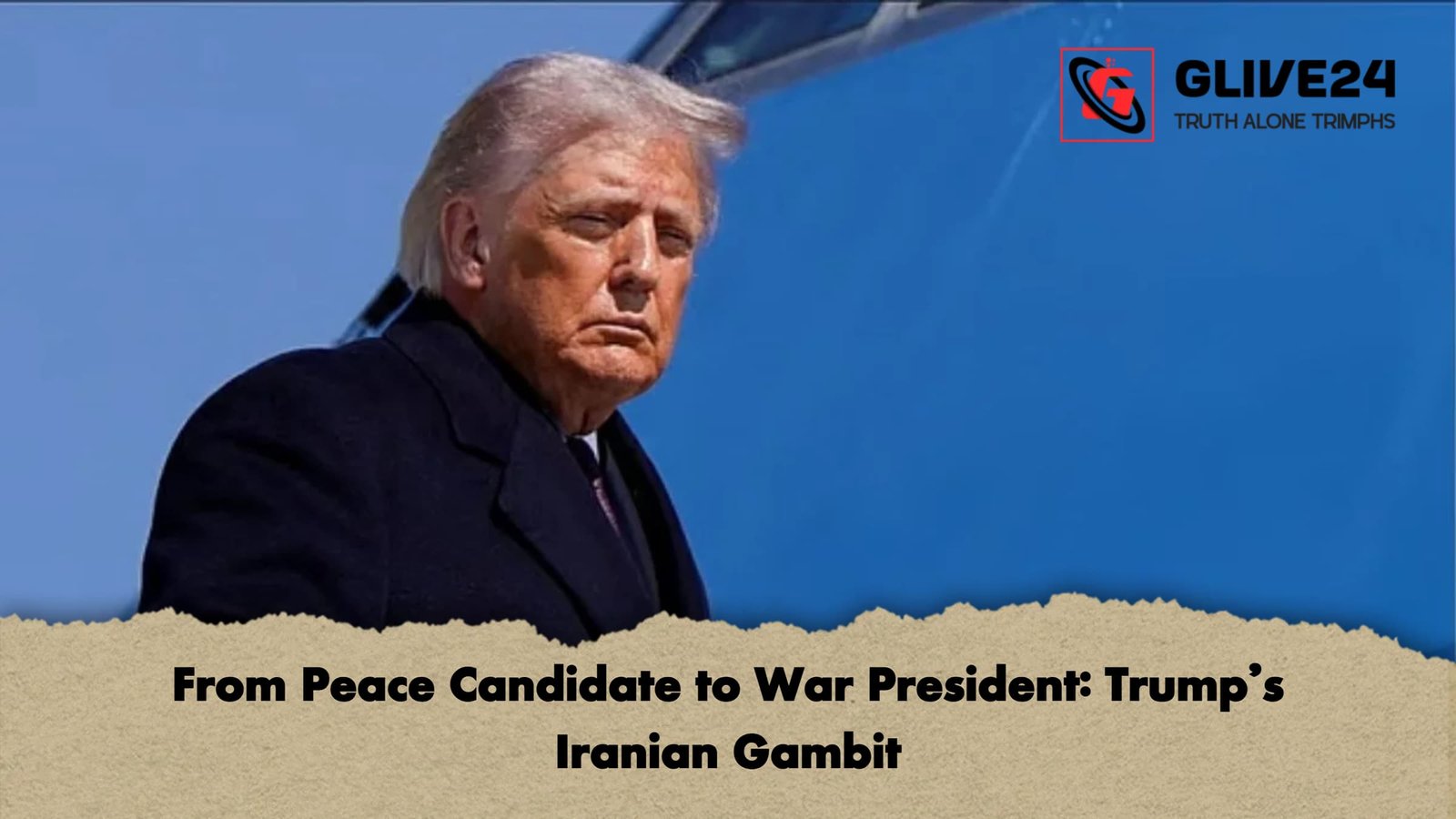
The transition from a non-interventionist “America First” platform to the precipice of a Middle Eastern conflagration has been as swift as it was unexpected. Last Friday, whilst aboard Air Force One en route to Corpus Christi, Texas, President Donald Trump formalised the commencement of Operation Epic Fury. The mission, a comprehensive military strike against Iran, marks a definitive departure from his campaign rhetoric of ending “forever wars.”
Table of Contents
As the presidential aircraft cruised toward the Texan coast, where Trump was scheduled to deliver a speech on “American Energy Dominance,” the cabin transformed into a mobile command centre. Accompanying the President were hardline Republican Senators Ted Cruz and John Cornyn, alongside an unlikely guest: veteran Hollywood actor Dennis Quaid.
In a moment of surreal political theatre captured on video by Cruz, Quaid—who portrayed Ronald Reagan in a 2024 biopic—was asked to channel the “Great Communicator.” Leaning into the role, Quaid remarked, “Donald Trump is as strong as I am,” symbolising a passing of the torch from the Cold War icon to the current MAGA leader. Ironically, Quaid had previously played a satirical version of George W. Bush in the 2006 film American Dreamz, depicting a president led into war by oil-hungry advisors—a comparison the current White House vehemently rejects.
Throughout 2025, Trump positioned himself as a candidate for the Nobel Peace Prize, consistently criticising the interventionist legacies of the Bush and Obama eras. However, his second term has seen a shift toward “regime change” objectives. Analysts suggest several factors triggered this metamorphosis:
The “Maduro Success”: The January abduction of Venezuelan President Nicolás Maduro by US Special Forces provided Trump with a “televised” victory that emboldened his military appetite.
Domestic Distractions: Observers note the timing of the escalation coincided with mounting pressure over the release of documents related to Jeffrey Epstein, in which Trump’s name reportedly appears thousands of times.
Intelligence Shifts: Reports from the CIA and Mossad suggested the Iranian regime was fractured, leading the administration to believe a decapitation strike could usher in a pragmatic military junta.
| Date | Key Event | Outcome |
| January 3 | Operation in Venezuela | Nicolás Maduro captured; minimal US casualties. |
| Late Jan | Mar-a-Lago Summit | Netanyahu secures US backing for strikes on Iranian silos. |
| Feb 11 | White House Meeting | Regime change becomes the formalised strategic goal. |
| Feb 26 | Geneva Talks | Diplomatic efforts fail; US demands permanent enrichment halt. |
| Last Friday | Operation Epic Fury | Trump authorises strikes via Air Force One at 3:38 PM. |
By the time the strikes commenced—1:15 AM Florida time (9:45 AM in Tehran)—Trump had returned to his Mar-a-Lago resort, now colloquially dubbed “War-a-Lago.” The temporary situation room saw Vice President JD Vance and National Intelligence Director Tulsi Gabbard monitoring the feed. Despite both having long-standing reputations as anti-war voices, they appeared to offer their full consent to the operation.
The assault involved over 100 US aircraft and a barrage of Tomahawk cruise missiles. While the administration initially framed this as an opportunity for the Iranian people to reclaim their sovereignty, the President’s rhetoric has since shifted toward the inevitability of the conflict. “Wars can be fought forever,” Trump remarked, “and they can be fought very successfully.”
With the Supreme Leader, Ayatollah Ali Khamenei, reportedly choosing to remain in Tehran to face the onslaught rather than flee, the world watches to see if Trump’s gamble will result in a “New Middle East” or another protracted entrenchment.

Comments