
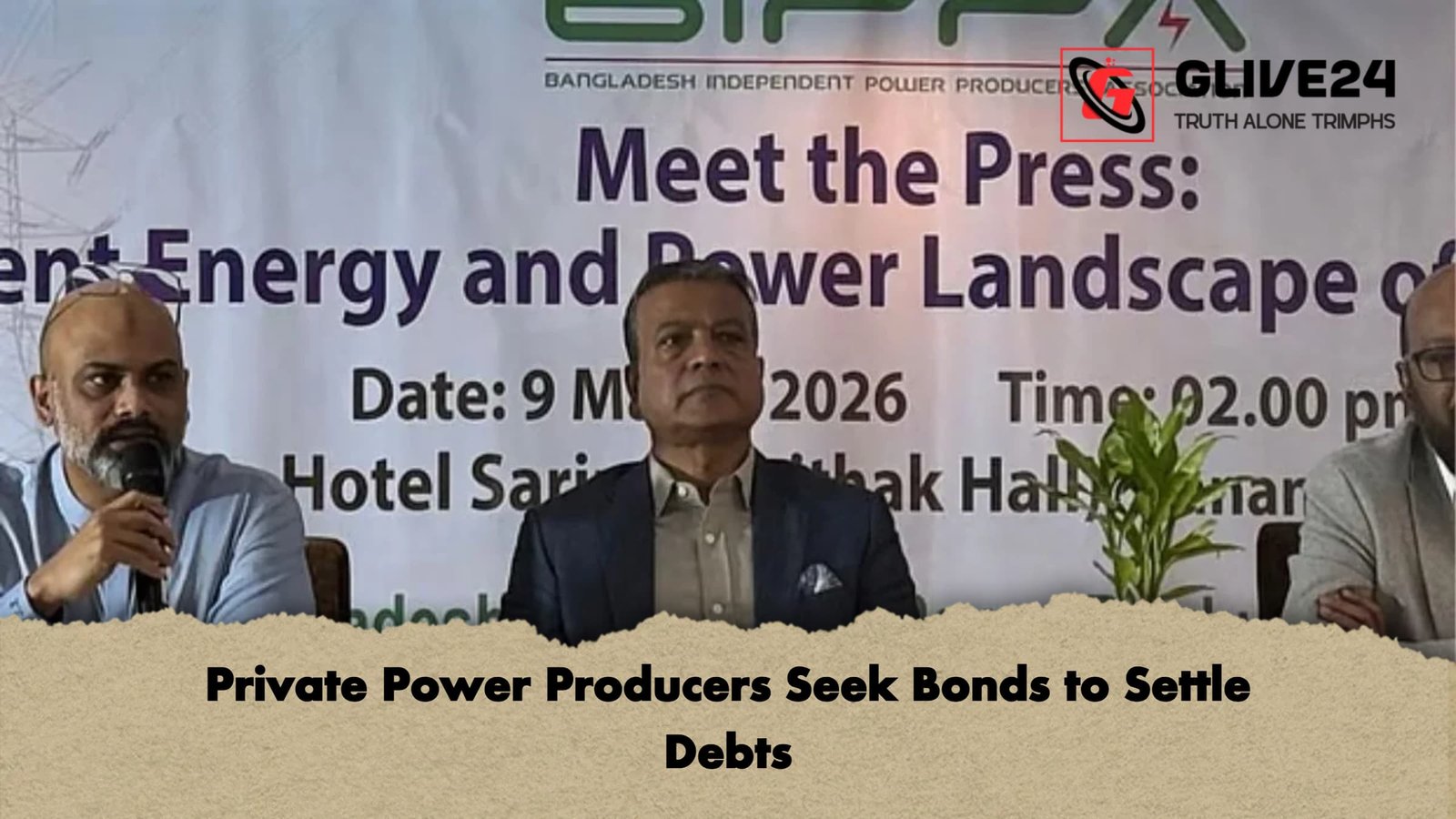
The Bangladesh Independent Power Producers Association (BIPPA) has issued an urgent appeal to the government, requesting the immediate settlement of outstanding dues through cash payments or the issuance of financial bonds. During a press conference held on Monday at a premier hotel in Dhaka, the trade body warned that without resolving the 14,000 crore BDT in arrears, private plants would struggle to open letters of credit (LCs) for essential fuel imports, potentially leading to widespread load-shedding this summer.
Table of Contents
Financial Strain and the Bond Proposal
BIPPA leadership highlighted that while the interim government successfully stabilised the sector last year by releasing 5,000 crore BDT in bonds, the current delay in payments has stretched from the contractually mandated 30 days to an alarming 180 to 270 days.
The association suggested that if the government is currently facing a liquidity crunch, issuing new bonds would allow power plant owners to adjust their existing bank liabilities and maintain operations. “We cannot secure the credit required to import fuel while carrying such massive debts on our balance sheets,” a spokesperson noted.
The Reality of Generation Capacity
Although Bangladesh boasts an installed capacity of over 28,000 MW, the actual operational capability is significantly lower due to fuel shortages and technical constraints. The following table breaks down the current limitations on the national grid:
| Factor | Capacity Impact (MW) | Reason |
| Installed Capacity | 28,000+ | Total theoretical output |
| Gas Shortage | (6,000) | Inadequate supply to gas-fired plants |
| Maintenance | (1,626) | Scheduled and emergency repairs |
| Solar/Diesel Issues | Variable | Lack of night-time solar & high diesel costs |
| Actual Peak Capacity | 18,627 | Real-world available supply |
With a projected surge in demand as temperatures rise, BIPPA warns that managing the summer peak will be “extraordinarily difficult” without a steady supply of liquid fuel (HFO and Diesel).
Rising Costs and Subsidy Burdens
The association pointed out a staggering 95% increase in fuel costs for power generation over the last six years, whereas electricity tariffs have failed to keep pace. While operational costs rose by 55%, the tariff for the highest-consuming tier of customers only increased by 54%. Consequently, every unit of electricity produced currently increases the government’s subsidy burden.
To mitigate this, BIPPA has proposed a temporary waiver of the 34% import duty on fuel oil and 22% on LNG. They argue that reducing these taxes would lower the overall cost of generation and ease the financial pressure on the state.
A Looming Deadline
Former BIPPA President Imran Karim warned that current fuel stocks are only sufficient to sustain oil-based plants until 7–10 April. As the Russia-Ukraine conflict continues to destabilise global LNG prices, oil-based plants remain a critical fallback. “If these plants shut down due to a lack of fuel, the national grid will face a systemic crisis,” Karim stated.
Current BIPPA President K.M. Rezaul Hasnat concluded that since infrastructure limitations prevent a rapid increase in gas imports, the government must prioritise the financial health of existing private producers to prevent a dark summer.