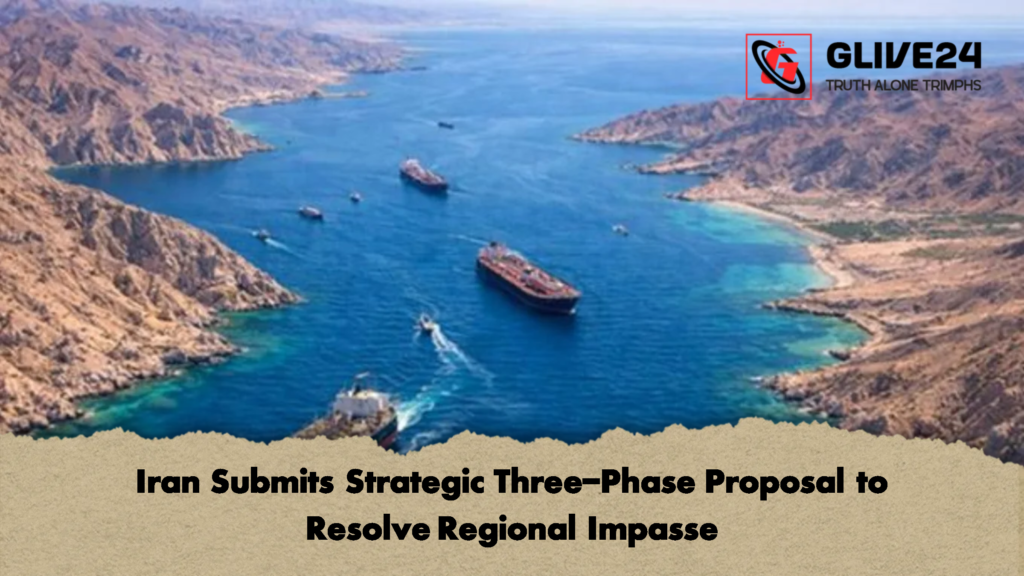
The Iranian government has reportedly formalised a new diplomatic overture aimed at the United States, designed to break the protracted geopolitical deadlock in the Middle East. According to reporting from the American outlet Axios on Monday, 27 April 2026, Tehran has expressed a readiness to facilitate a cessation of regional hostilities and ensure the unrestricted flow of maritime commerce through the Strait of Hormuz. However, the initiative is predicated on a significant condition: the deferment of discussions concerning Iran’s nuclear programme until specific security and economic milestones are achieved.
Table of Contents
Mediation and Diplomatic Conduits
The proposal was reportedly detailed by the Iranian Foreign Minister, Abbas Araghchi, during a recent diplomatic mission to Islamabad. Information sourced from a United States official and two figures familiar with the proceedings indicates that the plan was relayed to Washington through a coalition of mediating partners, including Pakistan, Egypt, Turkey, and Qatar.
During these deliberations, Araghchi purportedly conceded that the Iranian leadership lacks a unified internal consensus regarding the technicalities of Washington’s nuclear demands. This lack of domestic unanimity appears to have shaped the decision to propose a sequential, three-step de-escalation strategy, prioritising immediate regional stability over long-term atomic monitoring.
The Proposed Three-Phase Roadmap
The Iranian initiative is structured as a chronological framework intended to address immediate security concerns before transitioning to more complex technical negotiations.
-
Guarantees and Regional Peace: The initial phase demands an immediate halt to military confrontations. Tehran is seeking legally binding international assurances that no further strikes will be launched against Iranian territory or Lebanon. This stage is designed to establish a definitive cessation of the current cycle of violence and provide sovereign security guarantees.
-
Maritime Legal Framework and Sanctions Removal: The second stage focuses on the Strait of Hormuz, a vital maritime chokepoint through which a significant portion of global petroleum supplies passes. Tehran proposes establishing a new legal and operational structure for the waterway in collaboration with the Sultanate of Oman. Crucially, this phase is conditional upon the United States lifting the comprehensive economic sanctions that have significantly constrained the Iranian economy.
-
Resumption of Nuclear Dialogue: Only after the successful implementation of the first two stages does Tehran propose to reopen negotiations regarding its nuclear programme. By relegating the nuclear issue to the final phase, Iran aims to address its economic and regional security vulnerabilities as a prerequisite for discussing its atomic capabilities.
Conflicting Strategic Objectives
This latest proposal highlights a fundamental divergence in diplomatic priorities between Tehran and Washington. The United States has historically insisted that any meaningful engagement must be preceded by Iran’s total cessation of uranium enrichment and the verified transfer of its enriched stockpiles. Conversely, Iran’s current framework treats the restoration of trade and regional peace as immediate requirements, effectively pushing the nuclear issue to the periphery of current negotiations.
The Strait of Hormuz remains a central element of Iran’s diplomatic leverage. Given that the waterway is essential for global energy security, the offer to institutionalise its management serves as a powerful incentive for international cooperation, specifically aimed at securing relief from US-led sanctions.
International Context and Outlook
While Tehran maintains that its nuclear ambitions are exclusively peaceful, the United States and Israel remain deeply sceptical of such claims. The broader international community, including observers from RT, Gulf News, and The Wall Street Journal, is now awaiting a formal response from the White House.
The involvement of Oman in the proposed maritime framework reinforces the Sultanate’s traditional role as a diplomatic bridge in the region. Similarly, the use of Pakistan and Qatar as intermediaries underscores the complex, multi-lateral effort currently underway to prevent a total regional escalation. The success of this three-phase plan remains uncertain, as it requires a fundamental recalibration of the established diplomatic order in the Persian Gulf.