
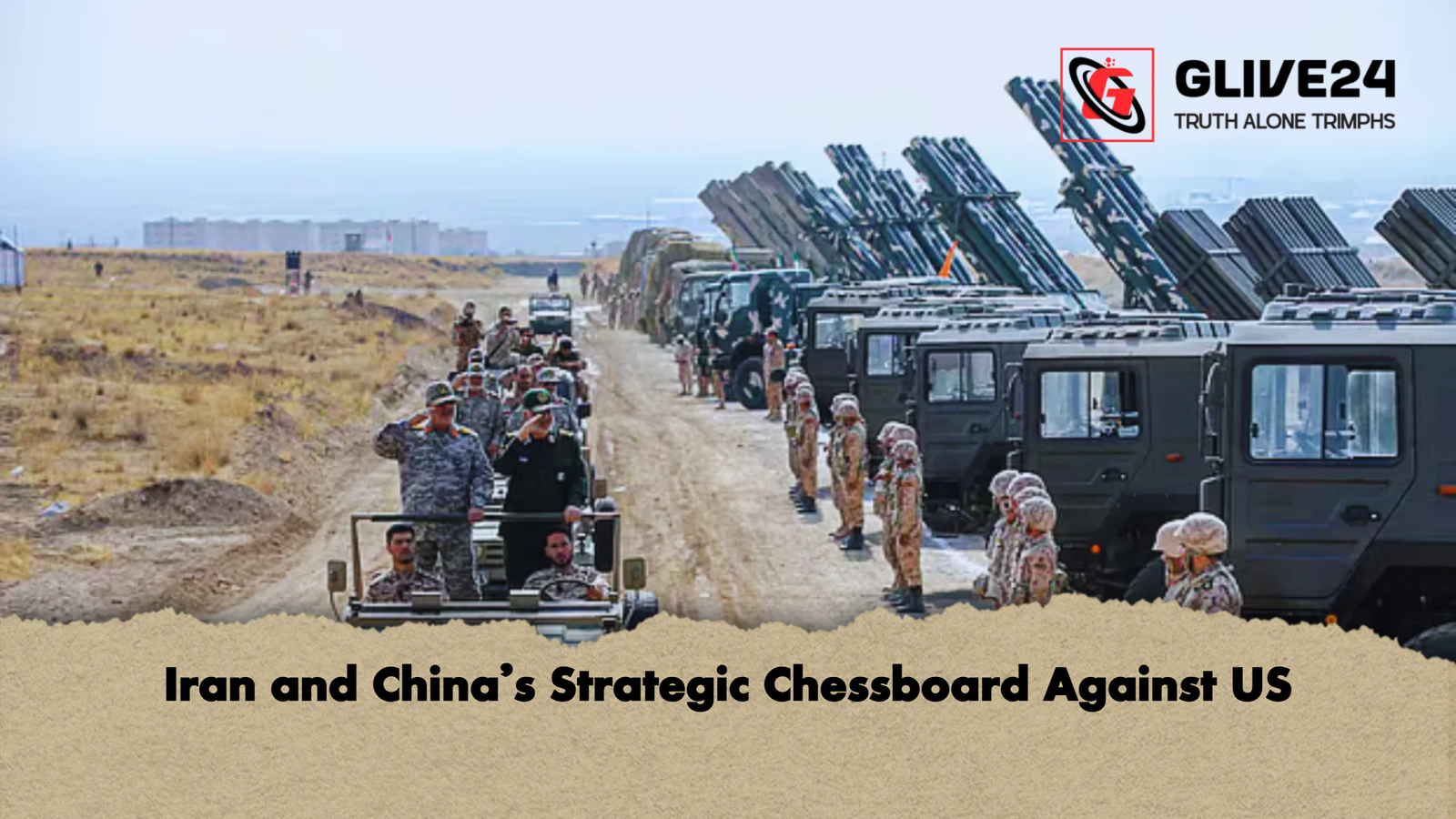
China has formally responded to the conflict imposed on Iran by the so-called “Epstein Syndicate” – the US-Israel alliance – through a dual-pronged approach involving both diplomatic and military channels. This reflects Beijing’s assessment of the situation as both a severe political-diplomatic tension and a tangible military threat.
A spokesperson from the People’s Liberation Army (PLA), a colonel speaking on record, stated bluntly that the United States is “addicted to war.” He noted that in its 250-year history, the US has experienced only 16 years of peace. This military perspective frames the US as a global and moral threat, while China’s leadership combines this military lens with a principled diplomatic critique.
President Xi Jinping has persistently connected Marxist thought with Confucian philosophy, emphasising precise and morally grounded communication as central to statecraft. By applying this reasoning, China positions Iran as a nation resisting an unjust war imposed by a state perceived to have lost its ethical compass. This stance has resonated with the Global South, which fully comprehends the strategic and moral dimensions of this message.
Advanced Military Coordination
Iran’s strategic grid is now fully integrated with China’s Baidu satellite system. Over 40 satellites create a digital shield that counters each move of the US-Israel alliance, enhancing precision strikes and resistance to electronic jamming. China’s 25-year strategic partnership has provided Iran with long-range radar systems linked to the satellite network, reducing the response time for counterattacks from 12 days to mere hours.
Russia has contributed in parallel, sharing expertise gained from operations in Ukraine, particularly in countering Patriot and Iris-T systems. Iran has adopted drone saturation techniques and combined them with ballistic missiles in the Russian model, evident in the operational success of “Operation True Promise Four.”
| Strategy | Details | Strategic Impact |
|---|---|---|
| Baidu Satellite Integration | 40+ satellites | Monitors and counters US-Israel operations |
| Russian Operational Lessons | Drone-missile coordination | Enhanced operational effectiveness |
| Petro-Yuan Transactions | Oil shipments via Yuan | Weakens Petro-dollar dominance |
| Long-range Radar Systems | Chinese supplied | Faster counterstrike capability |
Petro-Yuan and Economic Leverage
Iran now allows oil tankers to operate exclusively with transactions in Petro-Yuan, excluding dollars or euros. This move aligns with China’s efforts since December 2022 to phase out the Bretton Woods/Petro-dollar system. Beijing invited Gulf Cooperation Council (GCC) states to Shanghai for oil and gas trading in Yuan, signalling a shift in global energy finance.
China’s 15th Five-Year Plan sets precise targets through 2030: 4% GDP growth, 12.5% of GDP from digital economy, 25% renewable energy, and 85% surface water quality. High-value patents, education, and environmental sustainability are integrated to ensure strategic autonomy. This comprehensive planning underpins China’s ambition to lead in future technologies, extending influence well into mid-century.
Iran’s adoption of the Petro-Yuan in the strategic Strait of Hormuz – through which 20% of global oil passes – transforms energy exports into a financial weapon. Nearly 90% of Iran’s crude exports are now cleared through the cross-border CIPS system in Yuan, providing a model for other Global South nations.
Strategic Philosophy: Go as Geopolitics
Iran’s Islamic Revolutionary Guard Corps (IRGC) has adapted the “San Jur” strategy, turning the Strait of Hormuz and the Yuan into dual instruments of geopolitical leverage. This mirrors the ancient Chinese game of Go (WeiQi), where stones interconnect to form a board of long-term control. Beijing’s long-term investments in BRICS, SCO, the Belt and Road Initiative, alternative financial systems, and strategic diplomacy all form part of this chessboard.
The result is a meticulously arranged global strategy where US-Israel actions are constrained and gradually rendered ineffective. The imperial threats, collaborators, and client states are immobilised, trapped by their own hubris. The combination of economic, technological, and military strategy demonstrates a sophisticated, patient, and multi-dimensional approach that is redefining global power structures.