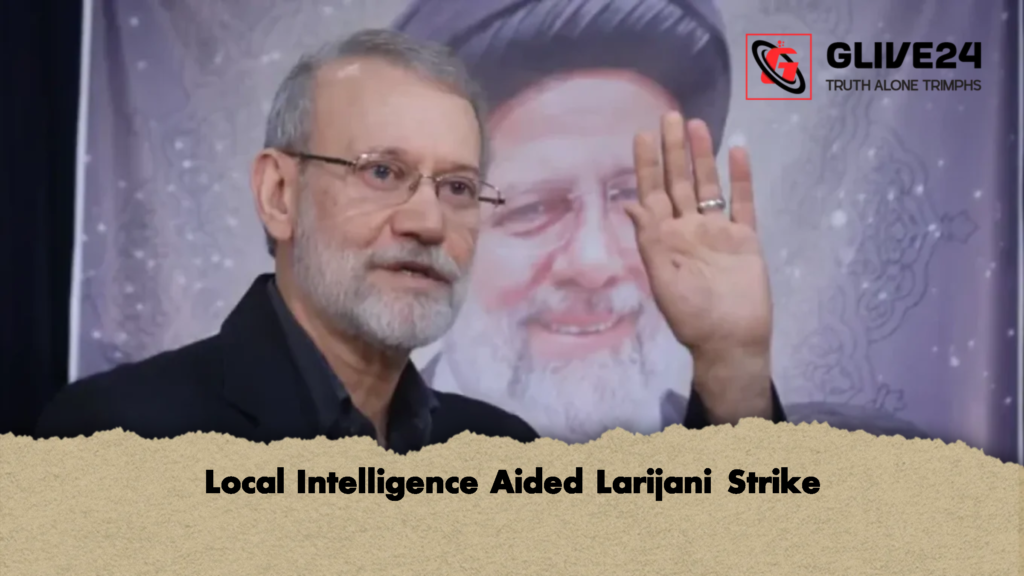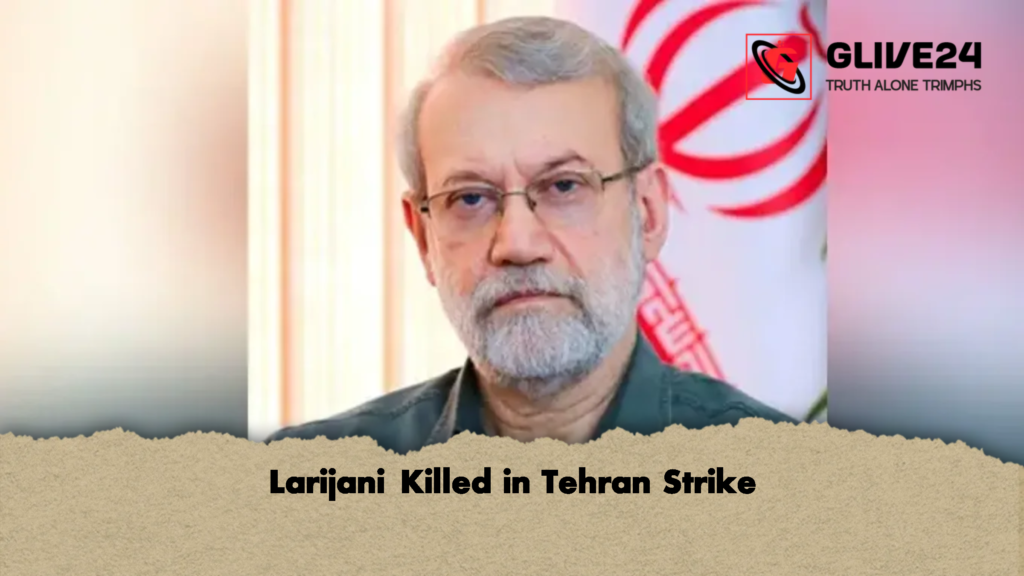
Iran has officially confirmed the death of senior political and security figure Ali Larijani, in what is being described as a major escalation in the ongoing regional conflict. The announcement was made late on Tuesday, 17 March 2026, by the Supreme National Security Council, following earlier claims by Israel that it had carried out a precision airstrike in Tehran targeting the veteran leader.
Table of Contents
Conflicting Reports Give Way to Confirmation
Earlier in the day, the Israel Defense Forces claimed responsibility for a targeted aerial operation in the Iranian capital, asserting that Larijani had been “eliminated”. The absence of immediate confirmation from Tehran initially fuelled speculation across international media and diplomatic circles.
However, a statement later carried by the semi-official Mehr News Agency confirmed that Larijani had been killed while carrying out his official duties. Iranian authorities described his death as “martyrdom”, a term frequently used in state discourse to denote individuals killed in service to the nation.
The statement further disclosed that the strike resulted in multiple casualties, including Larijani’s son, Morteza Larijani, his office chief Alireza Bayat, and several members of his personal security team.
A Pillar of Iran’s Strategic Leadership
Larijani was widely regarded as one of the principal architects of Iran’s national security doctrine and nuclear policy. Over decades, he held several influential positions, including Speaker of Parliament and Secretary of the Supreme National Security Council, placing him at the heart of Iran’s decision-making apparatus.
Following the reported death of Supreme Leader Ali Khamenei on 28 February, Israeli sources suggested that Larijani had effectively become Iran’s de facto leader, further elevating his strategic importance.
His death is therefore seen by analysts as a significant disruption to Iran’s leadership hierarchy, potentially creating uncertainty within both political and military structures at a particularly sensitive moment in the conflict.
Additional High-Level Casualties
In a separate but related development, the Islamic Revolutionary Guard Corps confirmed the death of Gholamreza Soleimani, head of the Basij paramilitary force, in another strike on the same day.
The near-simultaneous loss of two senior figures has been described by observers as one of the most serious setbacks for Iran in recent years. The deaths are expected to have far-reaching implications for the country’s internal security coordination and operational capacity.
Israeli Reaction
Israeli Prime Minister Benjamin Netanyahu hailed the operation as a major strategic success. He characterised the strike as a decisive blow against what he termed a “terrorist regime”, reinforcing Israel’s position that such actions are necessary to counter perceived threats from Iran.
Key Facts
| Detail | Information |
|---|---|
| Date of Confirmation | 17 March 2026 (night) |
| Deceased | Ali Larijani |
| Position | Secretary, Supreme National Security Council; former Speaker |
| Location of Strike | Tehran, Iran |
| Additional Casualties | Son, office chief, several bodyguards |
| Separate Incident | Gholamreza Soleimani (Basij chief) also killed |
| Claimed By | Israel Defense Forces |
| Iranian Response | Confirmed death; described as martyrdom |
| Strategic Impact | Major blow to Iran’s leadership structure |
Conclusion
The confirmed killing of Ali Larijani marks a pivotal moment in the intensifying confrontation between Iran and Israel. As a central figure in Iran’s political and security architecture, his loss is likely to reverberate across multiple levels of governance and military planning. Coupled with the death of another senior commander, the developments point to a period of heightened volatility, with significant implications for regional stability and the broader geopolitical landscape.