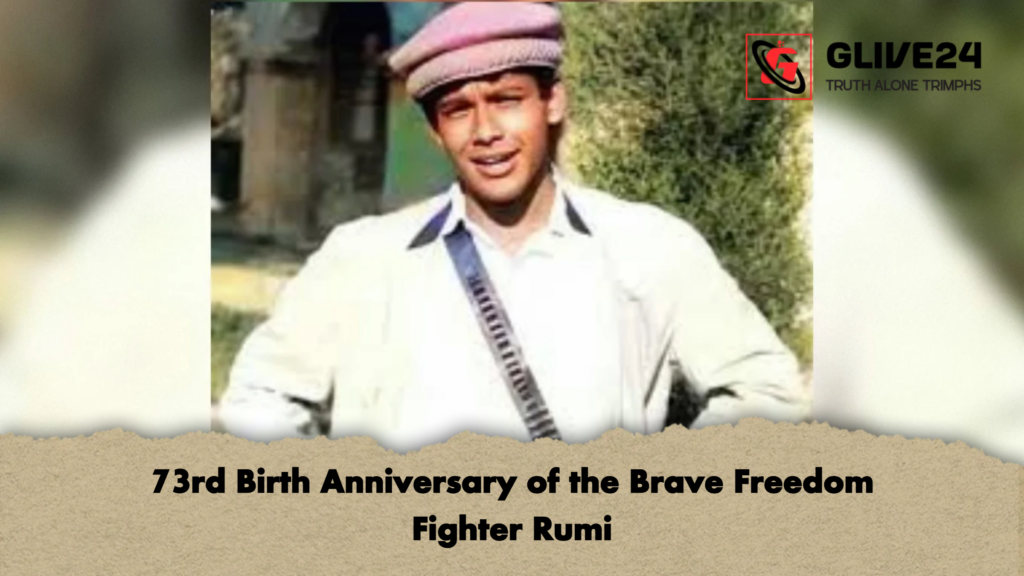
Today marks the 73rd birth anniversary of Shafee Imam Rumi, one of the most revered young martyrs of Bangladesh’s Liberation War. On this day, the nation pays solemn tribute to a courageous freedom fighter whose life, though brief, became an enduring symbol of resistance, patriotism and self-sacrifice during the turbulent birth of an independent Bangladesh.
Born on 29 March 1951 into a distinguished and progressive family in Dhaka, Rumi was the son of Sharif Imam and the celebrated writer and activist Jahanara Imam. His mother named him “Rumi” in honour of the great mystic poet Jalaluddin Rumi, hoping that her son would grow up embodying wisdom, courage and moral clarity.
Rumi was academically gifted from an early age. He successfully completed his Secondary School Certificate (SSC) and Higher Secondary Certificate (HSC) examinations before enrolling in engineering studies. His academic excellence earned him an opportunity to pursue higher education at the Illinois Institute of Technology in the United States, with classes scheduled to begin in September 1971.
However, the political reality of the time altered the course of his life irrevocably. Following the brutal military crackdown of 25 March 1971 by Pakistani forces, Rumi chose to abandon the prospect of a safe academic future abroad. Instead, he decided to join the armed struggle for liberation, driven by an unwavering sense of duty to his homeland.
After an initial unsuccessful attempt to cross the border on 2 May 1971, Rumi succeeded on his second attempt and received military training under Sector 2 at the training camp in Melaghar. He subsequently joined the elite guerrilla unit known as the Crack Platoon, which operated covertly within Dhaka.
Within this unit, Rumi took part in several high-risk operations targeting key infrastructure and enemy positions. His most notable missions included the sabotage attempt on the Siddhirganj Power Station and a daring guerrilla strike along Dhanmondi Road, both of which demonstrated his strategic discipline and personal bravery.
On 29 August 1971, Rumi was arrested from his home by Pakistani forces. Despite severe interrogation and torture, he refused to divulge any information about his comrades or operations. His silence under extreme duress remains one of the most powerful testaments to his unwavering commitment to the cause of independence. He is believed to have been executed on 4 September 1971.
The key milestones of his short but extraordinary life are summarised below:
| Category | Details |
|---|---|
| Date of Birth | 29 March 1951 |
| Parents | Sharif Imam and Jahanara Imam |
| Education | SSC, HSC, Engineering studies |
| Joined Liberation War | May 1971 |
| Sector | Sector 2 |
| Guerrilla Unit | Crack Platoon |
| Major Operations | Siddhirganj Power Station, Dhanmondi attack |
| Arrest | 29 August 1971 |
| Martyrdom | Likely 4 September 1971 |
On his birthday, his parents once blessed him with words that would later define his destiny—urging him to be as strong as thunder, to awaken with radiant strength, and to dedicate his life to restoring the dignity of the nation. Rumi fulfilled that vision through the ultimate sacrifice.
More than five decades later, he remains forever young in the national memory—an unaging symbol of courage in Bangladesh’s struggle for independence. His legacy continues to inspire generations, standing as a timeless reminder of sacrifice, honour and unwavering devotion to the homeland.