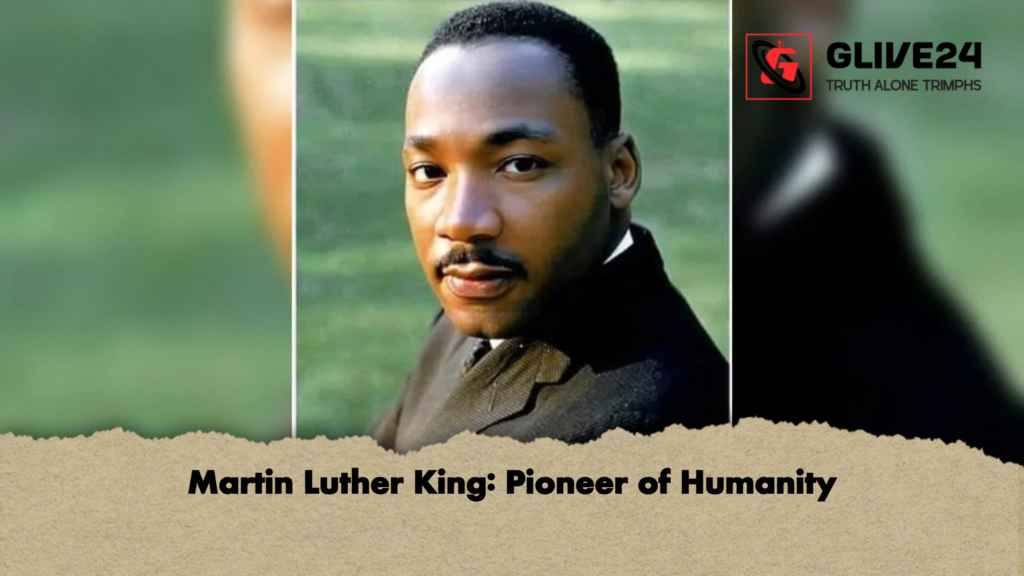
Martin Luther King Jr. stands as one of the most luminous figures in the global struggle for justice, equality, and human dignity. More than a leader of African American civil rights, he emerged as a universal symbol of nonviolent resistance, inspiring movements for freedom across continents.
Born on 16 January 1929 in Atlanta, Georgia, King was raised in a deeply religious household that shaped his moral outlook from an early age. The harsh realities of racial segregation in the United States left an indelible mark on his conscience. Rather than succumbing to anger, he channelled his response into a philosophy grounded in love, justice, and peaceful resistance.
King’s academic journey culminated in a Doctor of Philosophy degree from Boston University in 1955. Yet, it was not academia but activism that defined his life’s work. In the same year, he rose to national prominence by leading the Montgomery Bus Boycott, a pivotal campaign against racially segregated public transport. The success of this movement demonstrated the power of collective, nonviolent action and marked the beginning of a broader civil rights awakening in America.
His leadership reached its zenith during the March on Washington in 1963, where he delivered his iconic “I Have a Dream” speech. In eloquent and stirring language, King articulated a vision of a society where individuals would be judged not by the colour of their skin but by the content of their character. The speech remains one of the most influential orations in modern history, resonating far beyond the United States.
King’s philosophy of nonviolence was profoundly influenced by Mahatma Gandhi, whose principles he adapted to the American civil rights context. Through peaceful protest, civil disobedience, and moral persuasion, King challenged entrenched systems of discrimination and injustice.
In recognition of his extraordinary contributions, he was awarded the Nobel Peace Prize in 1964, becoming one of its youngest recipients. Despite constant threats, imprisonment, and personal sacrifice, he remained steadfast in his commitment to equality and justice.
Below is a concise overview of key milestones in his life:
| Year | Event | Significance |
|---|---|---|
| 1929 | Birth in Atlanta | Emergence of a future leader |
| 1955 | Montgomery Bus Boycott | Launch of national prominence |
| 1963 | March on Washington | Defining moment in civil rights |
| 1964 | Nobel Peace Prize | আন্তর্জাতিক স্বীকৃতি |
| 1968 | Assassination in Memphis | Martyrdom and enduring legacy |
Tragically, on 4 April 1968, King was assassinated in Memphis, Tennessee. His death shocked the world, yet it did not extinguish his vision. Instead, it amplified his message, galvanising future generations to continue the struggle for justice.
Today, Martin Luther King Jr.’s legacy endures as a powerful reminder that the fight against injustice does not require violence, but rather courage, truth, and unwavering humanity. His life remains a testament to the transformative power of hope and moral conviction.