
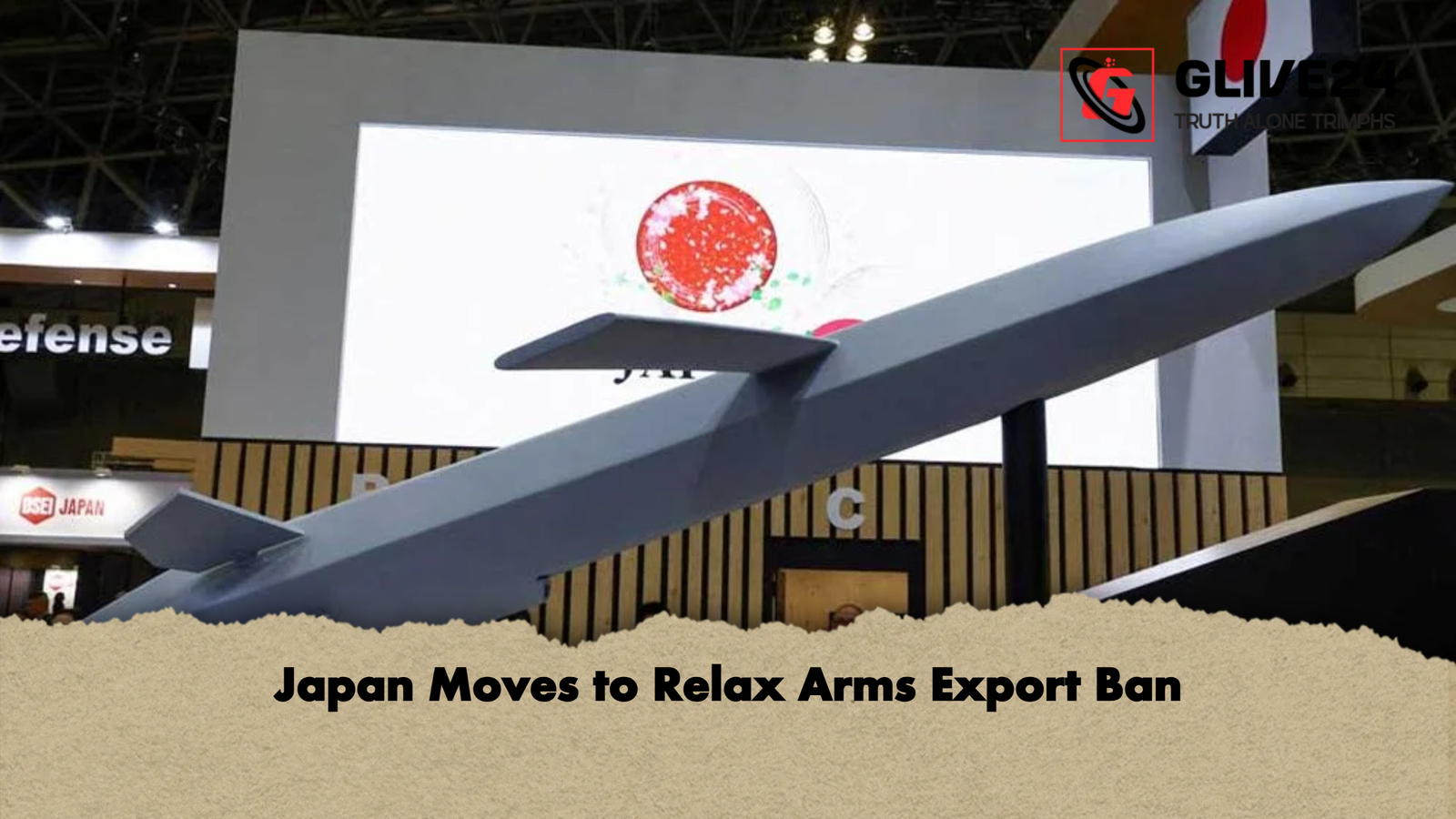
Japan has announced a significant shift away from its long-standing post-Second World War pacifist defence posture, easing strict restrictions on the export of lethal military equipment. The policy change marks one of the most notable transformations in the country’s security and defence strategy in decades, with potential implications for global arms markets and regional geopolitical dynamics.
The new framework was approved by the cabinet led by Prime Minister Sanae Takaichi. In a recent statement shared via social media, she confirmed that, under the revised rules, the transfer of defence equipment overseas will now be permitted in principle. However, she did not provide a detailed list of specific weapons systems eligible for export.
According to Japanese media reports, the revised policy could open the door to exports of advanced military assets, including fighter aircraft, missile systems, and warships. Recipient countries will, however, be required to commit to using such equipment in line with the principles of the United Nations Charter.
Government sources indicate that at least 17 countries are initially expected to be eligible under the updated export regime. This list may expand further as Japan negotiates additional bilateral and multilateral defence agreements in the coming years.
Historically, Japan has maintained one of the world’s most restrictive arms export regimes. Since 1967, under its so-called “Three Principles on Arms Exports,” the country largely prohibited the export of lethal military equipment, allowing only limited transfers of non-combat defence technology. While some exceptions were introduced in later years, strict constraints remained central to national policy.
The latest reform retains certain safeguards, particularly restrictions on exports to conflict zones. Nonetheless, it introduces greater flexibility, including provisions that allow exemptions in cases deemed essential for national security.
Comparative Overview of Policy Shift
| Policy Area | Previous Framework | Revised Framework |
|---|---|---|
| Export scope | Non-lethal defence equipment only | Expanded to include fighter aircraft, missiles, and warships |
| Eligible destinations | Highly restricted | Initially around 17 countries, expandable |
| Use in conflict zones | Effectively prohibited | Permitted under strict conditions |
| National security exemptions | Very limited | More flexible under special circumstances |
Japan’s defence industry is already showing signs of expansion. Under a major agreement with Australia, Mitsubishi Heavy Industries is constructing warships valued at approximately US$7 billion, intended for the Australian navy. This deal is widely viewed as a key milestone in Japan’s gradual return to the international defence export market.
However, the policy shift comes amid renewed political sensitivity. Prime Minister Takaichi’s reported offering at the Yasukuni Shrine has sparked controversy in parts of East Asia. The shrine commemorates Japan’s war dead, including individuals convicted of war crimes, and has long been a source of diplomatic friction with countries such as China and South Korea.
Analysts suggest that Japan’s evolving export policy may have far-reaching consequences beyond the defence sector alone. It could reshape regional security alignments, strengthen Japan’s defence industry, and recalibrate its role within broader international security frameworks.