
Khabor Wala Desk
Published: 27th April 2026, 12:24 PM
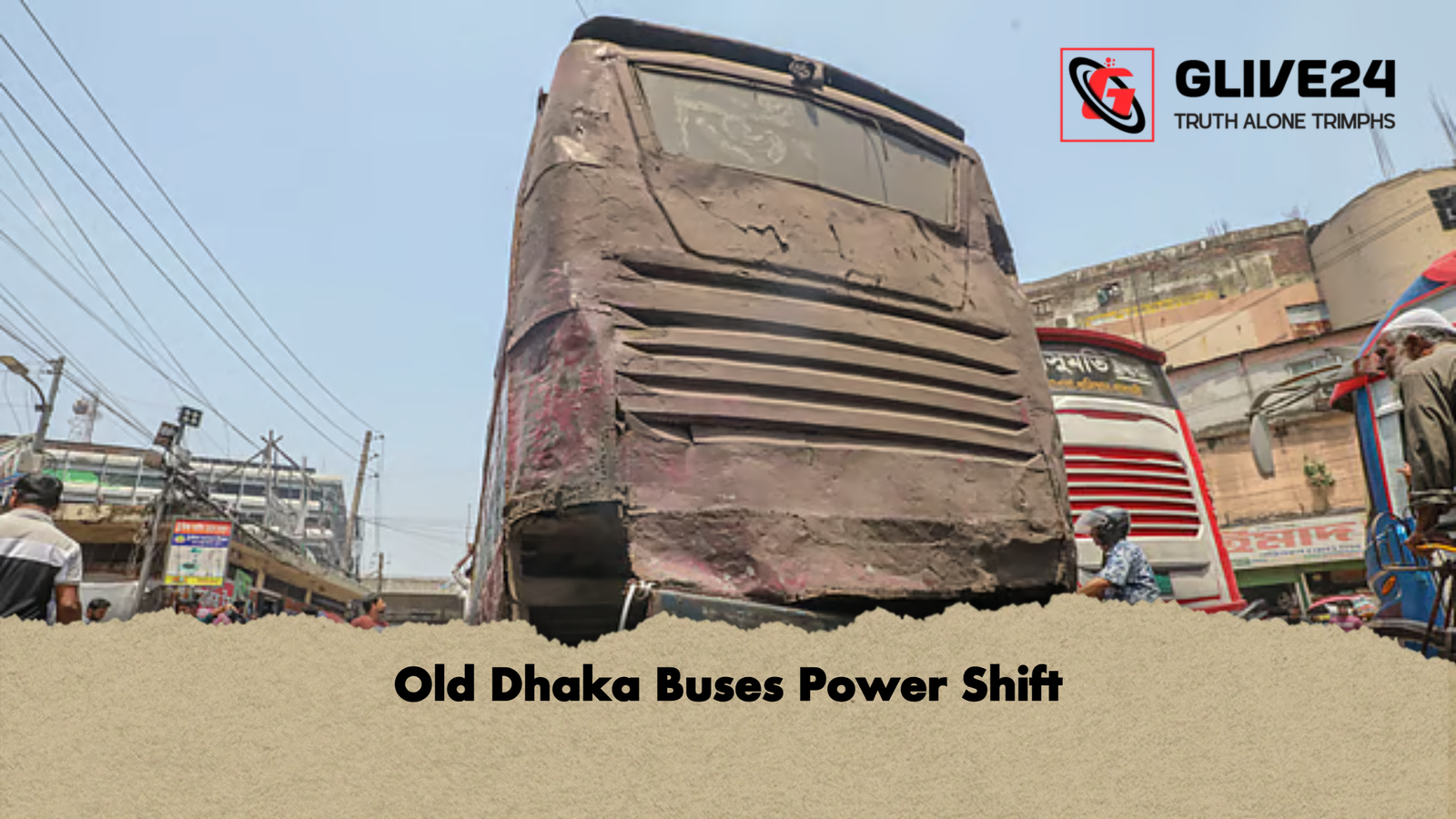
The bus was passing through Karwan Bazar in Dhaka when its age was immediately apparent. The vehicle was heavily worn, with uneven structure, faded paint and widespread corrosion across its body.
On 15 March 2026, a passenger boarded the bus and observed that the seats were greasy and poorly maintained. Although the bus had a seating capacity of 41, an additional five seats had been installed, bringing the total to 46. Despite this, all seats were occupied, and the passenger had to stand.
The assistant conductor of the bus, identified as Saddam Hossain, stated that the daily target payment for hiring the bus is 4,500 taka. After fuel and operational costs, the remaining income is divided between the driver, conductor, and assistant conductor. The arrangement indicates that the financial return to ownership remains stable regardless of the vehicle’s condition.
The bus carries registration number Dhaka Metro-B-11-3335. According to the Bangladesh Road Transport Authority (BRTA), the bus operates on the Mirpur–Jatrabari route under Shikhor Paribahan. However, officials confirmed that its route permit has expired, and its fitness certificate is also no longer valid. Manufactured in 2006, the vehicle is 20 years old. Under normal regulatory standards, such a vehicle would be considered beyond operational life.
A BRTA official stated that approximately 30 percent of registered buses and minibuses in Dhaka are operating beyond their permitted lifespan. Although the BRTA and traffic police are responsible for enforcement, many such vehicles continue operating. Allegations exist that informal payments enable continued road access despite regulatory breaches.
Table of Contents
| Category | Figure | Description |
|---|---|---|
| Registered buses in Dhaka | ~54,000 | Total registered minibuses and buses |
| Overaged vehicles in Dhaka | 16,198 | Vehicles beyond permitted age limit |
| National bus/minibus fleet | 86,338 | Total across the country |
| Vehicles without valid fitness (national) | 41,168 | Operating without updated fitness certificates |
| Estimated overaged share | ~30% | Approximate proportion in Dhaka |
A 2024 study by Transparency International Bangladesh (TIB) estimated that around 105.9 billion taka is collected annually in informal payments from privately owned buses. The report indicated that individuals linked to political groups, police personnel, BRTA officials and others receive portions of these payments. It also found that around 92 percent of major bus companies are associated with political figures, with approximately 80 percent linked to the then ruling Awami League.
Efforts to remove old buses from Dhaka roads began over a decade ago but were not fully implemented. Government initiatives were repeatedly announced but faced resistance from stakeholders within the transport sector, including those with ownership interests. As a result, ageing buses continued operating alongside newer vehicles, often with higher fares.
Following the political transition after 5 August 2024, control of parts of the transport sector reportedly shifted. However, systemic enforcement issues remained unresolved, and operational patterns largely continued.
Dhaka’s bus system is estimated to include around 300 companies and at least 4,000 owners. Operations are largely informal. Owners lease buses daily to drivers or companies under fixed payment arrangements, regardless of revenue. In some cases, companies employ drivers directly, paying fixed wages. In other cases, drivers pay a fixed amount to operate buses and retain remaining earnings.
Because many buses lack valid permits and fitness certificates, owners reportedly place vehicles under influential operators to avoid enforcement action.
An example is Bihanga Paribahan, operating on the Mirpur–Sadarghat route. Its former managing director was linked to a political organisation and a former member of parliament. Following political changes, administrative control shifted to a new management structure under local transport leadership.
Similarly, Bosumati Paribahan, previously associated with Khondaker Enayet Ullah, continues operating under revised leadership.
At the federation level, leadership in transport worker organisations has also changed following political transitions, with new representatives from different political affiliations now holding positions.
BRTA records indicate that enforcement against overaged vehicles has been attempted since 2010, including official bans on buses older than 20 years and goods vehicles older than 25 years. Despite multiple directives and executive orders, implementation has remained inconsistent.
In 2018, following a fatal road accident involving a bus operated by Jabal-e-Noor Paribahan, student protests demanded stricter enforcement of licensing and vehicle fitness regulations. Although authorities made commitments, long-term structural change was limited.
In 2023, an official policy set the economic lifespan of buses at 20 years, but enforcement was suspended amid operational and political pressures, particularly ahead of national elections.
Transport experts note three primary issues linked to ageing buses and the current system: passenger safety, environmental impact, and road accidents.
Studies cited in national planning documents indicate that buses account for a significant proportion of daily transport usage in Dhaka. However, operational conditions often include overcrowding, fare disputes, and safety concerns, particularly for women passengers.
Environmental assessments indicate that vehicle emissions contribute to urban air pollution. A significant portion of buses emit excessive black smoke due to poor maintenance.
Road safety concerns are also linked to mechanical failure and competitive driving practices among buses.
A bus driver, who also operates long-distance routes, noted that mechanical deterioration often leads to brake and system failures, requiring manual intervention to keep vehicles operational.
In 2015, a plan was introduced to reorganise Dhaka’s bus system into structured routes operated by single companies with designated stops. Although initial progress was made, implementation was discontinued following the death of key officials and administrative changes.
Later attempts included pilot projects such as the Dhaka Nagar Paribahan initiative, which operated on limited routes but did not expand significantly.
The current interim administration has taken steps to reintroduce age limits and announced incentives for replacing old vehicles with new ones. However, enforcement has been delayed due to operational resistance and service continuity concerns.
BRTA officials acknowledge that removal of overaged buses requires coordinated political and administrative decisions, alongside replacement capacity. Without systemic restructuring, ageing vehicles continue to operate within Dhaka’s transport network, reflecting long-standing regulatory and institutional challenges.

Comments