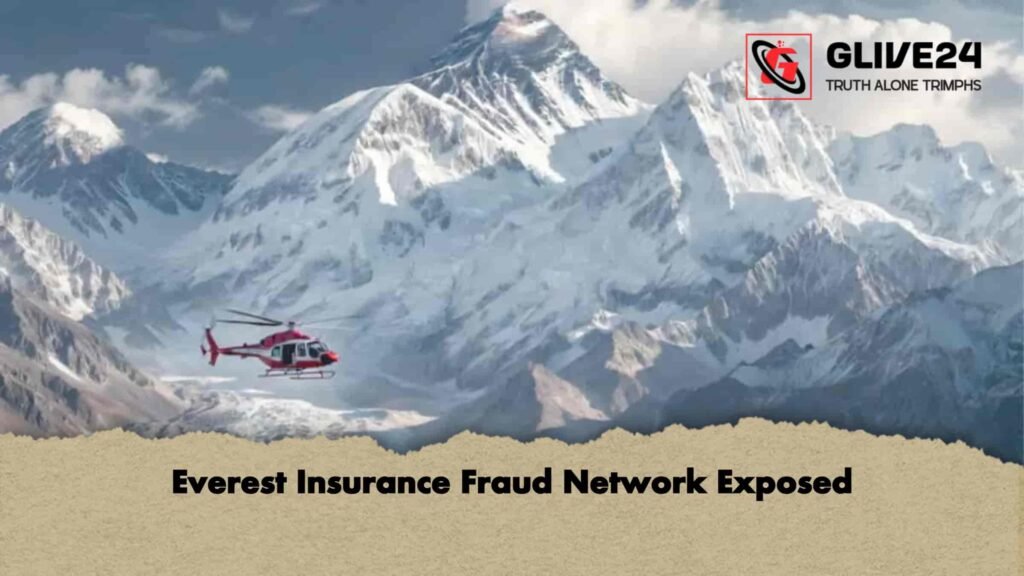
A coordinated insurance fraud operation has been uncovered in the Everest region of Nepal, affecting foreign trekkers and raising concerns about regulatory oversight in high-altitude tourism services. According to reports attributed to international media, including The New York Times, the scheme is estimated to have caused losses of approximately USD 20 million, equivalent to around BDT 220 crore, through inflated claims submitted to international insurance companies.
Investigations reported by The Kathmandu Post indicate that the alleged network involved multiple actors within the tourism and healthcare sectors. These reportedly included trekking guides, helicopter operators, and personnel associated with private medical facilities. Authorities state that the group facilitated unnecessary emergency evacuations and medical treatments for visiting tourists in remote Himalayan regions.
Structure and operation of the alleged scheme
The operation is alleged to have relied on inducing or engineering medical emergencies among tourists during trekking activities near Mount Everest and surrounding areas. According to investigators, this included the suspected contamination of food with harmful substances, resulting in sudden illness among some travellers. Once tourists became unwell, emergency helicopter evacuations were arranged from remote locations to medical centres.
Helicopter evacuations, which typically cost between USD 2,000 and USD 3,000 per flight, were allegedly billed at significantly higher rates when claims were submitted to insurance providers. In several cases, reported charges ranged between USD 10,000 and USD 15,000 per evacuation. Additionally, patients were directed to selected private hospitals, where further inflated treatment costs were recorded and subsequently claimed under insurance policies.
Cost comparison of evacuation services
| Service Component | Standard Cost (USD) | Alleged Billed Cost (USD) |
|---|---|---|
| Helicopter evacuation | 2,000 – 3,000 | 10,000 – 15,000 |
| Hospital treatment (varies by case) | Standard rates apply | Inflated billing reported |
| Total estimated fraud impact | — | ~20 million |
Legal proceedings and enforcement response
Nepalese authorities have initiated legal proceedings against 33 individuals in connection with the case. Those charged reportedly include owners of helicopter companies as well as officials linked to private hospitals. The Central Investigation Bureau (CIB) is overseeing the investigation, and 33 arrests have been confirmed.
In response to the findings, the government of Nepal has introduced revised Standard Operating Procedures (SOPs) governing high-altitude rescue operations. These updated protocols are intended to regulate emergency evacuations more strictly and improve coordination between tourism operators, medical facilities, and insurance-related processes.
Wider implications for tourism and insurance
The case has prompted concern within the international insurance sector regarding claims originating from Nepal’s Everest trekking routes. Industry observers note that the allegations may affect underwriting assessments and operational policies for high-risk tourism activities in the region.
The incident also highlights the need for stronger compliance mechanisms in the coordination between rescue services and healthcare providers. Authorities and stakeholders are expected to review existing monitoring systems to prevent misuse of emergency evacuation services and ensure transparency in billing practices related to insured tourists.