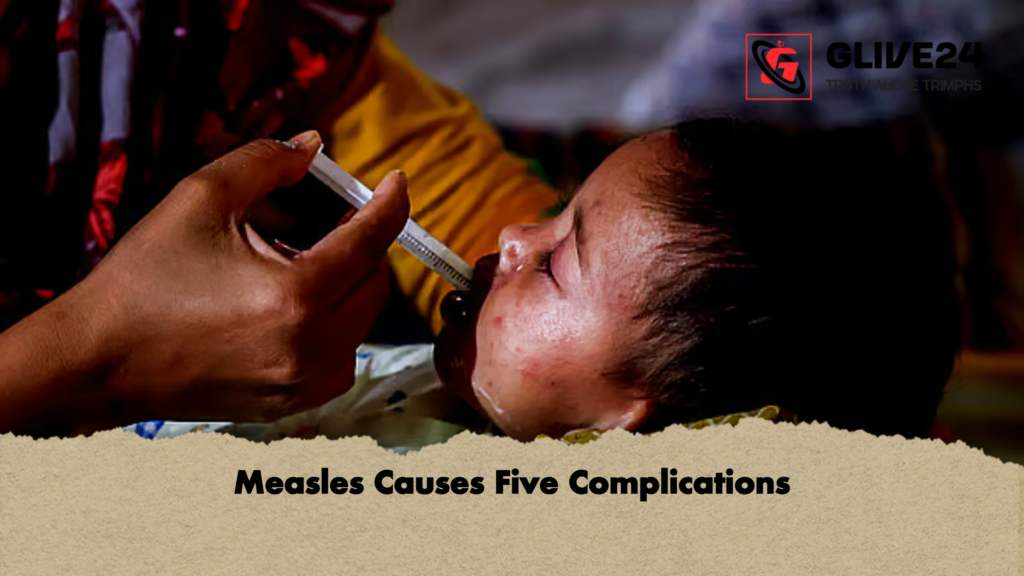
The World Health Organization (WHO) has identified five principal categories of complications associated with measles in children. These complications can be severe and, in some cases, fatal. Paediatric health specialists also note that measles can cause significant harm to child health, with certain effects carrying a risk of being permanent.
According to WHO’s detailed disease profile, children affected by measles may experience impaired vision, severe diarrhoea leading to dehydration, ear infections, and acute respiratory complications such as pneumonia. The disease can also cause encephalitis, an inflammation of the brain, which may result in lasting neurological damage.
Health authorities report that data on measles-related deaths and recovery are being compiled daily by the Directorate General of Health Services’ central control unit. So far, 264 children have died due to measles. However, comprehensive information regarding the post-recovery physical condition of a large number of affected children remains unavailable, and no systematic assessment initiative has been undertaken by the health authorities.
In separate cases reported from different parts of the country, families have described prolonged illness and post-infection complications among children recovering from measles. A 10-month-old child from Barguna, after being treated at several public hospitals before admission to a private hospital in Dhaka, was declared recovered from measles by attending physicians. However, the child continues to experience breathing difficulties and reduced appetite, according to family accounts, and has not yet fully recovered.
In another case from the capital, eight-month-old twins were hospitalised for approximately two months following measles infection at six months of age. After discharge, they have reportedly returned home but are experiencing weight loss and ongoing health issues.
Health professionals have noted that children recovering from measles are not routinely monitored for secondary complications after discharge. Officials from the disease control division have stated that current efforts are primarily focused on treatment rather than long-term follow-up.
Major Complications of Measles in Children
| Complication Type | Description | Potential Outcome |
|---|---|---|
| Vision impairment | Damage to the eyes due to vitamin A depletion | Reduced vision or blindness |
| Severe diarrhoea | Acute gastrointestinal infection leading to fluid loss | Dehydration, possible death |
| Ear infection | Infection of the middle ear | Hearing impairment |
| Pneumonia | Severe respiratory infection | Respiratory failure, mortality risk |
| Encephalitis | Inflammation of the brain | Seizures, permanent neurological damage |
WHO also notes that measles disproportionately affects individuals with weakened immune systems. Children who have not received vaccination, or in whom immunity has not developed adequately after vaccination, face higher risk of infection.
Medical institutions specialising in child health and infectious diseases report that measles can lead to additional complications such as malnutrition, oral ulcers, and secondary infections including pneumonia and otitis media. Experts further explain that measles infection can cause a reduction in vitamin A levels in the body, increasing the risk of ocular complications, including xerophthalmia and night blindness. In severe deficiency cases, permanent visual impairment may occur.
Medical specialists also highlight that encephalitis associated with measles may lead to seizure disorders. In severe cases, affected children may develop convulsions and long-term neurological conditions.
WHO further states that measles infection during pregnancy can pose risks to both mother and child, including the possibility of premature birth and low birth weight.
Public health experts emphasise the importance of vitamin A supplementation for malnourished children affected by measles, as well as nutritional support for affected families to reduce complications. They also underline the need for broader nutritional improvement strategies at the national level to mitigate the severity of infectious diseases such as measles.