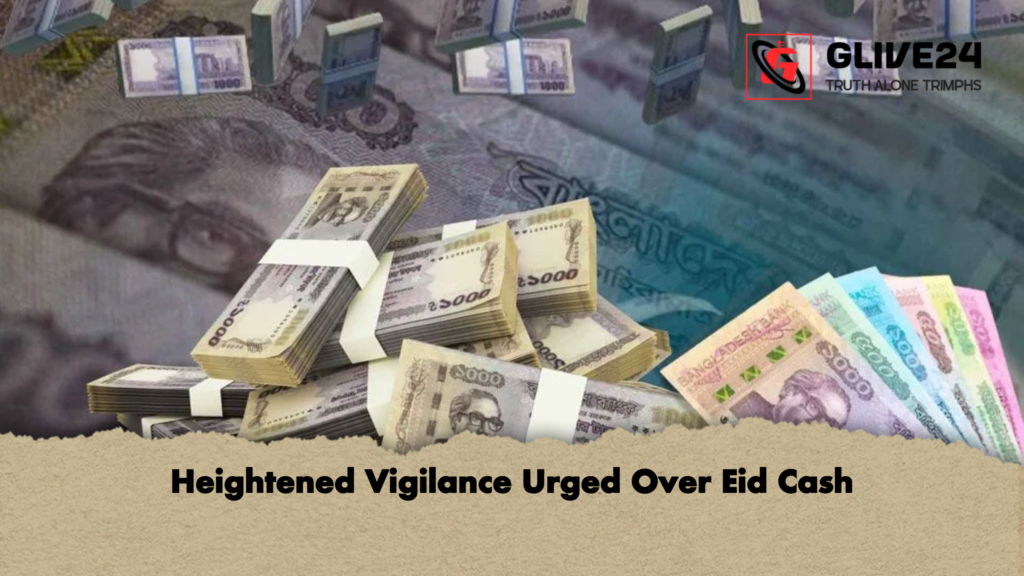
As the festival of Eid al-Adha approaches, the country’s central bank has issued a renewed warning over large cash transactions in livestock markets, citing an elevated risk of counterfeit currency circulation. The advisory comes at a time when trading activity intensifies nationwide, particularly in temporary cattle markets where substantial sums are exchanged daily.
During this period, the demand for higher-denomination banknotes—especially those valued at 500 and 1,000 taka—rises significantly. This surge creates an opportunity for organised fraud networks to introduce counterfeit notes into circulation. Authorities have therefore urged buyers, sellers, and traders to exercise heightened caution when handling cash, warning that insufficient verification could lead to considerable financial losses.
Every year, makeshift livestock markets emerge across urban and rural areas to accommodate the seasonal influx of sacrificial animal trading. These markets often operate with limited formal banking oversight, making them particularly vulnerable to fraudulent practices. Experts note that while modern banknotes incorporate advanced security features, many individuals remain unaware of how to properly verify them.
Financial specialists emphasise that recognising key security elements can significantly reduce the risk of accepting counterfeit notes. Genuine currency typically includes multiple built-in safeguards that can be checked quickly without specialised equipment. The following table outlines the most important features and how to identify them:
| Security Feature | Method of Identification |
|---|---|
| Watermark | Visible portrait appears clearly when held against the light |
| Security Thread | Embedded vertical strip within the note |
| Colour-Shifting Ink | Changes colour when the note is tilted |
| Intaglio (Raised) Print | Textured surface detectable by touch |
In particular, the public has been advised to scrutinise commonly used denominations such as 100, 200, 500, and 1,000 taka notes during transactions. If any suspicious note is encountered, individuals should immediately seek verification from nearby bank branches or temporary banking booths often set up within livestock markets during the festive period.
Additionally, authorities recommend avoiding large cash dealings with unfamiliar individuals. Where possible, transactions should be conducted through formal banking channels or authorised financial institutions, as these provide a more secure and traceable method of payment.
Economists underline that preventing the spread of counterfeit currency is essential for maintaining overall financial stability. A rise in fake notes not only affects individual traders but can also undermine public confidence in the monetary system. Increasing awareness among citizens is therefore seen as a critical step in mitigating such risks.
Officials further advise the public to familiarise themselves with official guidelines on identifying genuine currency, which are made available through central bank communication channels. Ongoing public awareness campaigns and monitoring efforts are reportedly being strengthened to curb counterfeit activity during the peak trading season.
In this context, vigilance at every level—from individual consumers to market authorities—remains key to ensuring safe and secure financial transactions throughout the Eid period.