
Khabor Wala Desk
Published: 28th April 2026, 6:12 PM
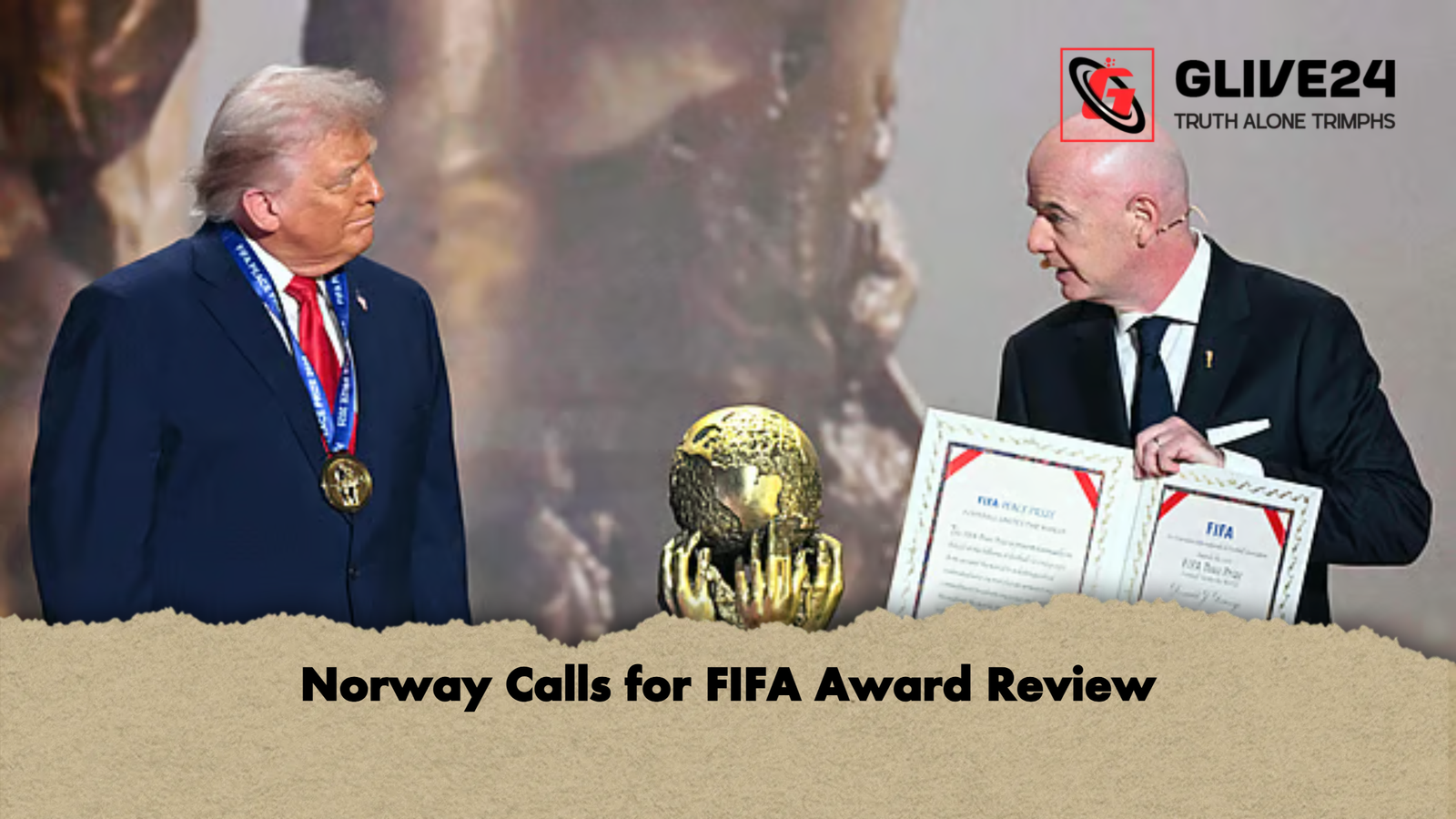
The Norwegian Football Federation (NFF) has called for the abolition of FIFA’s so-called Peace Prize, arguing that the award conflicts with the governing body’s principle of political neutrality. NFF president Lise Klaveness stated that the federation will formally write to FIFA to request that such awards, which are unrelated to football, are discontinued.
The NFF also confirmed its support for a complaint submitted by the advocacy group FairSquare to FIFA’s Ethics Committee concerning the same award. According to the complaint, the process surrounding the Peace Prize lacks sufficient transparency and raises concerns regarding compliance with FIFA’s internal governance standards.
The award was first presented in December by FIFA president Gianni Infantino during the 2026 World Cup draw ceremony. It was awarded to United States President Donald Trump at the event held in Washington. The decision attracted significant criticism and public scrutiny at the time, with questions raised regarding its compatibility with FIFA’s stated neutrality.
| Issue | Details |
|---|---|
| Award in question | FIFA Peace Prize |
| First presentation | December, 2026 World Cup draw ceremony |
| Recipient | United States President Donald Trump |
| Presenting authority | FIFA President Gianni Infantino |
| Complaint body | FIFA Ethics Committee (via FairSquare) |
| NFF position | Calls for abolition and supports complaint |
Klaveness argued that the introduction of such an award falls outside FIFA’s remit. She stated that an organisation such as the Nobel Institute operates independently in awarding peace-related distinctions, whereas FIFA is bound by its own neutrality framework. In her view, presenting the Peace Prize during a World Cup-related event in Washington was inconsistent with FIFA’s political neutrality policy. She also raised concerns that internal legal procedures within FIFA may not have been properly followed in the creation and awarding of the prize.
Klaveness further emphasised that FIFA, along with its federations and confederations, should avoid situations in which its neutrality could be questioned through close association with heads of state. She noted that awards of this nature risk becoming political unless they are administered through clearly defined structures, independent panels, and established criteria. She described such administration as requiring dedicated expertise, resources, and governance mechanisms, suggesting that these conditions may not have been met.
The NFF confirmed that it supports FairSquare’s complaint and has called on FIFA to ensure a transparent review process. Klaveness stated that the federation is seeking a clear assessment of whether FIFA’s principle of political neutrality has been breached. She added that any investigation should be conducted in a timely and transparent manner, with findings and reasoning made publicly available.
In addition, concerns were raised regarding security arrangements for the upcoming World Cup in the United States. According to US officials, officers from Immigration and Customs Enforcement (ICE) are expected to be part of the security framework for the tournament. However, Klaveness expressed concern that their presence at stadiums could potentially affect spectators.
She said the matter would be raised at the FIFA Congress scheduled to begin on 30 April in Vancouver. The NFF intends to seek clarification from FIFA leadership on how ICE-related operations will be managed across stadium venues, with the aim of ensuring safe and unrestricted access for all attendees.
Klaveness concluded that the World Cup should remain an inclusive and secure event, and that dialogue with FIFA leadership would continue in pursuit of that objective.



Comments