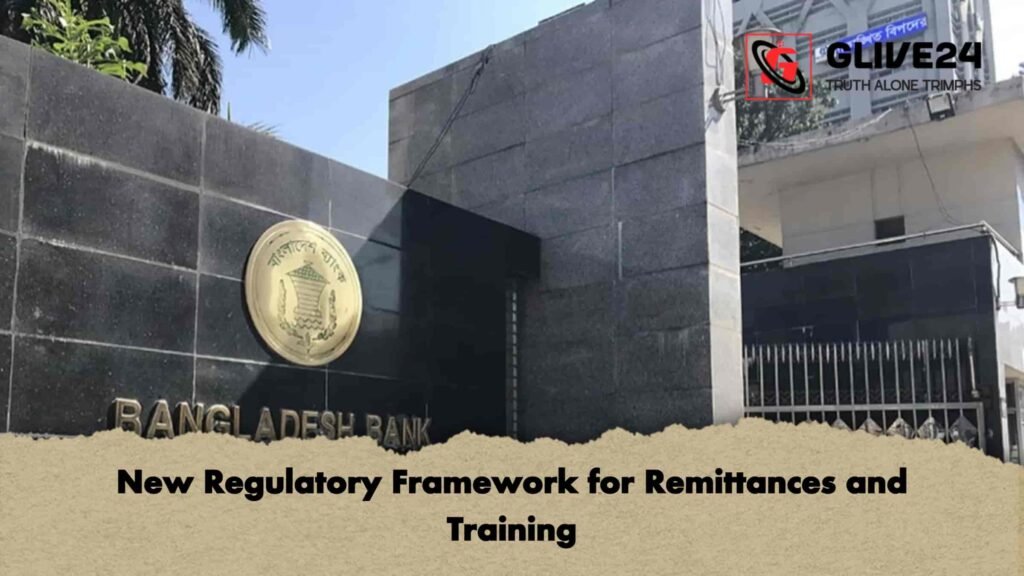
In a comprehensive effort to modernise the nation’s financial architecture, the Bangladesh Bank (BB) has issued two landmark directives. These measures aim to harmonise the outward remittance process for the transport sector and establish a rigorous, mandatory training standard for the next generation of banking professionals. By consolidating decades of fragmented instructions, the central bank is seeking to bolster transparency, compliance, and professional ethics across the industry.
Consolidating Transport Remittances
The central bank’s latest circular serves as a unified regulatory compass for foreign exchange transactions related to international transport. Historically, these operations were governed by a patchwork of instructions issued at different intervals. Under the new framework, all activities—ranging from the collection of freight charges to the issuance of international air tickets—are now streamlined into a single document.
Operating under the Foreign Exchange Regulation (FER) Act, 1947, this consolidation applies to both public and private sectors. This includes national flag carriers like Biman Bangladesh Airlines and the Bangladesh Shipping Corporation, as well as private courier services and freight forwarders. Furthermore, the guidelines introduce tighter oversight for tour operators, ensuring that the growing outbound travel sector maintains rigorous regulatory alignment.
Raising the Bar for Banking Personnel
Parallel to these operational shifts, the Bangladesh Bank has mandated a 14-week foundation training programme for all newly recruited bank officials. Recognising the banking sector as the bedrock of economic stability, the regulator intends to standardise professional competency through a mix of theoretical rigour and practical field experience.
Structure of the Mandatory Training Programme
The curriculum is designed to be immersive, moving away from passive lecturing toward participatory learning. A breakdown of the programme requirements is provided below:
| Training Segment | Duration | Primary Learning Objectives |
| Theoretical Instruction | 8 Weeks | Macroeconomics, Fintech, and Legal Frameworks |
| Practical Training | 6 Weeks | Branch operations, shadow duties, and field visits |
| Rural Immersion | 5 Days (Min) | Firsthand exposure to SME and agricultural projects |
| Simulation | Ongoing | Transaction practice in “Mock Branches” using actual CBS |
The curriculum is divided into six pillars, ensuring a holistic development of the official. These include Economics & Policy, focusing on tools such as the $Cash\ Reserve\ Ratio\ (CRR)$ and $Statutory\ Liquidity\ Ratio\ (SLR)$, as well as Legal & Ethical Frameworks, covering the Money Laundering Prevention Act, 2012.
Mandatory Compliance and Professional Ethics
The directive, issued under Section 45 of the Bank Company Act, 1991, stipulates that successful completion of this 14-week course is a prerequisite for the confirmation of service for all recruits, including Management Trainee Officers (MTOs). By integrating emotional intelligence and conflict management with technical skills like credit management, the Bangladesh Bank aims to create a “service-oriented” workforce capable of thriving in a competitive, technology-driven global market.