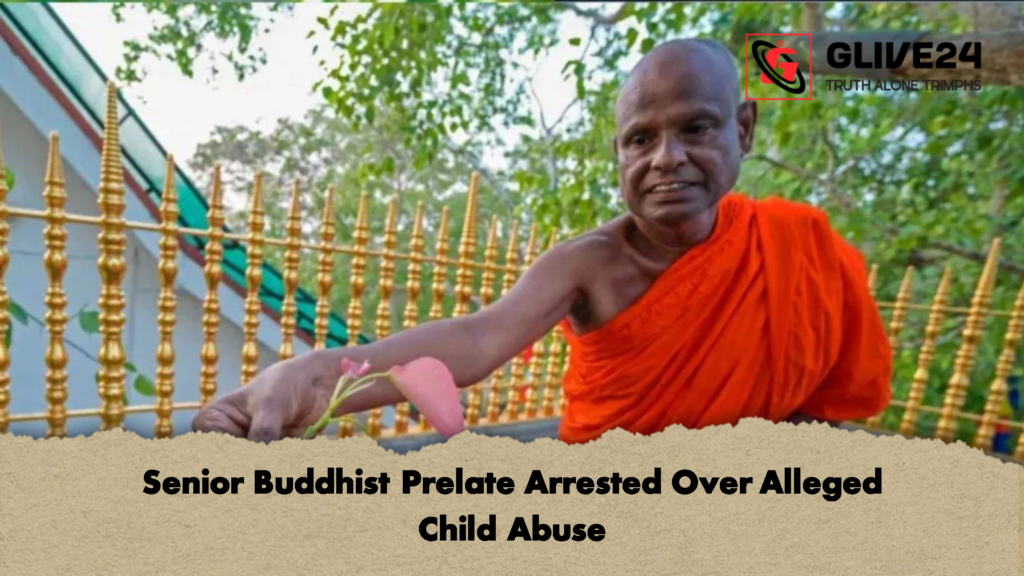
Law enforcement authorities in Sri Lanka have apprehended one of the nation’s most influential and high-ranking Buddhist clerics following allegations of sexual abuse involving an 11-year-old child. The arrest of 71-year-old Pallegama Hemarathana, the chief prelate of a major sacred shrine in Anuradhapura, represents what legal observers describe as one of the most significant criminal cases involving a religious figure in the country’s modern history.
Details of the Allegation and Arrest
According to a report by Al Jazeera, Hemarathana was taken into police custody on Saturday at a private hospital in the capital, Colombo. The cleric had reportedly admitted himself to the facility for medical treatment while the Criminal Investigation Department (CID) was actively conducting an inquiry into his conduct.
The charges against the prelate stem from an incident alleged to have occurred in 2022 within the precincts of the highly revered temple in Anuradhapura, where he served as the chief incumbent. In a concurrent development, the police also arrested the victim’s mother on charges of aiding and abetting the alleged crime.
The arrest followed a specific mandate from the Anuradhapura Chief Magistrate, who directed the police to apprehend the cleric “without delay” and produce him before the court. This judicial intervention came amid growing concerns voiced by child protection advocates and the National Child Protection Authority (NCPA) regarding perceived administrative delays in the investigation. To prevent any possibility of the suspect fleeing the jurisdiction, a travel ban had been placed on the monk several days prior to his detention.
Institutional Response and Public Sentiment
In a formal statement, the Sri Lankan police confirmed that all subsequent legal proceedings would be conducted in strict accordance with the Magistrate’s directives. While Sri Lanka has previously recorded isolated instances of misconduct involving members of the clergy, Hemarathana is the most senior religious official to ever face arrest on such grave charges.
The case has ignited a national debate regarding the accountability of religious institutions. Public indignation has been heightened by the influential stature of the accused; the Anuradhapura temple complex is considered one of the holiest sites in Theravada Buddhism, attracting millions of pilgrims annually. Legal experts suggest that the authorities are maintaining a rigorous stance to ensure that the victim’s family is shielded from potential intimidation or attempts to exert undue influence over the judicial process.
Recent Controversies Within the Clergy
The arrest of the senior prelate coincides with a period of heightened scrutiny directed at the conduct of certain members of the Buddhist monastic order in Sri Lanka. The nation is currently grappling with a series of scandals that have challenged the traditional reverence afforded to the clergy.
-
Drug Trafficking Incident: Only last month, the country was shocked by an unprecedented security breach at Bandaranaike International Airport in Colombo. Authorities arrested 22 Buddhist monks after they were found attempting to smuggle approximately 110 kilograms of cannabis in their luggage. This seizure is recorded as one of the largest narcotics trafficking attempts in the history of the airport.
-
Moral Crisis: These combined incidents—ranging from high-level narcotics smuggling to the alleged sexual exploitation of minors—have triggered widespread calls for internal reform within the religious hierarchy.
The current legal action against Pallegama Hemarathana is being viewed as a litmus test for the Sri Lankan justice system’s ability to operate independently of religious and political influence. The government has reiterated its commitment to upholding the rule of law, regardless of the social or spiritual status of the individuals involved. As the case moves to the trial phase, the focus remains on the protection of the minor and the transparency of the evidence presented before the Anuradhapura Magistrate’s Cour