
Khabor Wala Desk
Published: 10th May 2026, 12:03 PM
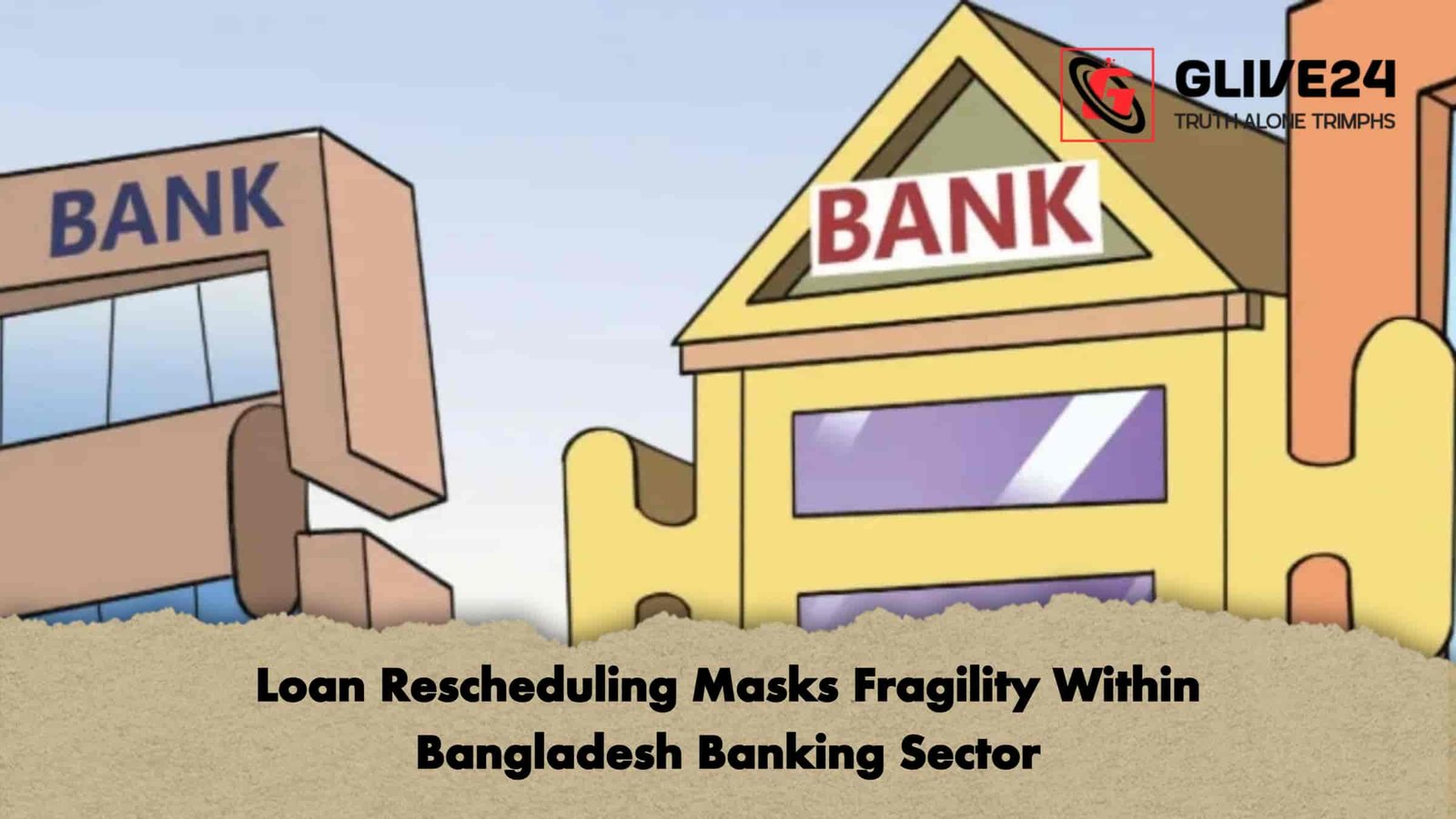
Financial reports for 2025 reveal a stark dichotomy in the Bangladeshi banking sector: record-breaking profits set against a backdrop of declining core business performance. Sonali Bank PLC, the nation’s largest state-owned lender, exemplifies this trend, posting a net profit of Tk1,313 crore—a 33% increase over the previous year—despite a 77% collapse in net interest income. Industry experts suggest these gains are largely “artificial,” driven by a central bank policy that allowed massive loan rescheduling, effectively deferring financial stress into the future.
The primary driver behind these figures was a relaxed rescheduling policy introduced by the central bank in September 2025. This initiative permitted banks to reclassify defaulted loans as “regular” assets by extending repayment periods to 10 years, accompanied by a two-year grace period. By converting non-performing loans (NPLs) into rescheduled ones, banks significantly reduced their required provisioning—funds set aside to cover potential losses. This reduction in expenses allowed lenders to book profits even as interest earnings from borrowers plummeted.
The campaign led to a sector-wide reduction in default loans by Tk87,298 crore in the final quarter of 2025. While state-owned banks were the primary beneficiaries, troubled private commercial banks also utilised the policy to improve their balance sheets on paper.
| Financial Institution | Reduction in Default Loans (Quarterly) | Key Performance Indicator |
| Sonali Bank | 22.32% | Capital surplus of Tk1,325 crore |
| Islami Bank | > Tk14,000 crore | Largest private sector NPL reduction |
| AB Bank | ~ Tk12,000 crore | NPL ratio fell from 84% to 50.88% |
| National Bank | ~ Tk10,000 crore | Significant restructuring of bad debt |
| Agrani Bank | Tk5,285 crore | Rescheduled Tk8,368 crore in 2025 |
Economists, including Zahid Hussain, former lead economist at the World Bank’s Dhaka office, have warned that this strategy is unsustainable. The World Bank’s Bangladesh Development Update 2025 noted that such regulatory forbearance risks masking the true quality of bank assets and delaying necessary balance-sheet repairs.
Critics argue that the two-year grace period creates a “liquidity squeeze.” Since banks receive neither principal nor interest payments during this window, their capacity to extend fresh credit is severely diminished. This has contributed to private sector credit growth falling to a record low of 6.03% in January 2026. Furthermore, industry veterans warn of a “moral hazard,” where disciplined borrowers are discouraged as wilful defaulters receive repeated concessions.
There is also a significant risk to international trade. Global financial institutions often view rescheduled loans as distressed assets, which can lead to higher borrowing costs or restricted credit lines for Bangladeshi importers and exporters. While balance sheets currently appear “clean,” there are concerns that a sharp deterioration may occur in the third year when the grace periods expire and repayments fall due.

Comments