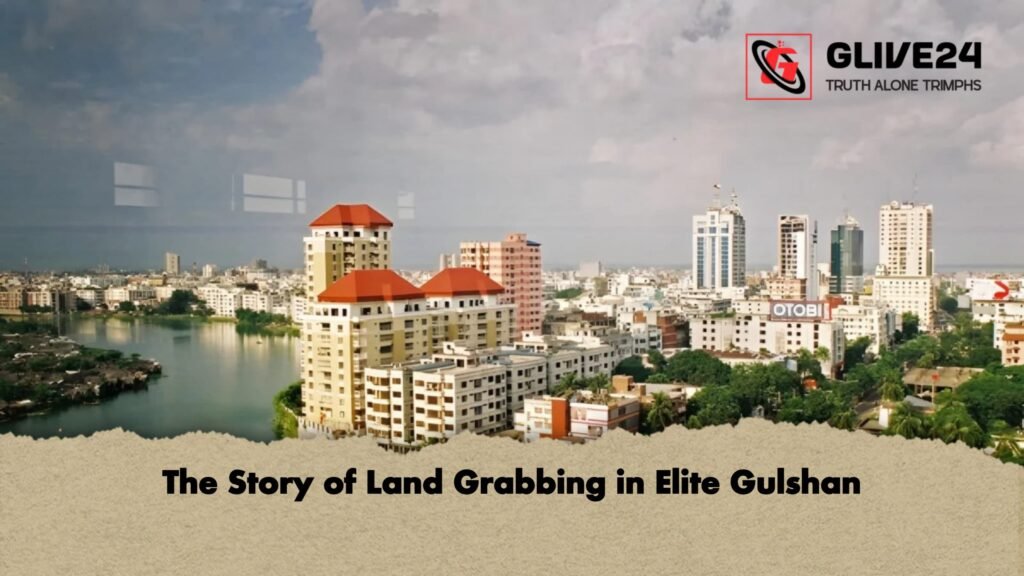
After the Partition of India in 1947, the population and urbanisation of Dhaka began to increase rapidly. To manage this growing pressure, the then Dhaka Improvement Trust (DIT) initiated plans in the 1960s to develop planned residential areas. As part of that initiative, the present-day Gulshan area was selected to be transformed into a modern “model town”.
Around 1961, the government acquired vast rural lands in the area and gradually began infrastructure development. On the initiative of an influential administrative official, the area was named “Gulshan”, meaning “flower garden”. The name was reportedly inspired by an upscale neighbourhood in Karachi.
Early Urbanisation and Infrastructure Development
In its early years, Gulshan was largely devoid of infrastructure. There were virtually no roads, bridges, markets, police stations, or educational institutions. At that time, people often had to walk from Mohakhali to reach the area.
However, with planned urban development, the situation gradually changed through:
- Excavation of lakes and land filling for road construction
- Development of bridges and connecting roads
- Establishment of markets and basic civic facilities
- Improvement of street lighting and drainage systems
Initially, there were only a few educational and religious institutions, and no major structures existed in the area. Over time, affluent and elite families began receiving plots from DIT and started building residences there.
At that time, a 20-katha plot cost only around Tk 20,000 to Tk 25,000. Early residents built relatively modest yet aesthetically pleasing homes, flower gardens, and a socially cohesive environment, gradually transforming Gulshan into an elite residential neighbourhood.
Administrative Development and Modern Gulshan
After Bangladesh gained independence, the administrative structure of Gulshan became more organised. Following 1971, police station operations were introduced in the area, and during the 1980s it came under the jurisdiction of the Dhaka Municipality. Later, urban planning and development accelerated under the supervision of the Capital Development Authority (RAJUK).
Gradually, Gulshan emerged as one of Bangladesh’s most important diplomatic and commercial hubs. At present, the area hosts:
- Foreign embassies
- International organisations
- Multinational companies
- Leading banks and corporate offices
- Luxury hotels and restaurants
Land Management, Irregularities, and Challenges
Land prices in Gulshan are now extraordinarily high. A 20-katha plot can currently be worth between Tk 60 crore and Tk 100 crore or more. This enormous financial value has led to repeated allegations of land-related irregularities, fraud, and corruption over the years.
Historical records indicate that after acquiring the land in 1957, DIT compensated the original landowners and prepared a master plan for the area. According to Land Acquisition (LA) case records, most owners received their due compensation.
However, allegations have since emerged that:
- Certain dishonest officials and influential groups created forged deeds and fake documents to claim ownership of land.
- Original records were allegedly lost, altered, or tampered with.
- Large sums of money were misappropriated through the construction and sale of unauthorised high-rise buildings.
- In many cases, flat buyers failed to obtain valid registration documents and became entangled in lengthy legal disputes, forcing them to seek justice through the courts.
Under such circumstances, ensuring good governance and transparency has become critically important. Strong investigations, proper document verification, and planned land management are necessary to protect this significant urban area. Such measures would not only help maintain social security in the locality but could also enable the government to generate thousands of crores of taka in revenue.
Today, Gulshan is not merely a residential area; it is a symbol of Bangladesh’s diplomatic, economic, and modern urban life. Its importance as a successful example of planned urbanisation is immense.
However, sustaining this achievement requires effective governance, enforcement of the law, and transparent land management practices. There is no alternative to these measures if Gulshan’s long-term stability and integrity are to be preserved.
To be continued…
Writer: ABM Zakirul Haque Titon
Editor and Publisher, G Live 24