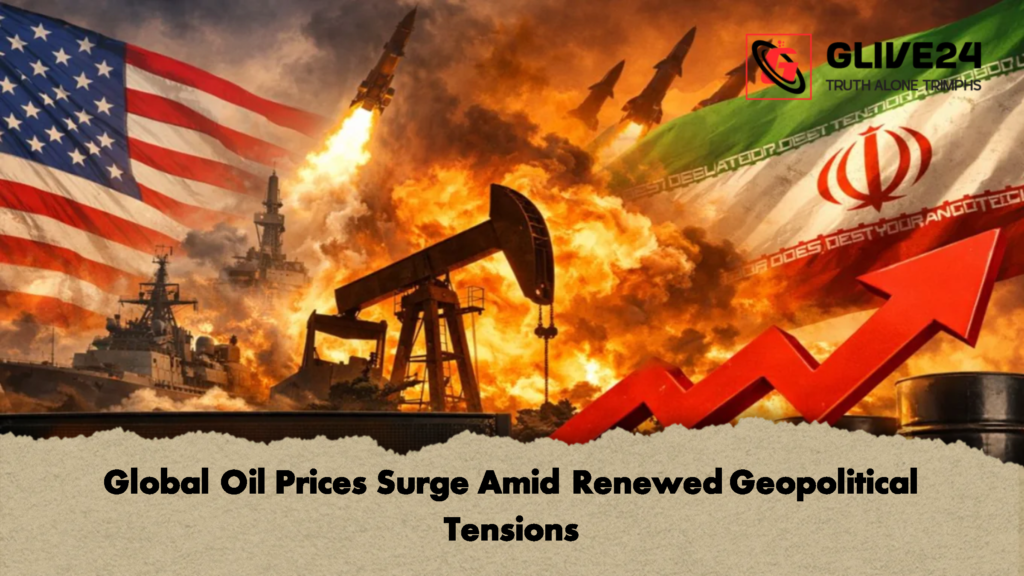
The international energy market has experienced a significant escalation in crude oil prices following a stalemate in diplomatic negotiations between the United States and Iran. On Tuesday, 12 May 2026, concerns regarding global supply stability triggered a sharp upward trend, with prices advancing by more than 3 per cent within a single trading session. This surge reflects growing investor apprehension over geopolitical friction in the Middle East and its potential to disrupt critical maritime trade routes.
According to market data, the price of Brent crude, the international benchmark, rose to $107.68 per barrel, representing a substantial increase of 3.3 per cent. Concurrently, US West Texas Intermediate (WTI) crude saw a similarly sharp rise, climbing 3.6 per cent to settle at $101.61 per barrel. This marks the second consecutive day of significant price hikes, following an approximate 3 per cent increase in both benchmarks during the previous trading day.
Diplomatic Impasse and Market Volatility
Market analysts have identified the primary driver of this volatility as the collapse of recent peace proposals intended to de-escalate regional tensions. The United States and Iran have reportedly rejected each other’s latest positions regarding a potential settlement, a development that has effectively stalled the dialogue and reignited fears of a prolonged conflict.
Carsten Fritsch, a prominent analyst at Commerzbank, observed that the mutual rejection of terms has exacerbated market anxiety. He noted that as both nations maintain their respective stances, the likelihood of a near-term resolution diminishes, leaving the energy sector vulnerable to speculative pressure and supply-side risks. The failure of these talks has directly translated into a risk premium being added to global oil prices, as traders factor in the possibility of physical disruptions to crude shipments.
Infrastructure Risks and Supply Chain Forecasts
The state of maritime security, particularly surrounding the Strait of Hormuz, remains a central concern for the industry. Amin Nasser, the Chief Executive Officer of Saudi Aramco, issued a stern warning regarding the long-term implications of continued instability. He suggested that if obstructions to oil exports through this vital corridor persist, the global market may not achieve genuine stability until 2027.
The Saudi energy chief highlighted the scale of the potential crisis, noting that weekly supplies of approximately 100 million barrels of oil are at risk if the waterway faces sustained blockades or interference. Such a deficit would represent a massive shock to the global economy, as the Strait of Hormuz serves as the primary artery for crude oil flowing from Middle Eastern producers to international consumers.
Future Price Trajectories and Economic Projections
The outlook for oil prices remains highly contingent on the next phase of diplomatic relations. Market analyst Tim Waterer has provided two distinct scenarios based on potential geopolitical shifts. He suggested that should there be a sudden and significant breakthrough in peace negotiations, global oil prices could experience a rapid correction, potentially dropping between $8 and $12 per barrel almost immediately.
Conversely, Waterer warned that further escalation or any new credible threats to blockade the Strait of Hormuz could send Brent crude prices surging past the $115 per barrel threshold. This scenario would likely lead to increased inflationary pressure across global economies, affecting transport costs and manufacturing sectors. As the situation remains fluid, investors are closely monitoring statements from Washington and Tehran for any indication of a change in policy.
The current pricing levels underscore the fragility of the post-pandemic energy recovery. With supply chains already strained by various global factors, the re-emergence of Middle Eastern tensions has forced many nations to reconsider their energy security strategies. For now, the market remains in a state of high alert, awaiting further developments from the ongoing diplomatic standoff between the two powers.