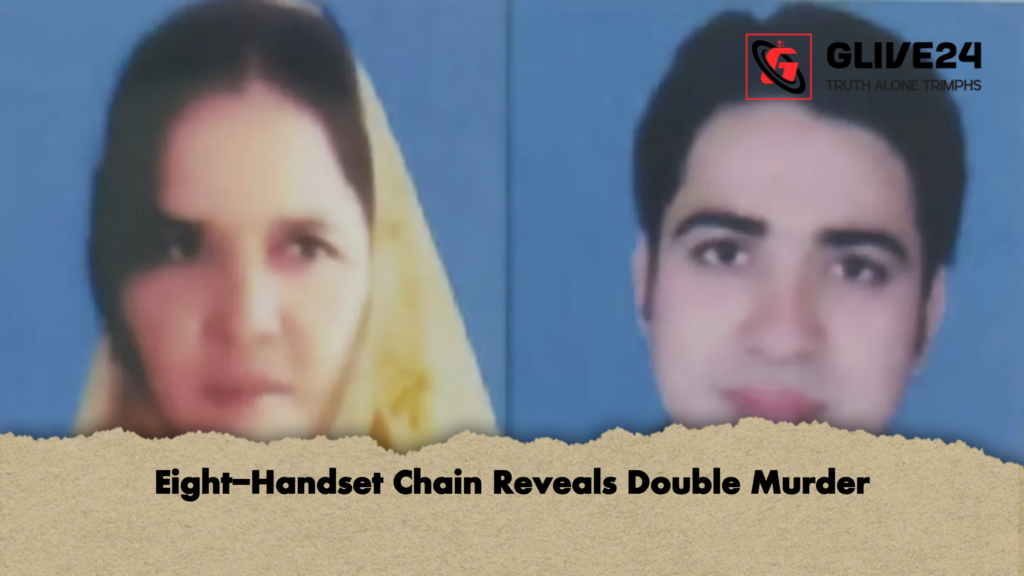
In the Rajshahi district of Bagmara, the investigation into the 2014 double murder of a mother and son was ultimately solved through the recovery and tracing of a stolen mobile phone that had changed hands eight times. The case involved the killing of Aklema Bibi (55) and her son Jahid Hasan (28), who were found murdered with sharp weapons at their home in Deula village on the night of 23 November 2014. The following day, another son of the victim, Dulal Uddin, filed a murder case with Bagmara Police Station.
At the initial stage, local police investigated the case and arrested five individuals. However, subsequent findings confirmed that those arrested were not involved in the killings. Approximately one year later, the case was transferred to the Police Bureau of Investigation (PBI), which shifted focus to a missing mobile phone belonging to the victim.
Chain of mobile phone movement
The investigation revealed that the mobile phone taken from the crime scene was later sold repeatedly, passing through multiple owners before reaching a buyer in Netrokona. Each transaction involved relatively small amounts, ranging between 500 and 700 Bangladeshi Taka. The phone changed hands eight times in total.
| Stage | Movement of handset | Details |
|---|---|---|
| 1 | Taken from crime scene | Collected by Habibur Rahman |
| 2–7 | Multiple intermediaries | Sold repeatedly for Tk 500–700 |
| 8 | Final known holder | Individual in Netrokona |
Investigators tracked the device using its IMEI number, allowing them to reconstruct each transfer and identify those involved in handling the handset.
According to the PBI, the phone was first taken from the scene by Habibur Rahman. Based on the chain of possession, seven individuals were arrested. Among them were Habibur Rahman and Abul Hossain Master, the victim Aklema Bibi’s paternal cousin-in-law.
Investigators found that Abul Hossain Master and Habibur Rahman had longstanding disputes with Aklema Bibi. These conflicts were identified as central to the planning of the killings. The PBI concluded that both individuals were directly involved in organising the murder and in recruiting hired killers.
PBI chief and Additional Inspector General of Police Mostafa Kamal stated that the mobile phone was the key piece of evidence in the investigation. He confirmed that although the handset had been stolen and circulated among eight individuals, tracing its movement step by step ultimately led to the resolution of the case.
Recruitment of hired killers
Details published in a PBI headquarters book titled Investigation of Unidentified Dead Bodies and Clue-less Murder Cases, released in January of the current year, provide further context on the investigation.
The report states that Abul Hossain Master, a local influential figure, had a longstanding dispute with the victim. Separate tensions also existed between Aklema Bibi and Habibur Rahman, reportedly linked to local narcotics-related disputes. These conflicts led to the planning of the killings.
Habibur Rahman was responsible for recruiting hired killers. Five such individuals were arranged from different areas of Durgapur upazila in Rajshahi. On 23 November 2014, they were transported approximately 18 kilometres to the crime scene, guided by Abul Hossain Master, who led them on a motorcycle. The attackers followed him to the victim’s residence.
According to the investigation, between approximately 20:30 and 21:15, Aklema Bibi and her son Jahid Hasan were killed using sharp weapons. During the incident, another individual remained outside on a motorcycle to provide lookout support. After the killings, the perpetrators fled the scene, taking the victim’s mobile phone with them.
Sentences delivered by the court
Following a lengthy investigation and trial process, the court delivered its verdict in September 2019.
| Category | Individuals | Sentence |
|---|---|---|
| Death penalty | Abul Hossain Master, Habibur Rahman, Abdur Razzak | Capital punishment |
| Life imprisonment | Abdulla Al Kafi, Ruhul Amin, Rustam Ali, Monirul Islam (Monir) | Life sentence |
Abdur Razzak, also sentenced to death, was a former member of the Border Guard Bangladesh who had been dismissed from service and led the group of hired killers.
The case was ultimately resolved through systematic reconstruction of the stolen mobile phone’s movements, which provided the critical investigative lead in identifying those responsible for the double murder.