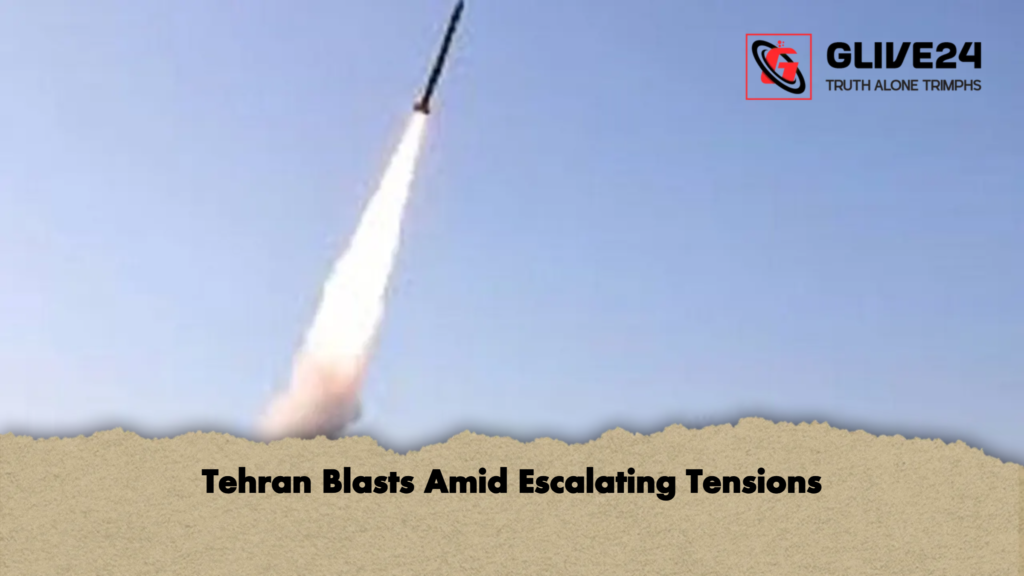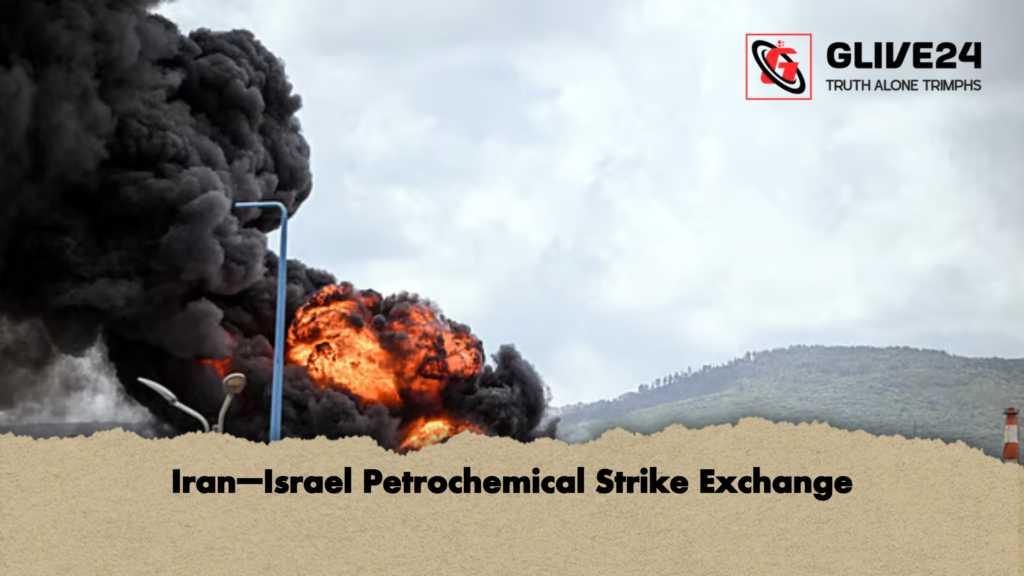
The Islamic Revolutionary Guard Corps (IRGC) of Iran has claimed responsibility for a missile strike targeting a petrochemical facility in the Israeli city of Haifa, stating that the operation was carried out in retaliation for earlier military actions attributed to Israel.
According to statements issued by the Islamic Revolutionary Guard Corps, the attack on Haifa was a direct response to an alleged Israeli strike on a petrochemical complex in Iran’s southwestern Mahshahr region. Iranian officials further characterised the earlier incident not solely as an Israeli operation, but as a coordinated action involving both the United States and Israel, significantly heightening the political framing of the escalation.
The IRGC asserted that the missile strike on Haifa specifically targeted an industrial petrochemical installation, which it described as strategically significant. The group emphasised that the operation was intended as a measured retaliatory response rather than an expansion of hostilities beyond military objectives. However, it also issued a strong warning that continued attacks on civilian infrastructure and energy facilities in the region would provoke broader consequences, potentially extending beyond the immediate theatre of conflict.
In its statement, the IRGC placed responsibility for the escalating situation on the United States, arguing that external support for Israeli military actions contributes directly to regional instability. It further cautioned that sustained strikes on energy-related assets could disrupt not only regional security but also global energy markets, given the centrality of Middle Eastern supply chains.
International observers note that the reported exchange of strikes marks a further deterioration in already heightened tensions between Iran and Israel. The focus on petrochemical and energy infrastructure is particularly significant, as such facilities are closely linked to both domestic economic stability and international energy flows. Analysts warn that continued targeting of these sectors could introduce volatility into global energy prices and shipping routes, though independent verification of the specific incidents remains limited at this stage.
The situation reflects a broader pattern of indirect and direct confrontations between the two states, often conducted through missile strikes, drone operations, and proxy engagements across the region. Each escalation tends to trigger reciprocal threats and raises concerns about unintended expansion into wider regional conflict.
Summary of Reported Developments
| Category | Details |
|---|---|
| Claiming authority | Islamic Revolutionary Guard Corps (IRGC) |
| Reported target | Petrochemical facility, Haifa, Israel |
| Alleged prior incident | Strike on petrochemical complex in Mahshahr, Iran |
| Iranian attribution | Described as US–Israel coordinated action |
| Reported response | Missile strike on industrial site in Haifa |
| Key warning | Further attacks on energy/civilian infrastructure may escalate regional and global impact |
| Strategic concern | Potential disruption to regional stability and global energy markets |
The IRGC reiterated that any continued targeting of civilian or industrial infrastructure would be viewed as a serious escalation, carrying consequences for regional stability. It stressed that responsibility for any further deterioration of the situation would rest with the parties initiating such attacks.
As tensions persist, the Middle East remains on heightened alert, with energy infrastructure increasingly viewed as a sensitive and high-value strategic target.