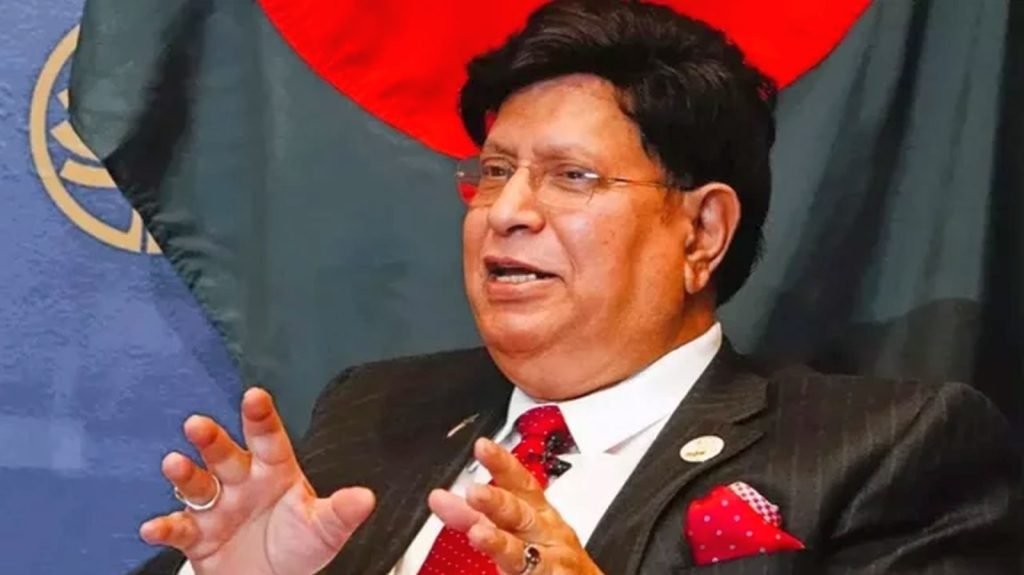
US doesn’t force countries to choose sides: envoy, Washington does not compel nations to take a position on Beijing, according to US Ambassador to Dhaka Peter Haas, because “we don’t expect every country to have the same exact assessment of China as we do.”
US doesn’t force countries to choose sides: envoy
“Let me be clear. This is not about forcing countries to choose. It’s about giving them a choice,” he said while speaking at a panel discussion at the “Bay of Bengal Conversation 2022” at a city hotel here. Haas said even the United States like many other countries have “vital economic or people-to-people ties with China that they want to preserve” while “US diplomacy is based on partnership and respect for each other’s interests”.
“China is also integral to the global economy and our ability to solve challenges from climate to COVID-19. Put simply, the United States and China must deal, with each other for the foreseeable future,” the envoy added. The ambassador quoted the US President’s recent UNGA address to explain the US stance over China when Joe Biden said “we do not seek a cold war” in reference to China.
In a meeting with Xi Jinping last week, Biden requested that US Secretary of State Antony Blinken travel to Beijing in order to maintain good relations between the two countries. According to Haas, the US vision for a “open, interconnected prosperous, secure and resilient Indo-Pacific” today faces the “most pressing strategic challenge” from Russian actions.
“If Putin stops fighting, the turmoil ends. (But) If Ukraine stops fighting, Ukraine ends,” Haas said. The ambassador, on the other hand, said “China is the only country with both the intent to reshape the international order and, increasingly, the economic, diplomacy, military and technological power to do it”. “Last week, President Biden made it clear to President Xi Jinping that the United States is not looking for conflict but to manage competition responsibly,” he said.
Haas, however, pointed out peoples’ suffering all over the world to cope with the effects of shared problems that cross borders — whether it is climate change, food insecurity, communicable diseases, or inflation — as the second challenge for the US. “These shared challenges are not secondary to geopolitics. They are at the very core of national and international security and must be treated as such,” he observed.
Bangladesh stake
The ambassador cited Bangladeshi Prime Minister Sheikh Hasina in saying that Bangladesh and the US shared a vision for the Indo-Pacific Strategy (IPS). – “Our vision for the region is to have a free, open, peaceful, secure, and inclusive region”.
Bangladesh stake
Haas said his country shared the identical vision with Bangladesh regarding the Indo-pacific region while the US seek to work with Dhaka and other partners to build an free and open, interconnected, prosperous, secure and resilient Indo-pacific region. The ambassador, in this regard, quoted Prime Minister Sheikh Hasina – “Our vision for the region is to have a free, open, peaceful, secure, and inclusive region”.
He said Bangladesh made important contributions to advance a free and open Indo-Pacific by committing to the peaceful resolution of its land and maritime border disputes and “Bangladesh has made the Bay of Bengal an example for the world to follow”. “We (US) have our own national interests. But I believe we all have a shared vision for the future and a firm belief that we must work together and with other nations to achieve that vision,” he said.
Haas said the US wants an indo-pacific region that stands for transparent governance which is responsive to the people. Haas said the US launched the Indo-Pacific Economic Framework (IPEF) to reflect the economic diversity of the region as well as the interconnectivity among partner countries that drives economic growth, job creation, and innovation. “We will continue to work on these issues (IPEF) and grow our economic partnership bilaterally with all nations, including Bangladesh,” he said.
The envoy said that the US would seek closer security cooperation with partners to tackle challenges ranging from violent extremism to illegal fishing to human trafficking to ensure a secured indo-pacific region.
Myanmar issue
The “violent military coup in Burma and the genocide against Rohingya,” according to Haas, pose a serious security threat to the stability of the area. He pleaded with all nations to stop giving Naypyidaw any further weaponry, military hardware, dual-use equipment, or technological support right away. According to Hass, the US is working to increase the Indo-Pacific countries’ resilience to global issues such as climate change and biological threats. By working to deliver funding to international climate finance to support lower-income countries in implementing their climate goals and ensuring a just energy transition, the United States is committed to upholding its global obligation to combat climate change, he said.