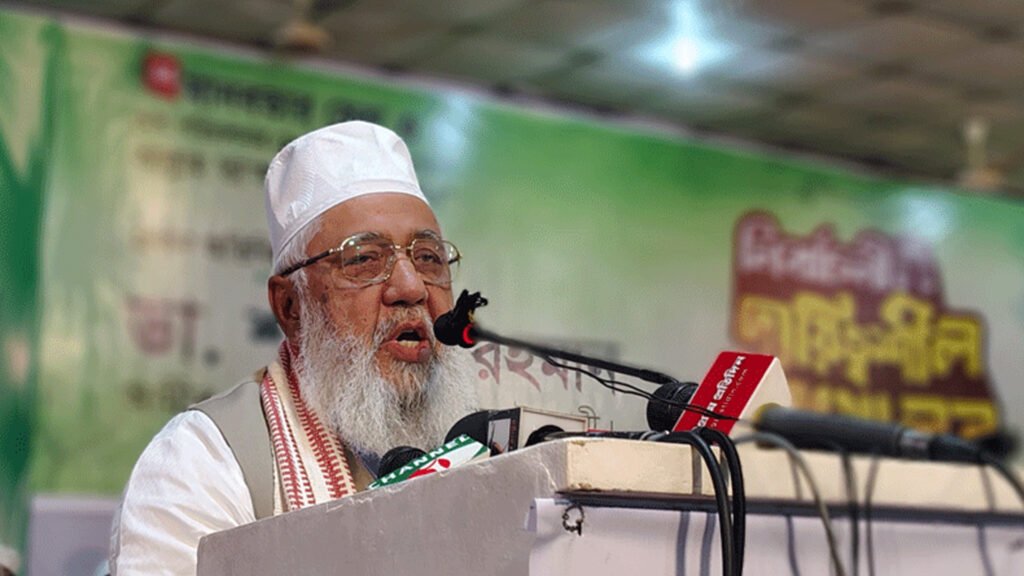
The Bangladesh Administrative Service Association (BASA) has voiced strong opposition to statements made by Jamaat-e-Islami leader Shahjahan Chowdhury, in which he appeared to advocate the politicisation of the civil service in the context of elections. According to reports, Chowdhury urged that officials be subordinated to political authority—responsible for arresting, filing legal cases, and providing protocol for political leaders, while the police follow their directives.
In its formal statement, issued on Thursday and circulated to the press on Friday, BASA condemned the remarks as “irresponsible” and incompatible with the principles of a professional civil service. The association called on all public figures to avoid such comments in the future, stressing that they threaten the impartiality, independence, and integrity of the country’s administration.
BASA’s statement underscored that officers are duty-bound to implement state policies, uphold the law, and ensure equal treatment and security for all participants during elections. They are not affiliated with any political party or faction and must remain strictly neutral.
Ahead of the forthcoming national parliamentary elections, the association reaffirmed its commitment to conduct its duties with the utmost professionalism, neutrality, and efficiency. These principles, it stressed, are the cornerstone of the civil service’s identity and reflect its core ethical responsibilities.
Experts note that statements like Chowdhury’s, if taken seriously, could undermine public confidence in state institutions and compromise the fairness of the electoral process. BASA’s robust rebuttal highlights the continuing tension between political actors and the civil service, and reinforces the principle that administrative officials must operate independently of partisan influence. By taking a clear stand, BASA has signalled that any attempt to politicise the administration will meet firm resistance from the country’s professional civil servants.