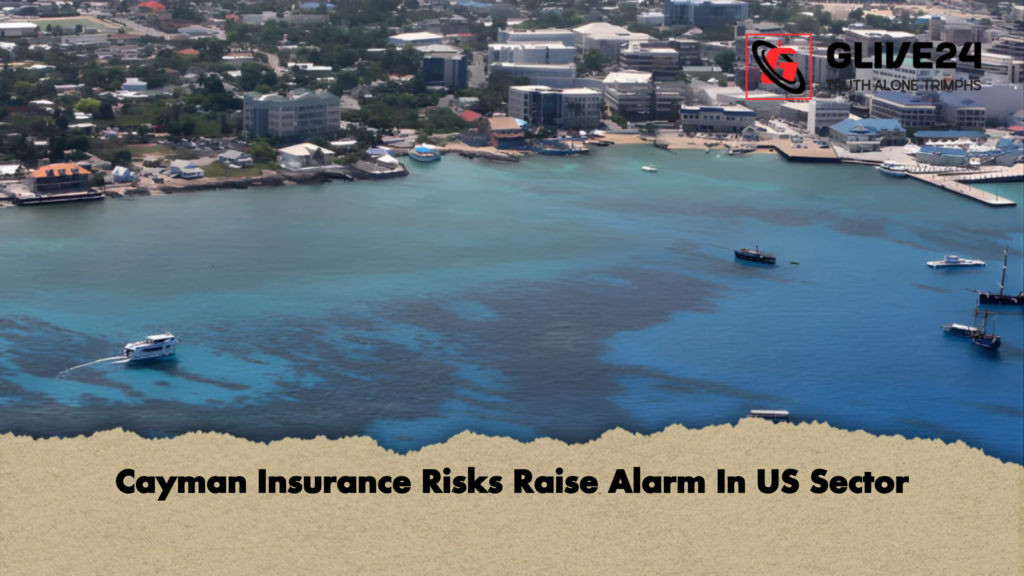
Apollo Global Management Inc., a leading US investment and asset management firm, has issued a stark warning regarding potential risks in the American insurance sector. The firm highlighted a growing trend among some US insurance companies to shift operations to the Cayman Islands, a move that could create vulnerabilities reminiscent of the sudden collapse of Silicon Valley Bank (SVB) in 2023. The fall of SVB had triggered significant instability across regional banks, and Apollo cautions that the Cayman insurance market may harbour similar risks.
In a detailed presentation, Apollo described the Cayman Islands as a “regulatory convenience hub,” where the inherent risks of the insurance market are not always fully addressed, and companies’ liabilities may exceed their available capital. Data presented by Apollo shows that exposure to Cayman-based entities among US insurers has more than doubled over the past two years, a figure that continues to rise.
The Cayman Islands Monetary Authority (CIMA), however, maintains that it operates under a robust regulatory framework. As a founding member of the International Association of Insurance Supervisors (IAIS) and through information-sharing agreements with US states, CIMA works closely with foreign regulators to assess and audit insurance companies. A spokesperson stated, “There is no cause for concern. While our regulatory approach may differ in form from other jurisdictions, it aligns with international standards and provides oversight in accordance with IAIS guidance.”
Speaking at this week’s Goldman Sachs Financial Services Conference, Apollo CEO Marc Rowan cautioned that additional insurer bankruptcies may be seen in the Cayman market. “We have already witnessed three failures there, and more are likely. I do not believe the Cayman Islands will serve as a fully effective jurisdiction for US insurers over the next 24 months,” he warned.
Regulators, analysts, and industry leaders have also expressed concern about private equity’s growing influence on the US life insurance sector. Economists at the Bank for International Settlements noted in October that offshore reinsurance frameworks allow comparatively flexible capital rules, creating potential risks in both the Cayman Islands and Bermuda. Apollo highlighted that its life insurance affiliate, Athene, conducts reinsurance operations in Bermuda.
The presentation further noted that major insurers such as Prudential Financial Inc. and MetLife Inc. operate in Bermuda. Apollo emphasised that while Athene maintains an A+ credit rating and $35 billion in regulatory capital, offshore reinsurance still requires the same level of protection under US policy standards.