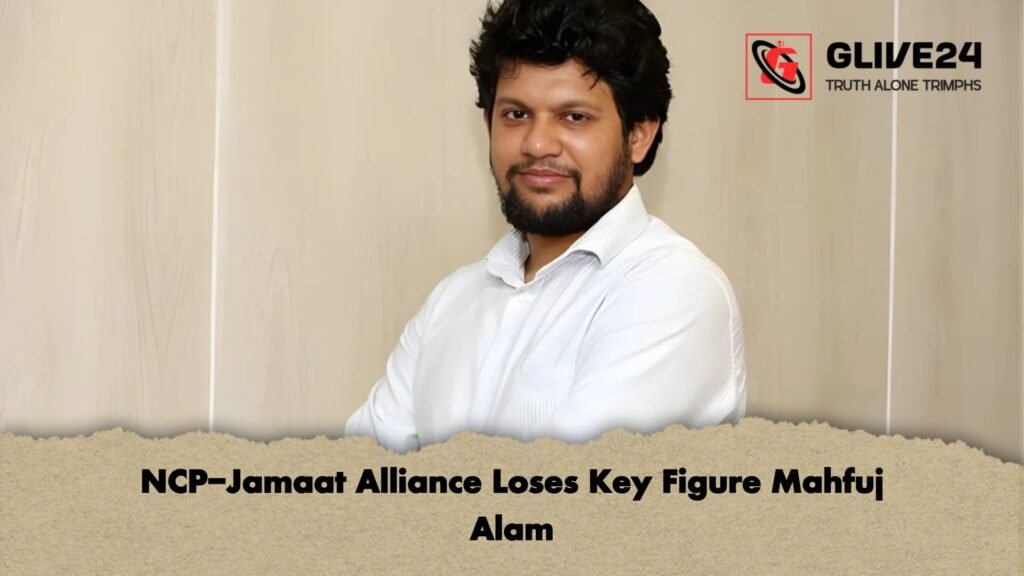
Mahfuj Alam, the influential architect of the July Uprising and former adviser to the interim government, has publicly declined an offer to contest the upcoming general election under the banner of the National Citizen Party (NCP). His decision follows the controversial announcement of a seat-sharing alliance between the student-led NCP and the veteran Islamist organisation, Bangladesh Jamaat-e-Islami. Writing on social media on Sunday, 28 December 2025, Alam clarified that he is not part of the NCP in its current form, highlighting a growing ideological rift within the youth-driven political landscape of post-revolution Bangladesh.
The rejection is particularly significant given Alam’s status as a “mastermind” of the revolution and his deep history with the founders of the NCP. While several other key figures from the uprising have resigned or voiced dissent over the Jamaat pact, Alam’s statement is the most high-profile rebuke to date. He confirmed that he was indeed offered a candidacy in a prominent Dhaka constituency by the Jamaat-NCP coalition but chose to decline, asserting that maintaining his “long-standing principles” is more vital than securing a seat in the Jatiyo Sangsad in February 2026.
Alam’s vision for the country has consistently centred on a “new political and economic settlement” and a cultural struggle against fascism—goals he feels are being compromised by conventional power-sharing arrangements. He expressed disappointment that his efforts to shape the NCP into a “big July umbrella” platform—independent, inclusive, and distinct from traditional political blocs—did not materialise. Instead, the party’s move toward a coalition represents a pragmatic electoral shift that he believes undermines the original aspirations of the martyrs and injured activists of the July Revolution.
Describing the current political atmosphere as a “cold war” of narratives, Alam argued that it is far better to remain firm in one’s policy and rhetoric than to align with established parties for short-term gain. Despite this break from his former comrades, he remains optimistic about the future of youth-led politics. He insisted that the potential for a “moderate, alternative July force” remains alive and well, pledging to continue his activism through political, cultural, and intellectual channels. His statement concludes with a call for a new brand of centrist leadership, suggesting that the rise of a truly independent youth power in Bangladesh is imminent.