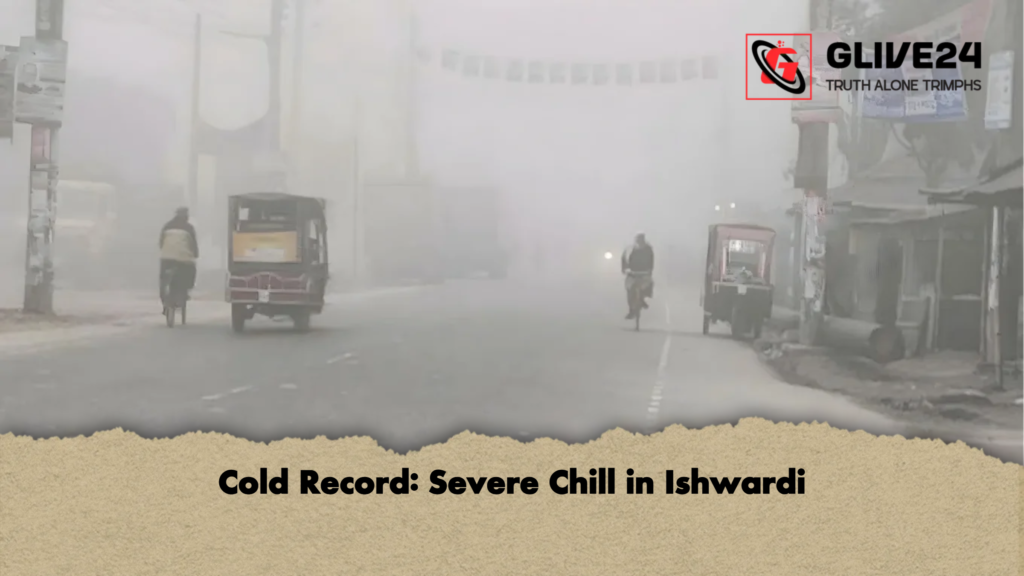
The residents of Ishwardi in Pabna, along the banks of the Padma and Jamuna rivers, are enduring an exceptionally harsh cold spell that is severely disrupting daily life. Dense fog, biting winds, and intermittent drizzle have intensified the impact of winter, leaving thousands of people struggling to carry out routine activities.
On Monday, 5 January, the Ishwardi Weather Monitoring Centre recorded the country’s lowest temperature at 8.4°C. Weather observer Nazmul Hossain stated, “Over the past two weeks, temperatures have fluctuated between 12.5°C and 9–10°C. Since 31 December, the mercury has dropped further. This morning, 5 January, the temperature reached 8.4°C—the lowest in Bangladesh this season.”
Previously, on 2 January, the temperature had stood at 8.8°C. The ongoing cold affects nearly 700,000 people in the region, including around 200,000 residents living on the riverine charlands of the Padma and Jamuna. Daily wage earners and low-income families are particularly vulnerable, as the chill prevents them from working and forces them to endure harsh living conditions. Many are attempting to keep warm using straw fires or small stoves.
Medical authorities have reported a surge in cold-related illnesses, particularly diarrhoea and pneumonia, affecting children and the elderly. Over the past two days, more than 300 patients have been admitted to Pabna General Hospital and local Upazila Health Complexes. Dr. Zahidul Islam, Resident Medical Officer at Pabna General Hospital, noted, “In the last 24 hours alone, 150 patients suffering from winter-related illnesses were admitted.”
The following table shows the recent minimum temperature records for Ishwardi and surrounding areas:
| Date | Location | Minimum Temperature (°C) | Remarks |
|---|---|---|---|
| 2 January | Ishwardi | 8.8 | Not the national low |
| 3 January | Pabna Sadar | 9.2 | Mild cold |
| 4 January | Bhangura | 9.0 | Moderate cold |
| 5 January | Ishwardi | 8.4 | National minimum recorded |
The cold snap has prompted increased footfall at local markets, where residents are buying warm clothing in preparation for further temperature drops. Even during the day, vehicles on major roads are operating with headlights on due to thick fog. Health authorities have issued advisories urging families to ensure that children and elderly relatives remain adequately protected against the cold.
In response to the extreme weather, local administration and the health department remain on high alert, closely monitoring both public safety and the risk of cold-related diseases among the population.