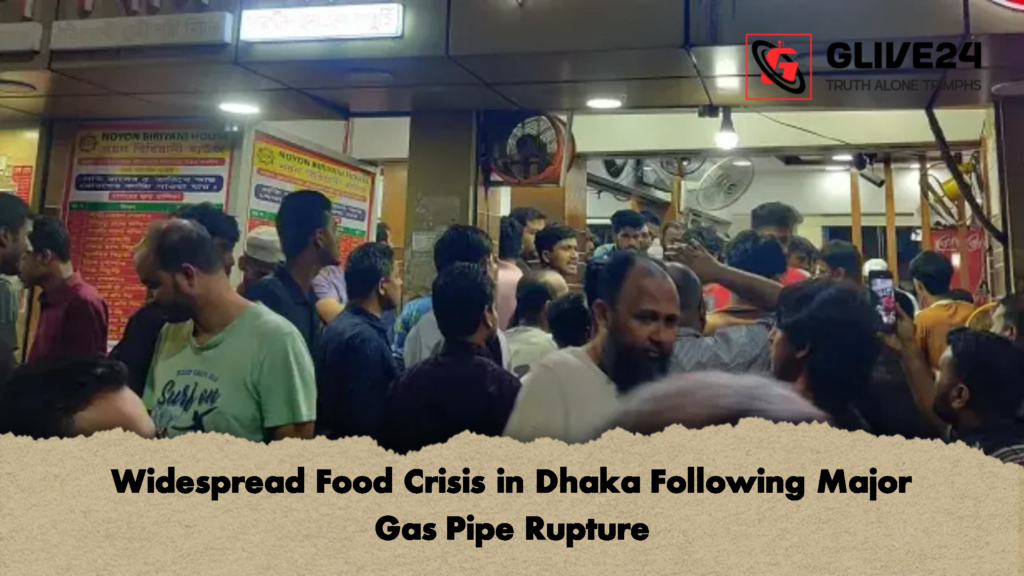
A critical failure in the utility infrastructure of the capital resulted in a significant domestic crisis on Sunday, 3 May 2026. Thousands of households across several affluent and densely populated neighbourhoods—including Gulshan, Banani, Baridhara, and Badda—were deprived of natural gas for domestic use. The outage, caused by a major rupture in a Titas Gas transmission line, precipitated a desperate search for prepared meals, leading to the rapid exhaustion of food supplies in local commercial eateries.
Table of Contents
Technical Origins of the Disruption
The crisis began on Sunday morning in the Gulshan-1 Circle vicinity. Technical assessments indicate that a primary gas main was breached during excavation activities undertaken by a contractor. To mitigate the risk of fire or explosion, Titas Gas Transmission and Distribution Company Limited was required to immediately isolate the affected section, effectively terminating supply to residential and commercial customers across the northern reaches of the city.
By 10:30 pm, the supply remained suspended in the Badda and Link Road areas. Given that the majority of urban households in these districts are dependent on piped natural gas rather than LPG cylinders, the interruption left countless residents unable to operate their stoves or prepare meals.
Humanitarian Impact on Families
The disruption placed an immense burden on families, particularly those with young children. Seema Akter, a resident of the Moynarbagh area in Madhya Badda, recounted her struggle while waiting outside a local restaurant with her six-year-old daughter and four-year-old son. With her husband away on an official assignment, she had to navigate the crisis alone.
“I had already prepared the vegetables and washed the rice for lunch when the gas failed,” she explained. “My children were forced to eat bread and bananas during the day. It is now late evening, and they are crying for a proper meal, yet the queues at every hotel are so large that it is impossible to enter with children.” Similar accounts of exhaustion and distress were recorded from parents across Hossein Market and Adarshanagar, where the lack of prior warning meant no contingency food stocks had been prepared.
Overwhelming Demand on Local Eateries
The sudden reliance on commercial food outlets created a logistical bottleneck. Restaurants that usually operate until midnight found their entire daily inventory depleted within hours. Establishments such as Nayan Biryani House and Maa Biryani House reported a surge in patronage described by staff as “unprecedented.”
Observations from the affected districts included:
-
Early Exhaustion of Stock: Smaller rice hotels and biryani outlets reported being completely sold out by 8:00 pm, nearly four hours ahead of their scheduled closing times.
-
Logistical Stress: At Nanna Biryani, distributor Abdus Samad noted that despite the usual surplus, all vats were empty by early evening.
-
Customer Desperation: In Adarshanagar, vendors attempted to mitigate the crisis by preparing three additional large vats (dekshis) of food beyond their standard quota, yet even this was insufficient to satisfy the backlog of customers.
Infrastructure Vulnerability and Utility Coordination
The incident has brought the vulnerability of Dhaka’s underground utility network back into the public discourse. Residents expressed profound frustration at the recurring issue of accidental pipe breaches during roadworks. Mohammad Azam, who had attempted to take his wife out for dinner due to the lack of gas at home, described the situation on the streets as “unmanageable,” noting that the overcrowding around food stalls made it nearly impossible to access basic services.
As the night of 3 May drew to a close, many residents were forced to return to their homes without having secured a hot meal. While Titas Gas officials confirmed that repair crews were working through the night to restore the line, the incident has highlighted the fragile nature of urban energy security and the immediate socio-economic consequences of utility failures in a high-density environment.