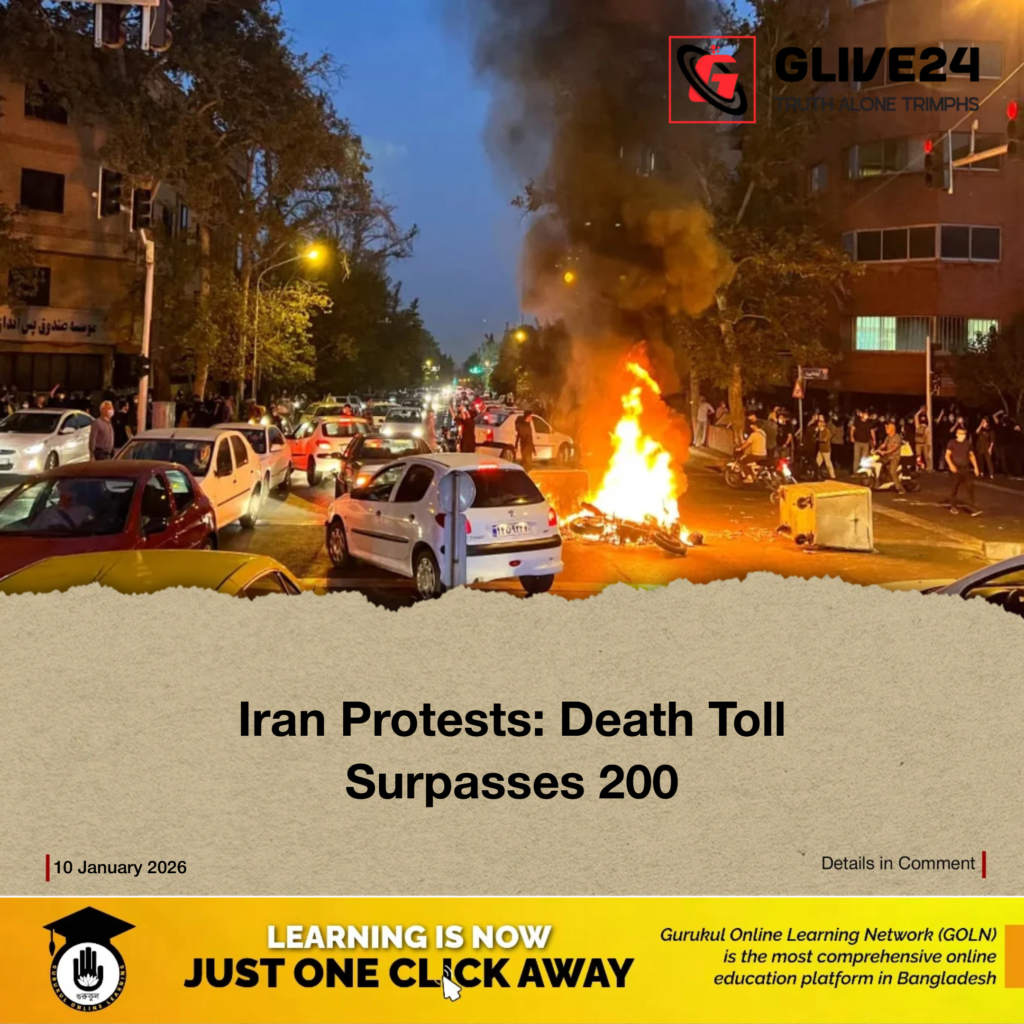
Protests sweeping across Iran over the past few days have escalated into severe and deadly clashes, with the death toll now exceeding 200. Initially sparked by economic hardship, rising living costs, and grievances over basic human rights, the demonstrations have rapidly morphed into a broader anti-government movement, challenging the authority of the Islamic Republic.
Cities across the country, including the capital Tehran, have witnessed intense confrontations between demonstrators and security forces. Reports indicate that both sides have suffered casualties, with protesters increasingly resisting with force, intensifying the violence.
A medical source from Tehran, speaking on condition of anonymity, stated that just six hospitals have received the bodies of 217 individuals, most of whom were young and had sustained gunshot wounds. The Iranian government has yet to release an official statement regarding the fatalities. Meanwhile, internet and mobile networks have been largely disabled, making independent verification of events extremely difficult. Human rights organisations are reporting differing figures, reflecting the challenges of information gathering in the current environment.
Reported Deaths and Injuries (per media sources):
| Date | Region/City | Total Deaths | Security Forces | Civilians/Protesters |
|---|---|---|---|---|
| 28 Dec | Nationwide | 62 | 14 | 48 |
| 8 Jan | Kermanshah | 8 | 8 | 0 |
| 9 Jan | Tehran (hospitals) | 217 | Unknown | Majority young |
| Total | Nationwide | 287+ | ≥22 | 265+ |
According to the Washington, D.C.-based Human Rights Activist News Agency, at least 63 fatalities have been verified, including 49 civilians, highlighting the discrepancy between different reporting methodologies.
Though the protests began as demonstrations against economic difficulties, they have swiftly adopted political overtones against the Islamic Republic. Many cities have witnessed attacks on government buildings, administrative offices, and police facilities. Even monuments, including the statue of the late Revolutionary Guard commander Qassem Soleimani, have been vandalised, signalling the depth of public anger.
Analysts warn that unless the situation is urgently addressed, the violence could intensify further across Iran. The unrest is attracting international attention, with global observers expressing concern over both regional stability and the wider implications for Middle Eastern geopolitics.
As the crisis unfolds, human rights organisations remain actively engaged, and international criticism of Iran’s handling of the protests is mounting. The situation remains fluid and unpredictable, shaped by a tense standoff between government crackdowns and defiant protesters.