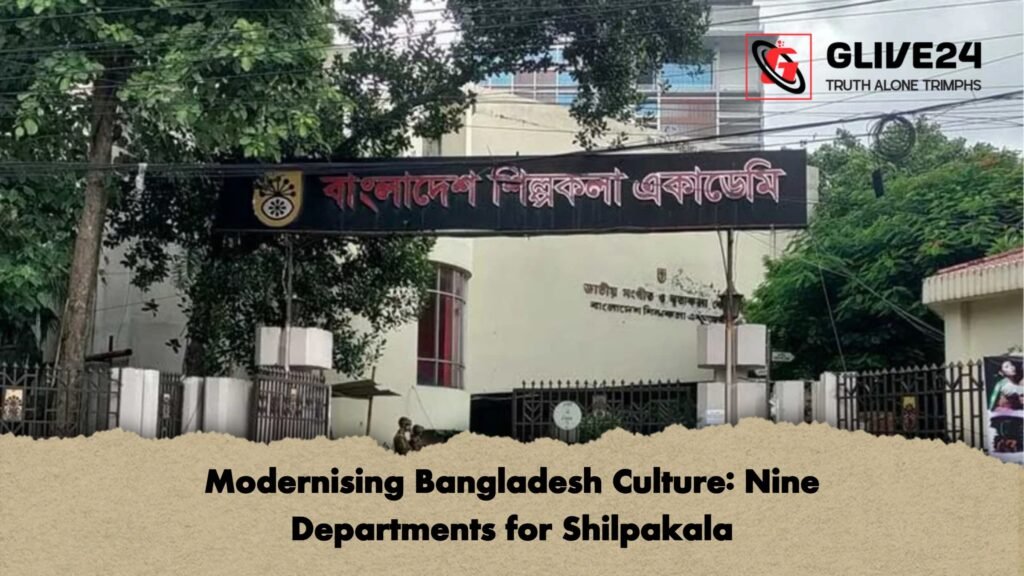
The landscape of Bangladeshi culture is set for a significant transformation following the Advisory Council’s ratification of the “Bangladesh Shilpakala Academy (Revised) Ordinance 2025.” During a high-level meeting chaired by Chief Adviser Professor Muhammad Yunus on 8 January 2026, the government greenlit a comprehensive restructuring plan that expands the Academy’s divisional footprint and democratises its leadership.
From Six to Nine: A Departmental Expansion
The most visible change is the expansion of the Academy’s core structure from six to nine functional departments. This move prioritises previously neglected sectors, specifically elevating Film and Photography to full departmental status. This institutional recognition is intended to bolster research, archiving, and professional development within these vital creative industries.
Furthermore, the Academy is embracing the digital age by integrating New Media and Cultural Branding into its official remit. This strategic update acknowledges that national heritage must be paired with modern marketing and technological innovation to resonate with global audiences.
A More Inclusive Executive Council
The 2025 Ordinance also delivers a radical overhaul of the Academy’s decision-making body. Moving away from a restrictive governance model, the new council will be far more representative of the nation’s diverse artistic and social fabric.
Table: Comparison of Governance Structures (Old vs. New)
| Feature | Previous Ordinance | Revised 2025 Ordinance |
| Total Departments | 6 Departments | 9 Departments |
| Specialised Reps | 3 Representatives | 8 Representatives (from distinct branches) |
| Geographic Balance | No specific restrictions | Max 1 rep per administrative division |
| Ethnic Representation | Not mandated | Minimum 1 rep from ethnic minorities |
| Media Inclusion | Minimal involvement | 1 National Daily Newspaper Editor included |
| New Media Focus | Excluded | Dedicated department for New Media |
Promoting Geographic and Social Equity
To prevent the centralisation of cultural influence, the new regulations impose strict geographical quotas. No administrative division may hold more than one seat on the council, ensuring that cultural policy is shaped by voices from across the entire country, rather than just the capital.
In a progressive step toward social inclusivity, the ordinance mandates the inclusion of a cultural figure from the country’s ethnic minority communities, alongside an editor from a national daily. This multifaceted board is expected to bring greater transparency and a broader perspective to the Academy’s mission of preserving and promoting the nation’s heritage.
By formalising these changes, the Academy transitions from a traditional administrative body into a forward-looking institution capable of managing the complexities of 21st-century cultural branding and artistic production.