
Khabor Wala Desk
Published: 19th January 2026, 5:45 AM
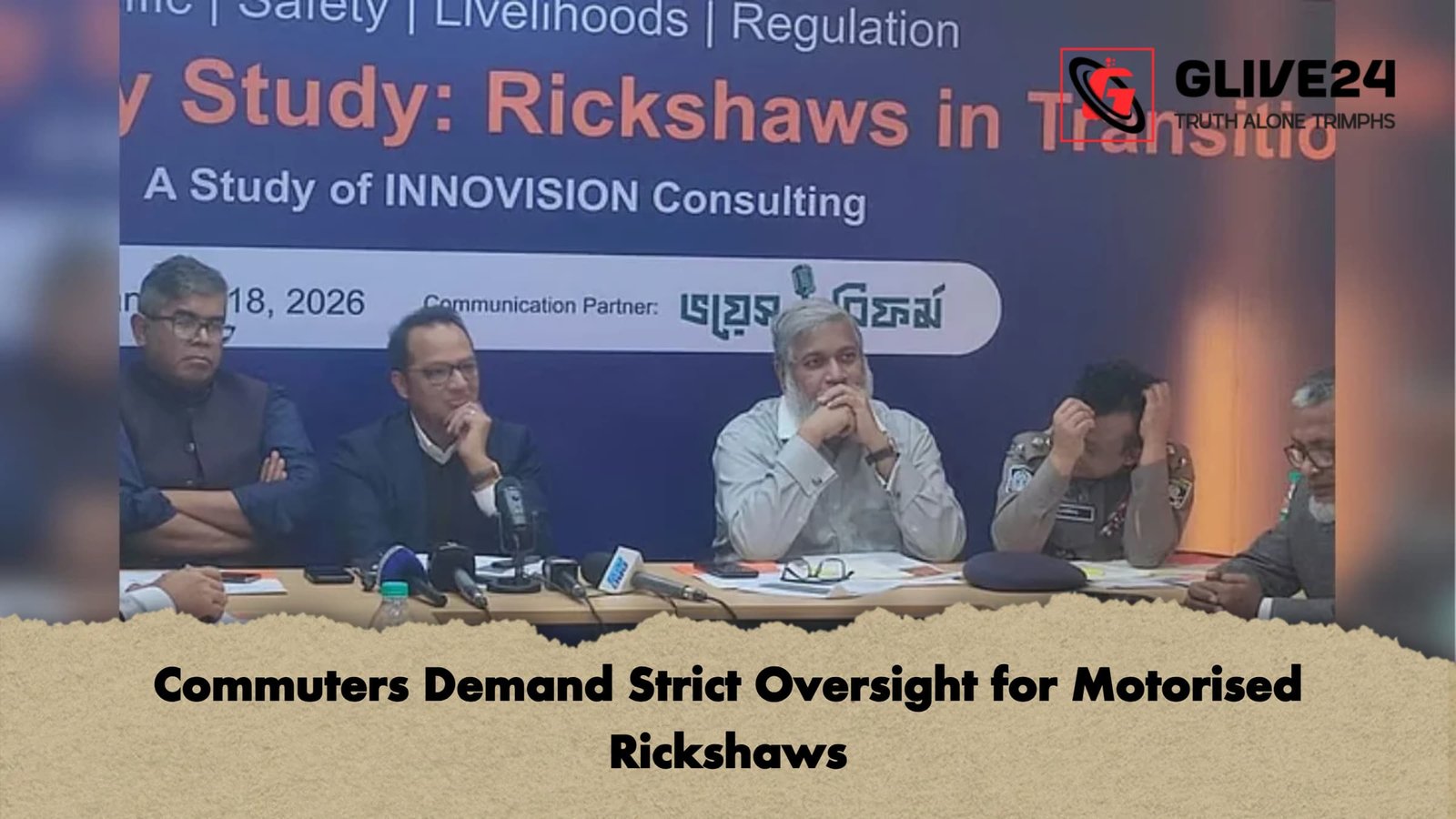
A comprehensive urban mobility study has revealed that a significant majority of Dhaka’s residents are calling for the “iron-fisted” regulation of battery-powered rickshaws. The research, titled “Urban Mobility Study: Rickshaw in Transition”, highlights a growing rift between the convenience of these fast-moving vehicles and the escalating safety risks they pose to the capital’s streets.
Table of Contents
According to the findings presented by the consultancy firm Innovision, 56.6% of passengers believe that the government must strictly control the movement of battery-operated rickshaws. While 21.9% advocate for a total prohibition of the vehicles, a third of the respondents (33.9%) suggest a compromise: allowing them to operate exclusively within residential “gallis” (alleys) while barring them from main roads.
The popularity of these vehicles is undeniable; 82% of commuters prefer them over traditional pedal rickshaws, citing speed, lower fares, and high availability. However, this efficiency is overshadowed by a lack of skill and safety. The study found that 75% of battery-rickshaw drivers are novices with no prior experience in the trade, contributing to the fact that 30% of passengers now view these vehicles as a significant accident risk.
The sheer volume of these vehicles—estimated to be around 2 million in Dhaka—has placed an immense strain on traffic management. 62% of study participants identified battery-powered rickshaws as the primary cause of the city’s crippling gridlock. A staggering 97.4% of these vehicles operate without any official registration, making them virtually invisible to the legal system.
| Metric | Battery-Powered | Traditional Pedal |
| Registration Rate | 2.6% (97.4% Unregistered) | 14.06% (85.94% Unregistered) |
| Average Driver Debt | ৳79,927 | ৳18,654 |
| Non-Owner Drivers | 79% | 65% |
| Public Blame for Traffic | 62% | 34% |
The surge in these vehicles has been linked to the economic fallout following the 2024 mass uprising. Fahim Mashroor, organiser of Voice for Reform, noted that the political shift led to the closure of many businesses, forcing the unemployed into the rickshaw sector. This has created a “debt trap” for drivers, whose average loan burden is more than four times higher than that of pedal-rickshaw pullers.
During the seminar held in Karwan Bazar, urban planners and transport officials proposed several critical interventions:
Designated Parking: Establishing “marking lines” on roads to prevent rickshaws from congregating at major intersections.
Skill Training: Mandatory training for young, inexperienced drivers to reduce the frequency of collisions.
Public Transport Upgrades: Professor Md. Musleh Uddin Hasan of BUET argued that a superior public bus service is the only sustainable way to reduce reliance on informal three-wheelers.
The consensus remains that the government must integrate these operators into a formal plan rather than allowing the sector to grow unchecked. Without a coordinated effort between city corporations, law enforcement, and lenders, the “transition” of the rickshaw will continue to be a source of urban chaos rather than a solution for mobility.



Comments