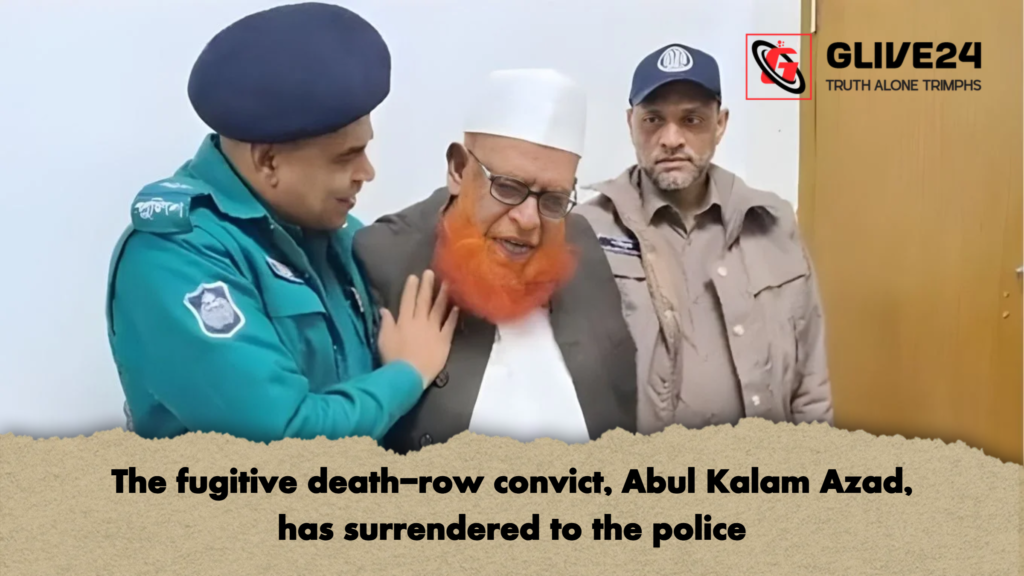
Abul Kalam Azad, a fugitive sentenced to death for crimes against humanity, surrendered to the International Crimes Tribunal (ICT) on Wednesday morning, 21 January. His voluntary appearance marks a significant development in one of Bangladesh’s landmark war crimes cases.
Azad had previously sought a suspension of his sentence from the Ministry of Home Affairs last year under Section 401 of the Code of Criminal Procedure. However, until his surrender, he remained at large. The original verdict against him was handed down on 21 January 2013 by International Crimes Tribunal-2, presided over by Chairman Justice Obaidul Hassan.
During the Bangladesh Liberation War, Azad faced eight charges of crimes against humanity, of which seven were proven. Three of these charges carried the death penalty, while the remaining four warranted imprisonment. Since the death sentence was implemented, the other penalties were not separately enforced. One allegation could not be substantiated and was dismissed.
The confirmed charges revealed Azad’s direct involvement in numerous atrocities, including the murder of 14 individuals, the rape of three women, the abduction of nine persons, unlawful detention of ten others, arson attacks on five houses, and looting of belongings from 15 homes. His actions during the 1971 war left a lasting mark on the affected communities, highlighting the severity of the crimes committed.
According to law enforcement sources, Azad fled the country prior to the issuance of his arrest warrant, reportedly travelling first to India and then to Pakistan. At the time of the 2013 verdict, his absence meant the tribunal could not summon him for the hearing.
The judicial proceedings of the case formally concluded on 26 December 2012, after both prosecution and defence presented their arguments. The tribunal then reserved the verdict, which ultimately became the first conclusive sentence in a war crimes case in Bangladesh’s history.
Summary of Proven Charges Against Abul Kalam Azad (1971 War):
| Type of Crime | Number of Incidents | Outcome |
|---|---|---|
| Murder | 14 | Death penalty |
| Rape | 3 | Death penalty |
| Abduction | 9 | Death penalty |
| Unlawful detention | 10 | Death penalty |
| Arson attacks | 5 | Death penalty |
| Looting of property | 15 | Death penalty |
Azad’s surrender allows the tribunal to execute the sentence formally and serves as a reminder of Bangladesh’s ongoing pursuit of justice for the atrocities committed during its Liberation War.