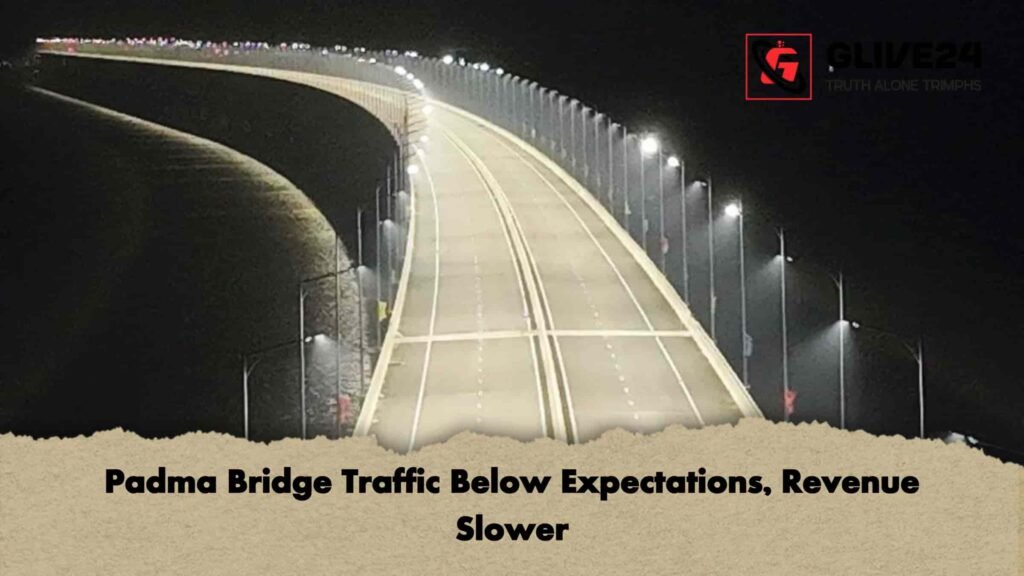
Nearly three and a half years after its inauguration, the Padma Bridge is still not generating the vehicle traffic or toll revenue originally anticipated by the government. According to official sources, the bridge has collected approximately BDT 3,000 crore in tolls since opening. While this represents a substantial cash inflow, it falls short of initial projections for recovering the bridge’s construction cost within the expected timeframe.
When the bridge opened in 2022, planners estimated an average daily traffic of 23,954 vehicles. Forecasts projected growth to 34,725 vehicles by 2029 and 66,829 by 2050. In reality, the current daily average is around 22,000 vehicles, of which nearly one-third are motorcycles and private cars. Heavy vehicles such as buses, trucks, and commercial carriers—which contribute most significantly to toll revenue—remain comparatively low in number.
The following table compares projected and actual figures for traffic and toll collection:
| Year | Projected Daily Vehicles | Actual Daily Vehicles | Projected Toll Revenue (BDT crore) | Actual Toll Revenue (BDT crore) |
|---|---|---|---|---|
| 2022 | 23,954 | 22,000 | 1,323 | ~1,000 |
| 2029 | 34,725 | – | 1,804 | – |
| 2050 | 66,829 | – | 3,379 | – |
The bridge is managed by the Bangladesh Bridge Authority (BBA), which oversees several key infrastructure projects including the Joynama Bridge, Muktarpur Bridge, Karnaphuli Tunnel, and the Dhaka Elevated Expressway. While toll revenue from Joynama Bridge has met expectations, Karnaphuli Tunnel and Muktarpur Bridge have yet to cover their operational costs.
Most government investment in Padma Bridge was debt-financed. Under a 35-year repayment agreement, the BBA has already repaid BDT 2,205 crore. Additional expenses include BDT 414 crore for toll collection and maintenance contracts and BDT 384 crore in VAT contributions, bringing total expenditures to approximately BDT 2,933 crore—closely matching the revenue collected to date.
BBA advisor Muhammad Fauzul Kabir Khan noted that industrial and commercial activity in the southern region has been limited, contributing to slower-than-expected traffic growth. He emphasised, however, that the bridge has facilitated public travel and increased the value of surrounding land.
Mr Khan added that current operational costs remain high due to outsourced toll collection. Once these contracts expire, BBA plans to manage toll collection and maintenance directly, which could reduce costs and improve net revenue.