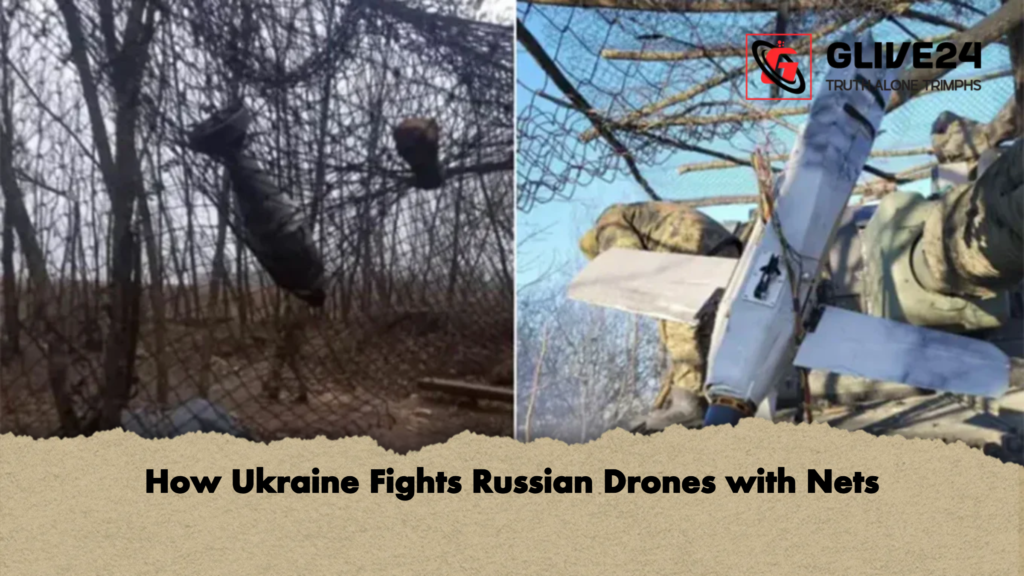
In a remarkable demonstration of ingenuity, Ukrainian forces and civilians are now using discarded or surplus fishing nets and various other protective nets to shield themselves from Russian drone attacks. Farmers, fishermen, and volunteer organisations across Europe are supplying these nets to Ukraine, a strategy reported by the American news network CNN.
Russian drone strikes have primarily targeted Ukrainian supply routes and military positions, aiming to isolate frontline units and disrupt logistical operations. However, civilian areas are far from safe. Hospitals, marketplaces, and other public infrastructure regularly face drone threats. Among the regions most vulnerable to such attacks is the southern city of Kherson. The roadways connecting Kherson to the outside world, dubbed the “lifeline roads” by Ukrainian authorities, are of critical importance, and every effort is being made to shield them from Russian bombardment.
Oleksandr Tolokonnikov, Deputy Head of the Kherson Military Administration, told CNN in November, “On average, Russia launches around 2,500 UAVs (drones) in our region every week. This year alone, 120 people have been killed in these attacks in Kherson.”
According to the United Nations’ human rights monitoring mission in Ukraine, at least 2,514 civilians were killed and 12,142 injured in conflict-related violence during 2025. Many of the victims were far removed from the frontline, highlighting the indiscriminate nature of the attacks.
Over the past year, the use of nets has increased steadily in Kherson. Protective nets are now deployed over hospital courtyards, power generators, and market areas, while roadways are fitted with netted canopies supported by poles to intercept incoming drones.
Tolokonnikov explained, “We are systematically securing roads. A large number of key roads are now covered by protective nets. Various types of nets have been tested for durability, ensuring they can withstand repeated drone strikes. Thanks to these measures and bold decisions, our forces are now able to destroy 80–95% of drones launched by Russia.”
Volunteer organisations across Europe are transporting these nets to Ukraine by truck. One of the largest groups, Life Guardians, led by Dutch national Klaas Pot, has already delivered more than 8,000 tonnes of nets—accounting for nearly half of all nets received so far.
The table below summarises the impact of drone attacks in Kherson and the effectiveness of net-based protection:
| Metric | Data |
|---|---|
| Average weekly drone attacks in Kherson | 2,500 UAVs |
| Civilian fatalities in Kherson (2025) | 120 |
| Ukraine civilian casualties nationwide (2025) | 2,514 killed, 12,142 injured |
| Drone destruction rate via nets | 80–95% |
| Nets delivered by European volunteers | 8,000 tonnes (≈50% of total received) |
This innovative use of fishing nets demonstrates a creative and highly effective approach to civilian and military defence in modern warfare. It highlights how resourcefulness and international support are helping Ukraine protect its population and infrastructure under relentless drone bombardment.