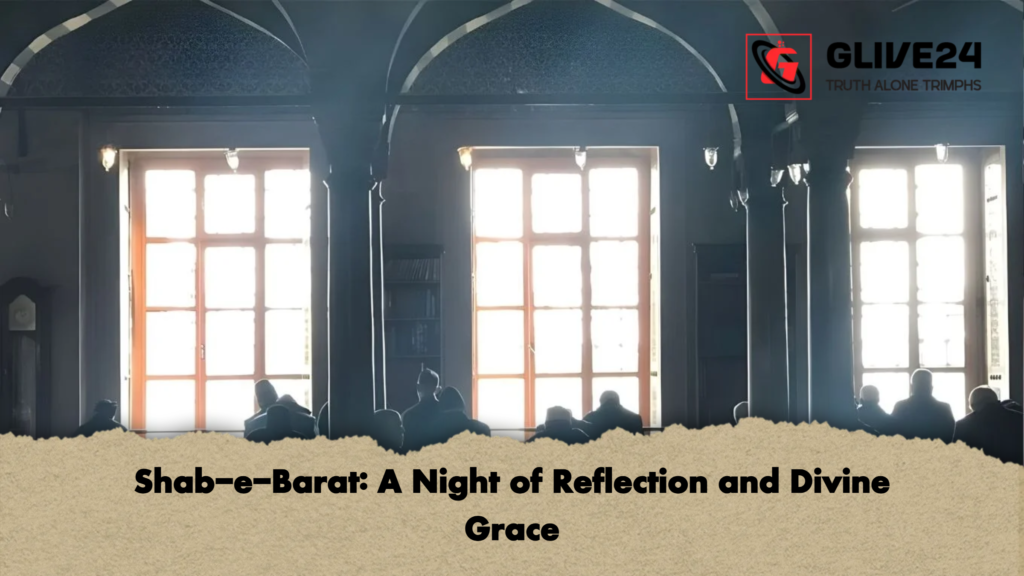
In the Islamic calendar, as the month of Sha‘ban draws to a close, a night of profound spiritual significance arrives. This night is not merely defined by the hours between sunset and dawn—it resonates deeply with the human heart, awakens conscience, and prompts the soul to introspection. This sacred night is known as Shab-e-Barat, a unique opportunity for mercy, forgiveness, and spiritual renewal.
The importance of Shab-e-Barat is explicitly mentioned in the Qur’an. It is a night blessed with divine favour, when the course of human destiny, sustenance, and time is decreed by Allah’s knowledge. According to Surah Ad-Dukhan (44:3), special divine blessings descend upon creation during this night.
The term Shab-e-Barat derives from barā’ah, meaning release, absolution, or new beginnings. It encourages believers to acknowledge past mistakes, seek forgiveness, and embark on the path of self-improvement. Islamic scholars emphasise that this night humbles human pride, reminding that while human control is limited, Allah’s mercy is boundless.
The teachings of Prophet Muhammad (peace be upon him) underscore that approaching Shab-e-Barat with a heart filled with arrogance or resentment prevents one from experiencing Allah’s compassion. Thus, this night is not merely about ritual worship—it is a time for reconciliation, spiritual cleansing, and silent revival of the inner self.
Renowned scholars offer further insights: Imam Al-Ghazali regards Shab-e-Barat as a mirror for self-accountability, while Ibn Taymiyyah notes that Allah’s grace touches only those who strive to purify their hearts. For the Sahabah and Tābi‘īn, Shab-e-Barat was never a night of celebration; rather, it was marked by prolonged prostrations, voluntary prayers, Qur’anic recitation, and introspection.
Some key practices observed on Shab-e-Barat are outlined below:
| Activity | Purpose |
|---|---|
| Voluntary prayers and prostrations (Sujood) | Acknowledge inner shortcomings and submit to Allah |
| Qur’an recitation | Enhance spiritual knowledge and focus the mind |
| Istighfar and supplication | Seek forgiveness and guidance for the future |
| Self-restraint and moderation | Avoid extravagance, ostentation, and waste |
| Reconciliation | Restore relationships with family and society |
Shab-e-Barat offers believers a rare pause to confront their inner selves. It encourages courage—admitting mistakes, seeking forgiveness, and embracing a fresh start. In Allah’s presence, the most treasured offerings are a broken heart, a humble soul, and sincere repentance.
Ultimately, Shab-e-Barat is more than a night; it is the silent call of the heart, the awakening of conscience, and a moment to reconnect with one’s inner humanity. In the midst of life’s busyness, it provides a rare compass guiding the soul towards depth, reflection, and renewal.