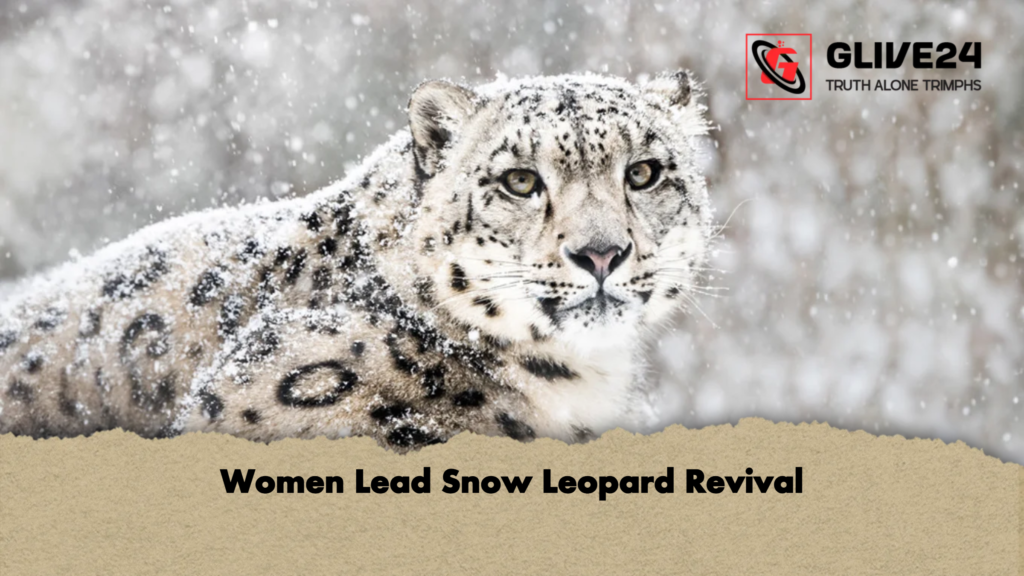
In the stark, high-altitude cold desert of Spiti Valley in Himachal Pradesh, the snow leopard was once regarded as a ruthless predator and an enemy of pastoral livelihoods. For generations, sightings of the elusive big cat—locally known as “Shen”—were met with fear and resentment, particularly when livestock fell prey to its stealthy attacks. Today, however, a remarkable transformation is under way. What was once hostility has evolved into coexistence, driven largely by a determined group of local women known as the “Shenmo”—literally, the women who protect the snow leopard.
Perched at elevations ranging from 12,000 to over 15,000 feet above sea level, Spiti is one of the most inhospitable inhabited regions in India. Winters are severe, temperatures frequently plummet below freezing, and oxygen levels are thin. Yet it is in these exacting conditions that the Shenmo women carry out their conservation work. Rising before dawn, they complete household chores before trekking across rugged mountain terrain to install and monitor camera traps at heights exceeding 14,000 feet.
Despite limited formal education—many studied only up to primary school—the women have undergone specialised training in wildlife monitoring. They now operate camera equipment, collect ecological data, and analyse digital images using computers. Their work forms a crucial component of scientific surveys tracking the population and movement patterns of snow leopards in the region.
Their efforts have yielded measurable results. According to recent assessments, the snow leopard population in Himachal Pradesh has risen significantly over the past three years.
| Year | Estimated Snow Leopard Population | Numerical Increase | Approximate Percentage Growth |
|---|---|---|---|
| 2021 | 51 | — | — |
| 2024 | 83 | +32 | প্রায় 63% |
The increase of 32 individuals represents an estimated growth of approximately 63 per cent—an encouraging sign for a species classified as vulnerable on the global conservation scale.
Equally significant has been the reduction in human-wildlife conflict. Previously, when snow leopards attacked goats or yaks, villagers often responded with anger, sometimes retaliating against the predator. The Shenmo women now play a mediating role within their communities. They assist livestock owners in enrolling in government-backed insurance schemes that compensate for losses caused by wildlife. Moreover, they promote the construction of reinforced predator-proof enclosures, reducing the likelihood of nocturnal attacks.
Conservation experts consistently emphasise that wildlife protection cannot succeed without the active involvement of local communities. The Shenmo initiative exemplifies this principle. What began as a modest income-generating opportunity has evolved into a mission rooted in environmental stewardship and pride. Once described as the “ghost of the mountains”, the snow leopard is gradually being reimagined not as an adversary, but as a symbol of ecological balance and regional identity.
In Spiti Valley, these women are no longer merely assistants in conservation projects. They have become skilled custodians of one of the Himalayas’ most iconic and endangered species—demonstrating that sustainable conservation is strongest when it is led from within the community itself.