
Khabor Wala Desk
Published: 7th February 2026, 4:45 PM
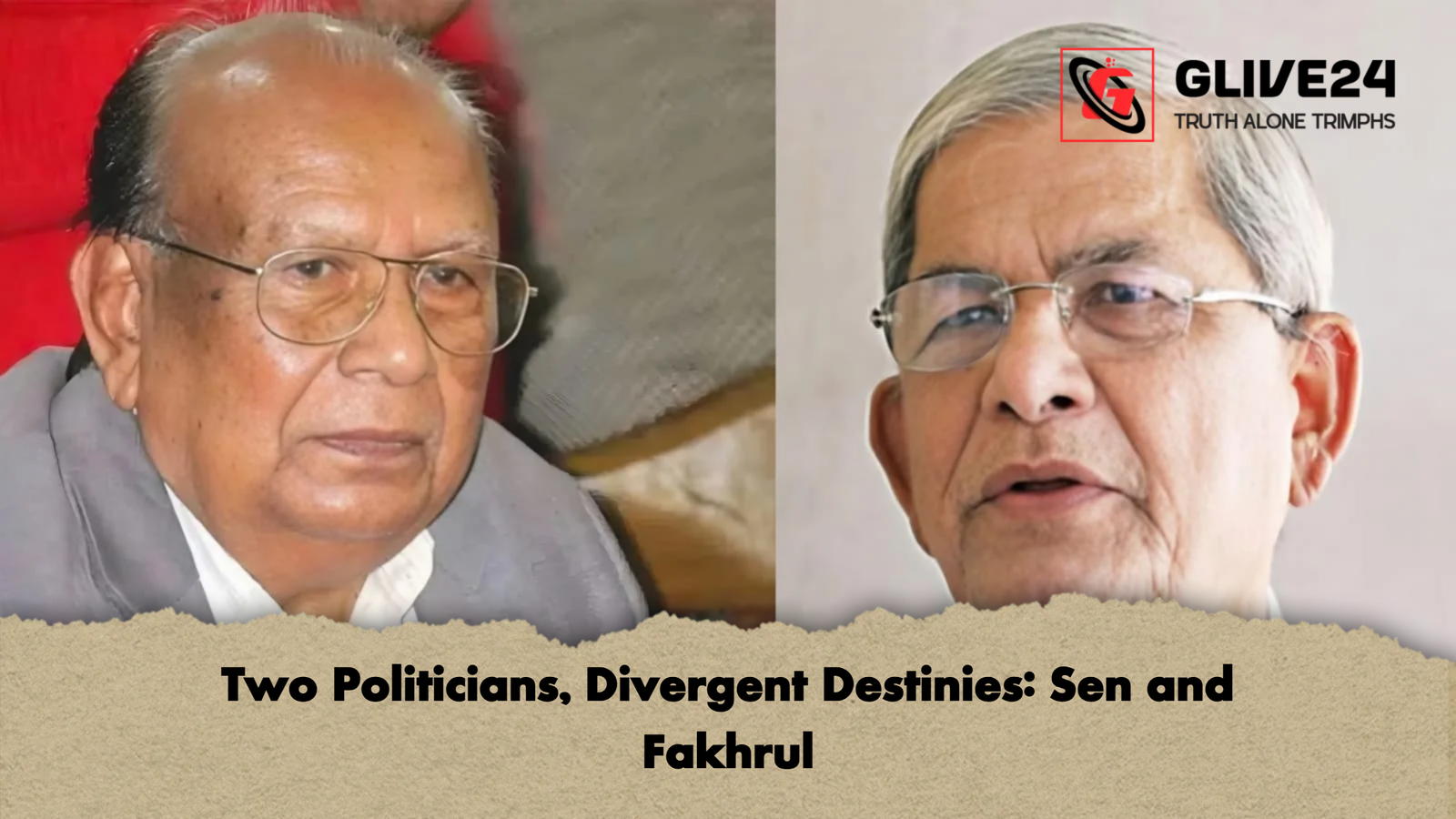
Early this morning, Ramesh Chandra Sen passed away quietly in prison, deprived of medical care. A man once entrusted to the state—a former minister, educator, and political figure—died without treatment. Under police supervision, his lifeless body was removed from the jail. This is not merely the death of one man; it is a stark testament to the state of politics and governance in the country.
The lives of Ramesh Sen and Mirza Fakhrul Islam Alamgir present a striking interplay of convergence and contrast. Both began as educators. Both entered politics through grassroots movements. Both held ministerial office. Both occupied seats in the highest decision-making forums of their respective parties. Yet, the trajectory of their lives could hardly be more different.
Ramesh Sen remained a steadfast member of the ruling Awami League throughout his life, committed to his constituency and party. In contrast, Mirza Fakhrul transitioned from student union activism and the National Awami Party to emerge as a senior leader of the Bangladesh Nationalist Party (BNP). A deeper divergence lies in their personal histories: Fakhrul’s family was associated with the suppression of communities that included Sen’s own.
Following 5 August, Sen was at his Thakurgaon home when a police team, under the pretext of providing “security,” took him away for half an hour. The next day, he was shown as arrested in a case lodged by an anonymous student. He never returned home alive.
As recognition for his political service, Sen had been entrusted with responsibilities in the party’s central decision-making forum and had served as a minister. Those who have visited Thakurgaon over the past fifteen years can attest to the initiatives he implemented and the legacy he left behind—one that cannot be erased. Sen, childless, lived his life with his wife Anjali Sen, yet always in the company of the public he served. Even in death, his wife could not be at his side, but the people—and his admirers—will not forget him.
By contrast, Mirza Fakhrul remains alive, yet his political relevance seems to be waning. Once poised to occupy the highest positions in the BNP, he is now increasingly marginalised within his own party and, in the public eye, a figure of derision. Despite the support of his wife, two daughters, and sons-in-law, Fakhrul struggles to preserve the political stature he once commanded.
In essence, Sen departed in solitude but with honour and a lasting legacy, whereas Fakhrul’s political twilight appears to be unfolding gradually before the nation’s eyes. The country watches, awaiting the conclusion of his political chapter.
| Aspect | Ramesh Chandra Sen | Mirza Fakhrul Islam Alamgir |
|---|---|---|
| Profession | Teacher | Teacher |
| Political Entry | Grassroots / Awami League | Student union / NAP / BNP |
| Ministerial Role | Yes | Yes |
| Party Leadership | Central decision-making forum | Central decision-making forum |
| Lifelong Party Affiliation | Awami League | BNP |
| Relation to 1971 Events | Victim community | Family associated with suppressive forces |
| Current Status | Deceased | Alive, politically marginalised |
| Family | Wife Anjali Sen | Wife, two daughters, sons-in-law |
| Legacy | Respected, enduring | Waning, uncertain |
Ramesh Sen’s life closes as a testament to service and honour; Fakhrul’s story, in contrast, remains an unfinished narrative, watched keenly by the nation.



Comments