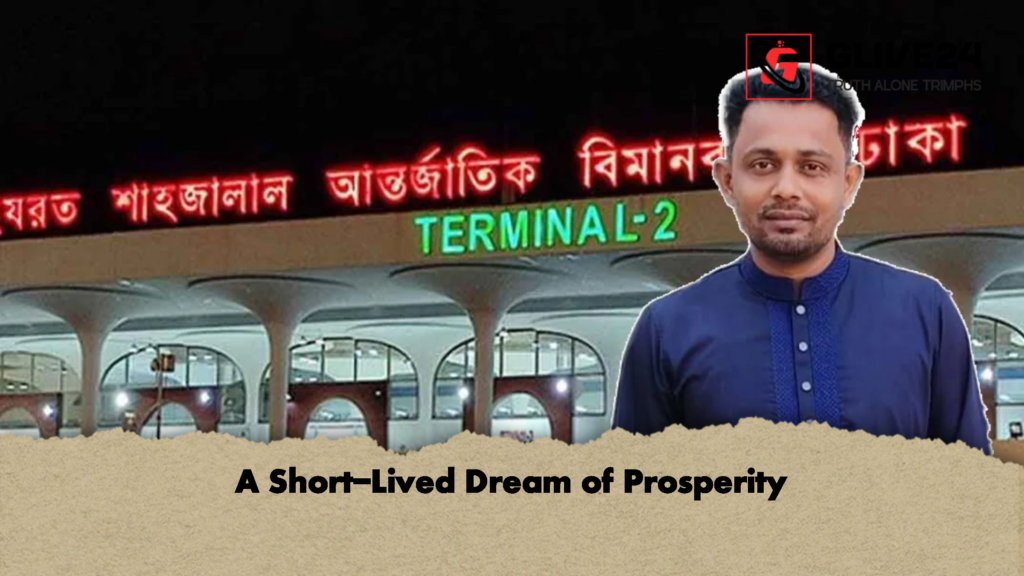
The tragic narrative of Nur Islam Sagar reflects the often-perilous reality faced by thousands of migrant workers seeking a more stable life abroad. Sagar, the eldest son of Dr Mohammad Shahjahan from South Shaldhar village, departed for Kuwait in August 2025. Like many before him, he was driven by the noble aspiration of securing financial fortitude for his family. However, his dreams were thwarted almost immediately upon his arrival in the Gulf nation.
Due to critical discrepancies in his documentation—an all-too-common pitfall in the migration process—Sagar found himself in an irregular legal status from the very outset of his journey. For several months, he lived under the constant, looming shadow of potential deportation. This precarious existence reportedly took a severe toll on his mental well-being, leading to chronic stress and anxiety. His journey came to an abrupt conclusion on 2 April 2026, when he was detained by Kuwaiti law enforcement. Following fifteen days in a detention facility, he was processed for mandatory repatriation to Bangladesh.
Fatal Collapse at the Terminal
Sagar arrived at Dhaka’s international terminal on a repatriation flight on the afternoon of Saturday, 18 April. Eyewitnesses and airport officials reported that shortly after disembarking and entering the terminal building, Sagar collapsed without warning. Initial assessments by the medical team on duty suggested a massive myocardial infarction, commonly known as a heart attack.
Airport authorities acted with commendable speed, transporting him to the nearby Kurmitola General Hospital. Despite the exhaustive efforts of the emergency medical personnel, Sagar was tragically pronounced dead shortly after arrival. The devastating news was subsequently relayed to his family in Feni via the local police apparatus.
The Human Cost of Irregular Migration
This tragedy underscores the immense psychological and physiological pressure exerted on migrant workers who fail to secure legal status. Sagar’s brother, Iqbal Hossain, provided a heartbreaking insight into the victim’s state of mind, noting that the perceived shame and significant financial loss associated with an unsuccessful migration attempt weighed heavily upon him.
“He had been deeply depressed since arriving in Kuwait because he simply could not secure the proper papers. Coming home so soon, having failed in his mission to support the family, was a reality he could not reconcile within himself,” his brother remarked.
| Key Fact | Details |
| Full Name | Nur Islam Sagar (Aged 38) |
| Hometown | South Shaldhar, Parshuram, Feni |
| Migration Date | August 2025 |
| Destination | Kuwait |
| Detention Period | 15 Days (Commencing 2 April 2026) |
| Date of Repatriation | Saturday, 18 April 2026 |
| Primary Cause of Death | Suspected Cardiac Arrest |
Final Rites and Local Reaction
The mortal remains of Nur Islam Sagar reached his ancestral home in South Shaldhar on Sunday afternoon, 19 April. The arrival of the ambulance was met with harrowing scenes of mourning as family members, friends, and neighbours gathered to pay their final respects. The atmosphere in the village was described by local residents as “heavy with the weight of unfulfilled dreams.”
The funeral prayer (Janaza) was conducted at the Shaldhar Bazar Central Eidgah at approximately 5:00 pm. Following the ceremony, he was laid to rest in his family graveyard. Officer-in-Charge (OC) Mohammad Ashraful Islam of the Parshuram Model Police Station confirmed that the police had facilitated the formal communication of the death to the family and ensured the respectful handover of the body for the final rites.
This incident serves as a grim reminder of the vulnerabilities inherent in the global migrant labour system. While the pursuit of overseas employment remains a cornerstone of the national economy, the lack of adequate legal protection and mental health support for those in irregular situations continues to be a significant challenge. For the family of Nur Islam Sagar, the pursuit of a brighter future has culminated in a devastating loss, leaving a void that no words can truly fill.