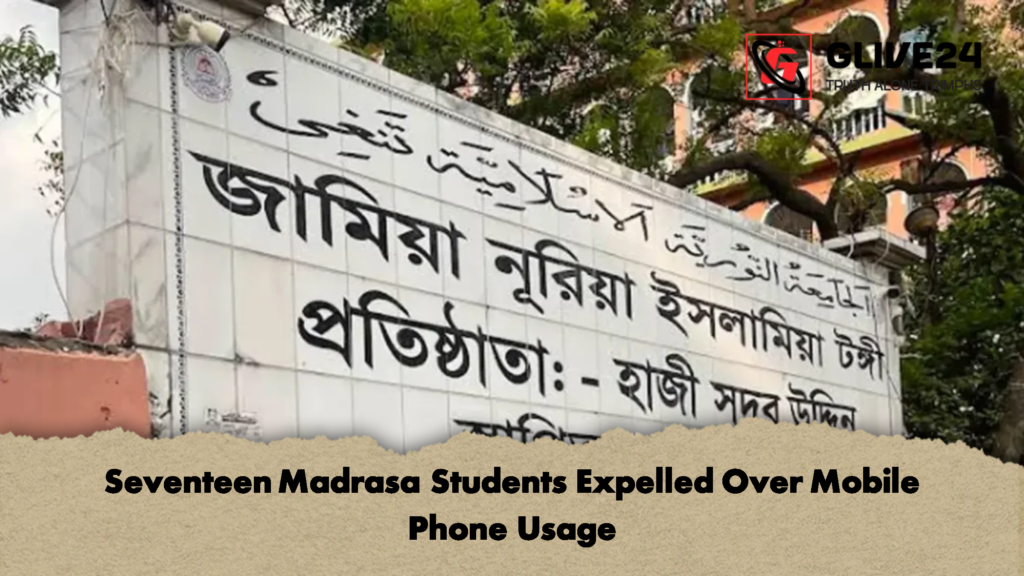
A significant disciplinary crisis has unfolded at the Jamia Nuria Islamia Madrasa in Tongi, Gazipur, resulting in the mass expulsion of an entire academic cohort. On Sunday, 19 April 2026, the madrasa administration confirmed that seventeen students had been formally dismissed from the institution. The expulsions followed allegations of prohibited mobile phone usage and a subsequent act of collective insubordination, where the students reportedly locked their classroom as a gesture of defiance against the teaching staff.
The Origins of the Dispute
The conflict originated from a long-standing policy within Qawmi madrasas across Bangladesh, which strictly prohibits students from possessing or using mobile phones. According to administrative sources, seventeen students from the Dawra-e-Hadith class—the final and most prestigious stage of the madrasa curriculum—had been surreptitiously using mobile devices.
Upon discovering this breach of protocol, the faculty expressed grave concerns regarding the impact of digital distractions on the spiritual and academic focus required for their studies. In response to the escalating tension, the students allegedly escalated the situation on Thursday, 16 April. Prior to the commencement of morning lessons, the group reportedly locked the classroom door and vacated the premises, an act categorised by the administration as “extreme insolence” and a total breakdown of the traditional student-teacher relationship.
Administrative Response and Official Statements
Maulana Zakir Hossain, the Principal of Jamia Nuria Islamia, confirmed the expulsions during a briefing on Sunday evening. He emphasised that the decision was not taken lightly but was necessary to preserve the sanctity of the institution.
“These students were not merely using mobile phones; they exhibited signs of severe addiction to these devices,” the Principal remarked. “Furthermore, the act of locking the classroom door demonstrated a level of arrogance and disrespect that we cannot tolerate. In a unanimous decision reached by our council of senior scholars, we have determined that their presence is no longer compatible with the values of this madrasa.”
Maulana Shafi Qasemi Nadvi, an assistant teacher at the institution, described the event as a “historical moment” for the Qawmi education system in Bangladesh. Writing on social media, he noted that the total expulsion of a graduating class over disciplinary and behavioural issues serves as a firm deterrent for future students.
Case Overview and Student Demographics
The following table outlines the specifics of the disciplinary action taken by the madrasa council:
| Category | Details |
| Institution Name | Jamia Nuria Islamia Madrasa, Tongi |
| Academic Level | Dawra-e-Hadith (Postgraduate Equivalent) |
| Total Students Expelled | 17 |
| Primary Offence | Prohibited mobile phone possession |
| Aggravating Factor | Insubordination (Locking the classroom) |
| Decision Status | Unanimous Council Approval |
External Reactions and Human Rights Concerns
The mass expulsion has not passed without external scrutiny. The Bangladesh Green Party, a prominent socio-political organisation, issued a statement on Sunday expressing concern over the severity of the punishment. While the group acknowledged that students must remain respectful and adhere to institutional regulations, they argued that “mass expulsion” rarely serves as an effective long-term solution to behavioural problems.
The organisation advocated for a more rehabilitative approach, suggesting that the administration should have opted for temporary suspensions followed by a structured dialogue. Their statement read:
“Educational institutions ought to be governed by a balance of discipline and mutual respect. We urge the madrasa authorities to reconsider this decision from a humanitarian perspective, providing these young scholars with an opportunity to express regret and return to their studies so that their academic futures are not irrevocably tarnished.”
Socio-Academic Implications
This incident has reignited a national debate regarding the place of modern technology within traditional religious education systems. While many traditionalists support the madrasa’s firm stance, arguing that spiritual devotion requires the absence of digital interference, critics suggest that total bans often lead to clandestine usage and eventual conflict.
As it stands, the seventeen students face a precarious future, having been dismissed from the pinnacle of their educational journey just weeks away from completion. The madrasa administration, however, remains resolute, maintaining that the preservation of discipline and the “Ustad-Shagird” (teacher-student) bond is of greater importance than the graduation of a single cohort.