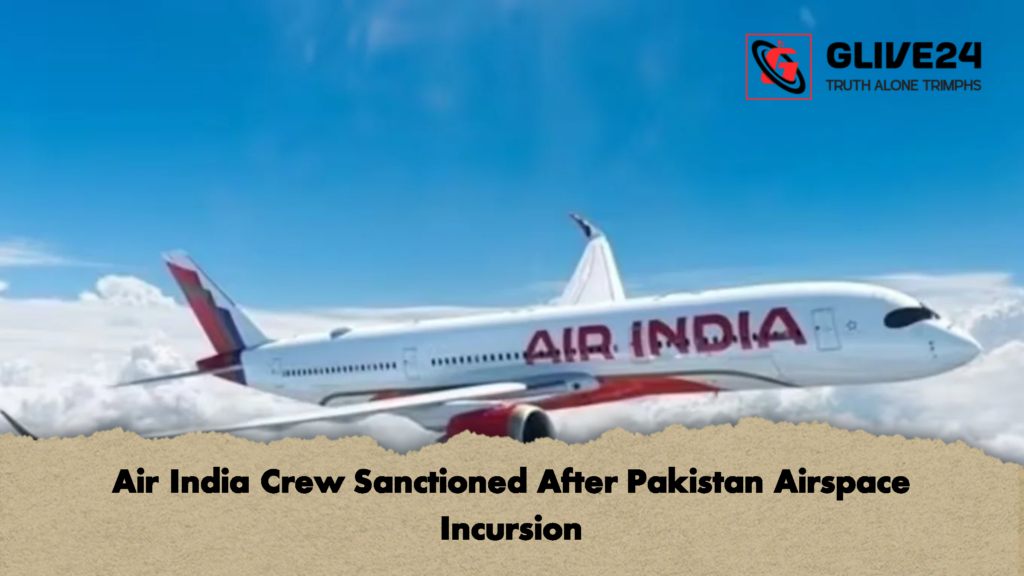
An Air India pilot has been removed from operational duties after a domestic flight briefly entered Pakistani airspace during a landing attempt at Amritsar, prompting regulatory scrutiny and disciplinary action against both flight crew members and air traffic control personnel.
The incident involved Air India flight AI479, an Airbus A321 operating between New Delhi and Amritsar on the night of 22 June. According to India’s Directorate General of Civil Aviation (DGCA), the aircraft inadvertently crossed the international airspace boundary whilst preparing to land at Amritsar Airport, following a series of operational disruptions that had affected airport traffic throughout the day.
The episode began several hours earlier when an IndiGo aircraft arriving in Amritsar suffered a bird strike at approximately 4:29 pm. Bird strikes, which occur when birds collide with aircraft, are treated as serious safety events and often require detailed inspections of both the aircraft and airport operating areas. The incident led to runway inspections and precautionary procedures, resulting in delays for a number of incoming flights.
As airport operations became congested, several aircraft were instructed to remain in holding patterns whilst awaiting clearance to land. Air India flight AI479 was reportedly the fourth aircraft in the queue.
The DGCA stated that at around 10:08 pm, the aircraft was conducting a radar-guided approach when circumstances required a go-around manoeuvre. During this phase of flight, the aircraft briefly crossed into Pakistani airspace. A go-around is a standard safety procedure used when pilots determine that landing conditions are unsuitable or when instructed by air traffic control to abandon an approach and prepare for another attempt.
Air India later acknowledged the incident, describing the airspace violation as unintentional. The airline said the occurrence took place during the execution of a go-around at Amritsar Airport and confirmed that the matter had been formally reported to the relevant authorities. An internal investigation has also been launched to establish the precise sequence of events.
According to reports in Indian media, the aircraft travelled approximately three miles inside Pakistani airspace before corrective action was taken. The situation was reportedly managed through coordination between Indian and Pakistani air traffic control authorities, allowing the aircraft to return safely without any operational complications.
No threat to passenger safety was reported during the incident. Aviation experts note that while modern aircraft navigation systems are highly accurate, unexpected operational circumstances, particularly near international borders, can occasionally result in temporary airspace deviations. Such occurrences remain uncommon but are treated seriously because of their potential diplomatic and security implications.
After the unsuccessful landing attempts, the aircraft returned to Delhi and landed safely. Airport sources indicated that fuel considerations became a significant factor after a subsequent approach could not be completed successfully. Once operational conditions improved, the same aircraft later departed again for Amritsar and eventually reached its destination without further difficulty.
The DGCA has since taken disciplinary measures against the flight crew involved. Action has also reportedly been taken against an air traffic controller stationed at Amritsar Airport. Authorities stated that part of the concern related to the failure to report the incident within the required timeframe, a procedural requirement regarded as essential for maintaining aviation safety standards and regulatory oversight.
Investigators are also examining the operational environment at the airport at the time of the event. Officials disclosed that Amritsar’s approach surveillance service was unavailable during the incident. Such systems provide controllers with critical information about aircraft positions and movements, helping to ensure safe and efficient traffic management, particularly during periods of congestion or adverse operating conditions.
The case has attracted considerable attention within India’s aviation sector because it highlights the importance of strict coordination between pilots, air traffic controllers and regulatory authorities. With international borders situated close to several major airports in the region, adherence to established procedures remains vital to preventing airspace violations and ensuring smooth cross-border aviation operations.
As investigations continue, both Air India and the DGCA are expected to examine operational decision-making, communication protocols and compliance with reporting requirements. The findings could lead to additional recommendations aimed at strengthening procedures and reducing the likelihood of similar incidents in the future.
Although the aircraft ultimately completed its journey safely and no passengers were harmed, the incident serves as a reminder of the complexities involved in managing air traffic near sensitive international boundaries and the importance of maintaining the highest standards of aviation safety.