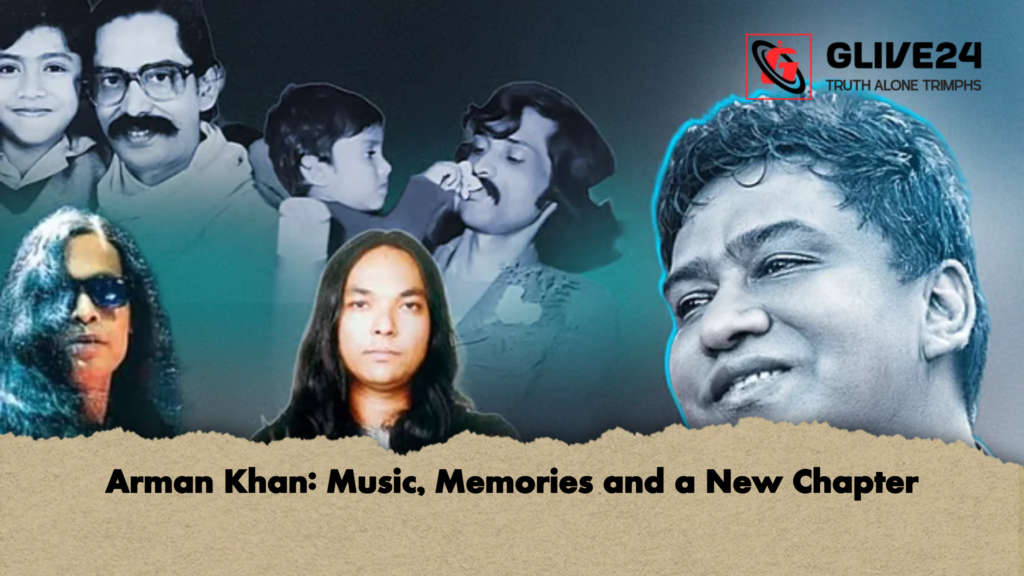
Today marks the birthday of Arman Khan, the celebrated Bangladeshi composer, lyricist, and music director behind some of the nation’s most enduring hits. Yet, in the bustling, glittering arenas of the city, he is rarely seen cutting cakes or announcing new releases. Still, when the name Nantu Ghotok is mentioned, the iconic line “Pola to noy jeno aguner gola!” instantly echoes in the minds of listeners. Though somewhat removed from the public eye, Arman Khan’s melodies remain as fresh and cherished today as they were decades ago.
His compositions shaped an era: Chander Batti’r Kosom Diya sung by Biplab of Prometheus Band, Sheet Noy Grishmo Noy Eseche Boshonto by Hasan of Ark Band, and Lal Bondhu Nil Bondhu were all his arrangements. Long before the word “viral” became commonplace, his music had already become the language of the streets—playing in markets, on ferries, buses, and tea shops alike. Today, as he celebrates his birthday, the question resurfaces: where is this once ever-busy music maestro now?
A Brief Conversation
We reached Arman Khan on WhatsApp to send birthday greetings. He shared that he is in Dhaka for a rare three-day break from his professional commitments. Tomorrow, he will return to his workplace. Despite his distance from the music industry, his connection to the city, its people, and memories of past creative moments remains unbroken.
Golden Era of Music
From the late 1990s to the early 2000s, Bangladesh’s music scene relied heavily on audio albums. This period is often regarded as a golden era for musicians. During these years, Arman Khan became one of the country’s busiest music directors, spending long days in the studio, moving from rehearsal to recording to composition. Between 2002 and 2005, he completed almost 23 albums, collaborating with nearly all popular singers in Bangladesh.
| Year | Albums Completed | Notable Works |
|---|---|---|
| 2002 | 8 | Dokan, Tin Sotti |
| 2003 | 7 | Lal Bondhu Nil Bondhu, TV drama compositions |
| 2004 | 5 | Ghotok, Dost Dushman |
| 2005 | 3 | Single releases, OSTs |
At the same time, the demand for television dramas surged. Arman Khan scored his first daily serial, Jowar Bhata, written by Abdullah Al-Mamun, and went on to compose for over 1,200 dramas, distinguishing himself with his nuanced understanding of when silence or music was required.
Fatigue and Reflection
Despite success, Arman began questioning the fairness in the industry. While performing artists earned well, lyricists and instrumentalists often received only 2,500–3,000 taka per song, with recognition limited by tiny print on album covers. The emergence of CDs and piracy further destabilised the financial structure, prompting him to step back.
A New Chapter
In 2013, Arman Khan began a career in hospitality at Grand Sultan Hotel in Srimangal, Sylhet, initially heading sales and marketing. He has since risen to the position of General Manager, winning the Best General Manager award in 2019. “Music gave people joy; now I strive to create a welcoming, joyful experience for guests,” he says.
Returning on His Own Terms
Arman never completely left music. In 2021, he released Bondhu, overseeing lyrics, composition, arrangement, and vocals. He later produced Asa-Jawa in memory of Ayub Bachchu and Guru Re to honour his uncle, pop legend Azam Khan, creatively blending legacy with his own vision. During the pandemic, he launched the YouTube channel Best and Great, chronicling stories of Bangladesh’s music pioneers from the 70s and 80s.
Family and Private Life
At home, he lives with his wife Amy Khan, son Arham, and daughter Antara Raisa. He spends quiet hours at the piano or visiting his parents’ graves in the hills near his workplace. Though he misses the social interactions of the music world, he harbours no regrets, appreciating how distance has offered new perspectives.
Though Arman Khan may no longer be in the limelight, his music remains an inseparable part of celebrations—from weddings to rural festivities. Time has changed, media has changed, yet the resonance of his melodies endures.