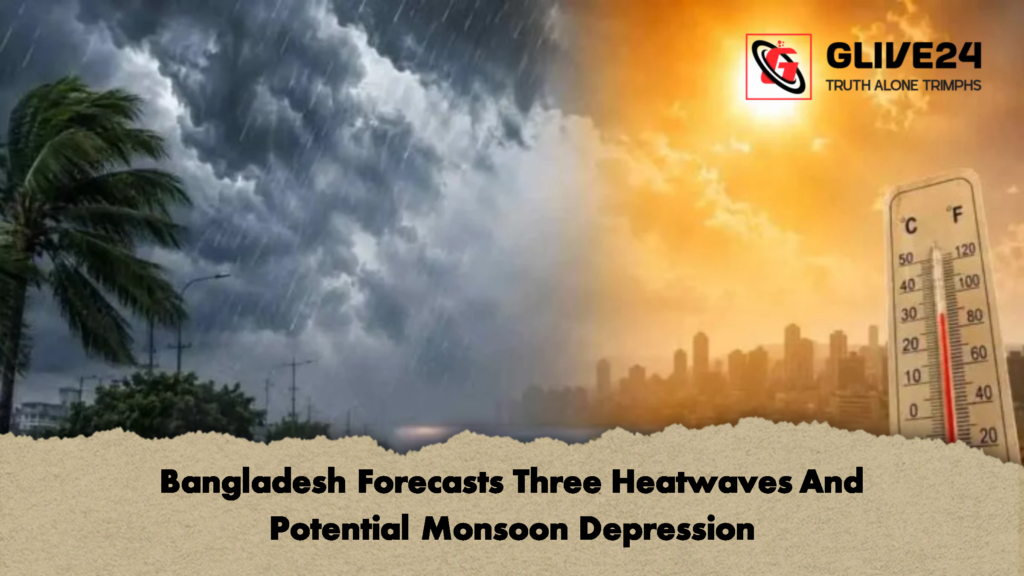
The Bangladesh Meteorological Department (BMD) has released its comprehensive long-term climate outlook for June 2026, forecasting a significant reduction in precipitation alongside multiple upcoming thermal anomalies. Following a notable decline in storm and rainfall activity during the final week of May, a substantial portion of the country has transitioned into an active heatwave condition at the immediate commencement of June. According to official meteorological projections, the nation is expected to experience an additional two to three isolated mild to moderate heatwaves over the course of the month. Concurrently, the state agency indicated that the southwest monsoon is anticipated to advance across the territory during the first fortnight of June, marking the formal onset of the annual rainy season.
Table of Contents
Thermal Projections and Atmospheric Disturbances
The official climate outlook issued by the meteorological authority underscores that the cumulative rainfall for June 2026 is projected to remain below the statistical seasonal averages. Despite this dry trend, atmospheric instability is expected to trigger light to moderate thunderstorms accompanied by lightning across various regions for approximately five to seven days. Both diurnal and nocturnal temperatures throughout the month are forecast to persist above the standard climatological normals established for this period.
Furthermore, the central weather agency has identified the potential formation of seasonal maritime disturbances in the Bay of Bengal. The executive summary details that one or two low-pressure areas are likely to develop over the bay during the month, with at least one of these systems possessing the structural capacity to intensify into a formal monsoon depression.
Comparative Analysis of Preceding Meteorological Data
An analytical review of the compiled data from May 2026 indicates that the overall national precipitation levels remained within standard parameters. However, significant geographical discrepancies were recorded across different administrative territories. The divisions of Chittagong, Khulna, and Barisal experienced a marked deficit in rainfall compared to historical averages, whereas the remaining administrative divisions recorded comparatively higher volumes of precipitation.
Temperature fluctuations during the preceding month were characterized by notable extremes:
-
Highest Maximum Temperature: 38.0°C, recorded in the western district of Chuadanga on 18 May.
-
Lowest Minimum Temperature: 18.4°C, registered in the northeastern city of Sylhet on 3 May.
Regional Weather Forecasts and Immediate Outlook
On Monday, a sweeping mild to moderate heatwave actively affected approximately 40 administrative districts across the country, including the capital city of Dhaka. However, the subsequent short-term weather bulletin issued for Tuesday introduced a localized probability of precipitation across all eight administrative divisions. The regional outlook indicates that light to moderate rain or thundershowers, accompanied by temporary gusty or squally winds, are likely to occur at a few places over the Chittagong and Sylhet divisions, and at isolated places over the Dhaka, Mymensingh, Khulna, and Barisal divisions. Additionally, moderately heavy rainfall has been forecasted for specific locales within the Chittagong and Sylhet regions.
For the remaining geographical areas of the country, the sky is expected to remain partially cloudy, with the prevailing weather conditions remaining predominantly dry. Both day and night temperatures across the entire nation are projected to remain virtually unchanged during this immediate period.
Expert Assessment on Prolonged Thermal Conditions
Providing an executive analysis of the current atmospheric transition, senior BMD meteorologist Mohammed Shaheenul Islam clarified that the recent diminution in precipitation has directly caused the sharp escalation in baseline temperatures.
Reflecting on the immediate short-term outlook, Islam stated:
“The temperature has risen primarily due to the scarcity of rainfall. At present, there is no immediate probability of heavy or sustained precipitation across the central plains. Consequently, the prevailing heatwave condition is highly likely to persist for another two to three days before any major atmospheric shift occurs.”
The meteorological office continues to monitor the progression of the southwest monsoon to determine the exact timeline for widespread thermal relief across the delta.