
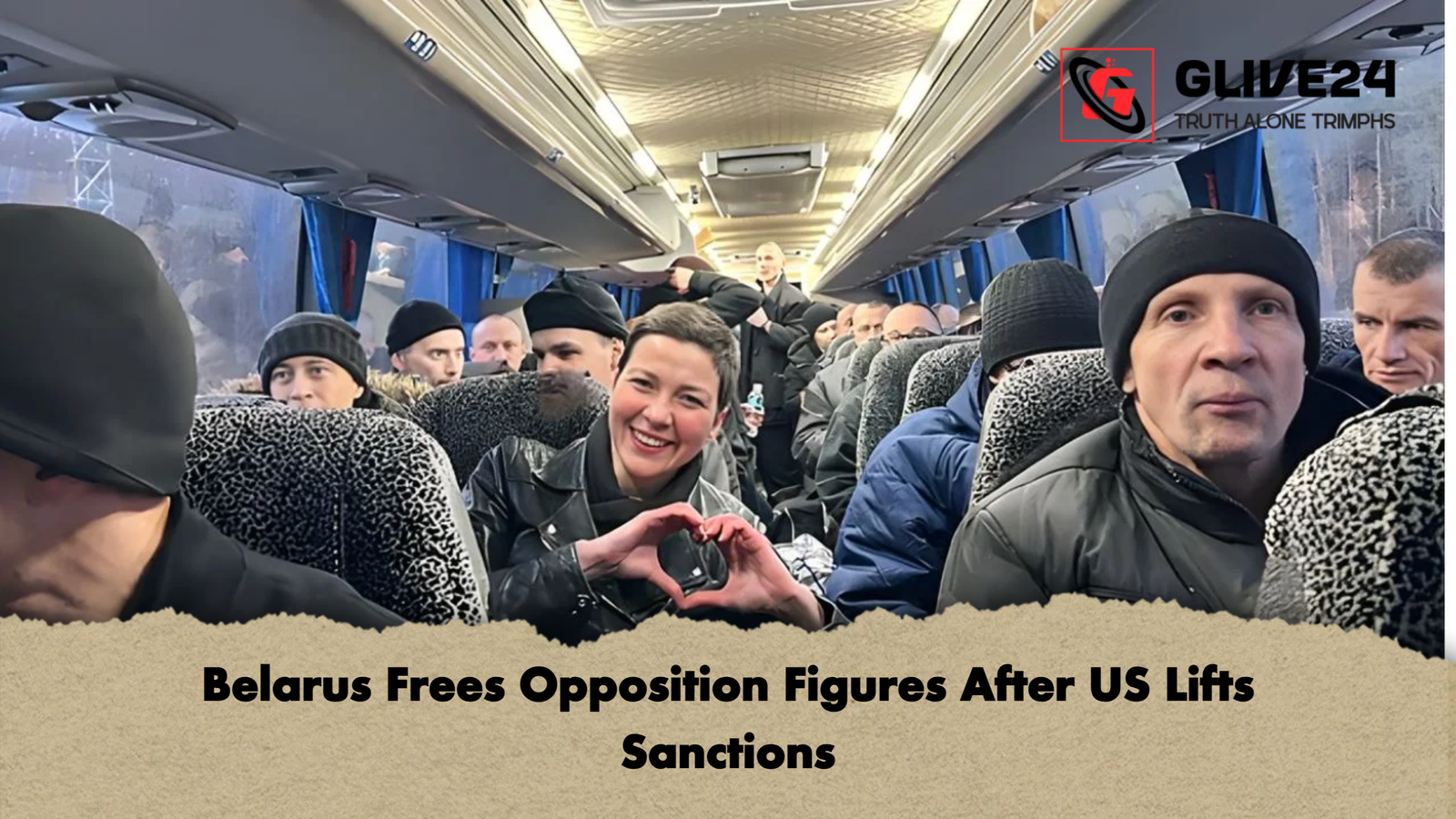
Belarus has released prominent opposition leader Viktor Babariko from prison as part of a wide-ranging political agreement that followed the United States’ decision to ease sanctions on the Eastern European country. The development, confirmed by the respected human rights organisation Viasna, marks one of the most significant gestures by President Alexander Lukashenko’s government since the disputed presidential election of 2020.
In a brief statement posted on social media, Viasna announced simply: “Viktor Babariko is free.” His release comes amid a broader process that has reportedly seen more than a hundred political detainees freed in recent days. According to international media reports, the move followed diplomatic engagement led by Washington and was closely linked to the partial removal of US economic sanctions.
Prior to his imprisonment, Babariko had emerged as the most formidable challenger to President Lukashenko ahead of the 2020 election. That vote was widely condemned by human rights groups and independent observers as fraudulent, triggering mass protests across Belarus. The authorities responded with a sweeping crackdown, arresting opposition leaders, activists, journalists and civil society figures, many of whom received lengthy prison sentences.
Viasna also confirmed that protest leader Maria Kolesnikova and Nobel Peace Prize laureate Ales Bialiatski were released under the same US-mediated arrangement. Kolesnikova had been detained since 2020 and reportedly spent much of her imprisonment in solitary confinement. Her sister, Tatiana, later confirmed her release, describing it as an emotional moment after years of uncertainty and isolation.
The BBC reported on Saturday that the United States had agreed to lift certain sanctions on Belarus, prompting the authorities in Minsk to release a total of 123 prisoners. Among the concessions made by Washington was the removal of restrictions on potash, a key component of fertiliser and one of Belarus’s most important export commodities. The easing of sanctions is widely seen as a pragmatic step aimed at encouraging further humanitarian gestures and gradual political openness.
Ales Bialiatski was freed following talks in Minsk with John Koale, the special envoy of US President Donald Trump for Belarus. Koale indicated that further sanctions relief could follow if relations between the two countries continue to improve. “As ties normalise,” he said, “we expect to see additional steps that benefit both sides.”
President Lukashenko, a close ally of Russian President Vladimir Putin, remains diplomatically isolated in Europe. The European Union does not recognise him as Belarus’s legitimate leader, citing the lack of free and fair elections. Nevertheless, the latest prisoner releases have been cautiously welcomed by international observers as a potential opening for dialogue.
Those freed are expected to travel shortly to Vilnius, the capital of neighbouring Lithuania, where many Belarusian opposition figures have sought refuge since the post-election crackdown.
Key Developments at a Glance
| Item | Details |
|---|---|
| High-profile detainees released | Viktor Babariko, Maria Kolesnikova, Ales Bialiatski |
| Total prisoners freed | 123 |
| Trigger for releases | Partial lifting of US sanctions |
| Sanction eased | Potash exports |
| Expected destination of released group | Vilnius, Lithuania |
While many remain sceptical about Minsk’s long-term intentions, the releases have nonetheless raised cautious hopes that sustained diplomatic pressure could yet yield further improvements in Belarus’s human rights landscape.