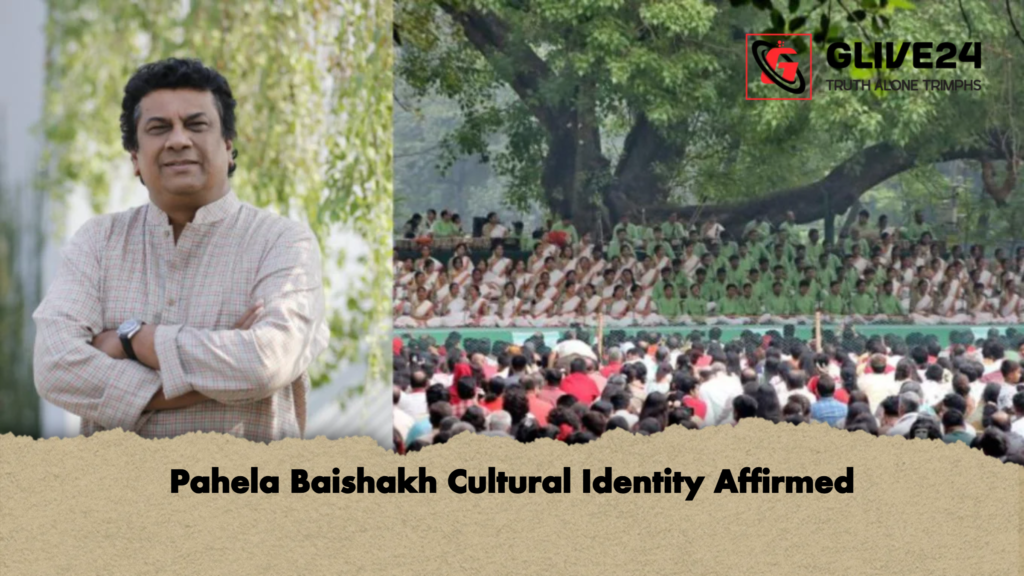
Pahela Baishakh is far more than the first day of the Bengali calendar; it is a profound expression of cultural identity, heritage and collective self-awareness, according to eminent Nazrul Sangeet exponent and vice-president of Chhayanaut, Khairul Anam Shakil.
He describes the occasion as a symbolic declaration: “I am Bengali, I have my own culture, and I take pride in it.” For him, the festival embodies a reaffirmation of linguistic and cultural roots that continue to shape Bengali society across generations.
Shakil has been closely associated with Chhayanaut’s iconic morning celebration at Ramna Batamul for several decades. Since the mid-1960s, he has participated almost every year, with interruptions only during the Liberation War period and the recent pandemic years. In his observation, what once began as a relatively modest cultural gathering has evolved into a vast public celebration drawing thousands of people from all walks of life.
The early morning programme traditionally begins with the soft light of dawn accompanied by classical music performances. The opening sequence features renditions based on ragas such as Bhairav, Bhairavi and Todi, performed with vocal and instrumental accompaniment including sitar, sarod and flute. This is followed by songs of Rabindranath Tagore, Kazi Nazrul Islam and other eminent composers, carrying messages of humanity, peace and patriotism.
According to Shakil, the transformation of the event has been remarkable: from an intimate cultural assembly to a large-scale social festival where families gather together, and children are introduced to the essence of Bengali heritage. His own musical journey, he notes, has been deeply shaped by this platform, beginning with group performances and gradually extending to solo appearances.
Beyond music, the surrounding area transforms into a vibrant fairground during Pahela Baishakh. Traditional handicrafts, indigenous food items such as pithas, and handcrafted clothing are showcased, turning the space into a living cultural landscape. The inclusivity of the gathering—where people from diverse religious and social backgrounds come together—is, according to Shakil, one of its greatest strengths.
Over time, the celebration has also gained international recognition. Bengali communities abroad now observe the occasion in various countries, reflecting the global reach of Bengali cultural identity.
A summary of key elements of the celebration is presented below:
| Category | Description |
|---|---|
| Dawn musical performance | Classical ragas marking the beginning of the day |
| Traditional songs | Works by Tagore, Nazrul and folk composers |
| Cultural fair | Display of handicrafts, food and traditional attire |
| Family participation | Attendance and engagement of entire families |
| Global observance | Celebration by diaspora communities worldwide |
Emphasising the importance of nurturing cultural consciousness among younger generations, Shakil stresses the role of families, educational institutions and society in fostering respect for language and tradition. Only through such collective effort, he argues, can young people remain connected to their roots in an increasingly globalised world.
In his words, “To appreciate world culture, one must first respect one’s own.” This perspective reinforces the idea that Pahela Baishakh is not merely a festival, but a living expression of Bengali existence itself.