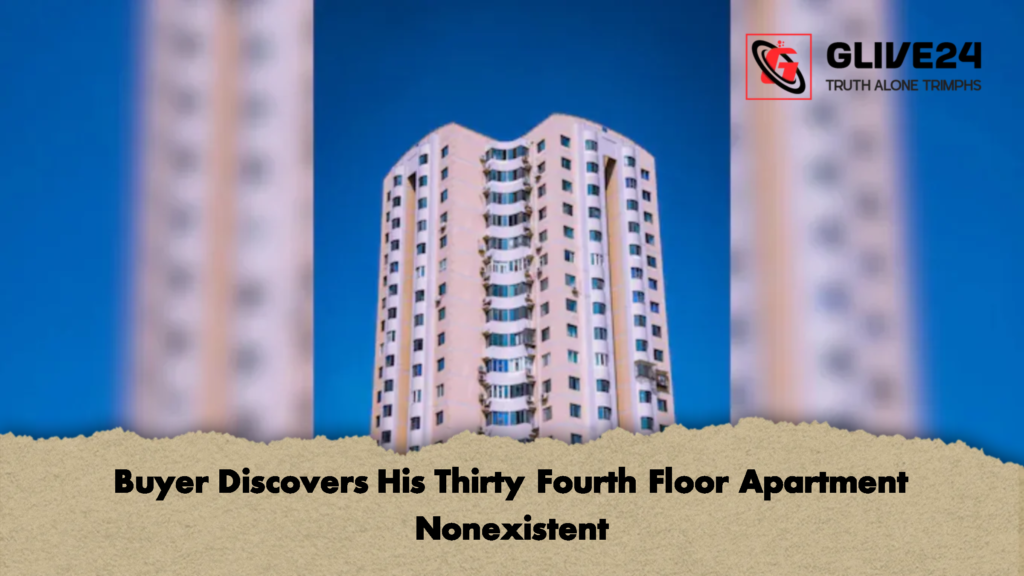
A resident of the Shaanxi province in China has fallen victim to a substantial property fraud scheme after investing his capital in a high-rise residential apartment project with the expectation of acquiring real estate at a significantly reduced market price. The male investor subsequently discovered through physical inspection and legal verification that the specific housing unit he had formally purchased from the real estate developer did not exist in reality, as the building structure terminated multiple floors beneath his documented property location.
Background of the Real Estate Transaction
According to detailed investigation reports, the individual, identified by his surname as Mr Shen, entered into a formal property acquisition agreement in the year 2013. The transaction involved a 90-square-metre apartment unit located on the designated 34th floor of a high-rise residential building project situated in an urban locality close to the historic city of Xi’an. At the time of the initial investment transaction, the property was offered to the purchaser at an exceptionally low financial rate, which was approximately one-third cheaper than the standard local market value for comparable real estate in the surrounding metropolitan region.
The primary underlying reason presented for this substantial financial discount was that the entire residential project was organised under a restrictive regulatory framework known within the region as the ‘limited property rights’ system. Property developments within this specific category are built upon rural collective land units rather than state-owned urban land, which fundamentally deprives the entire housing complex of official national legal recognition and leaves investors without standard statutory ownership deeds.
Construction Delays and Structural Discrepancies
Under the formal terms and conditions stipulated within the original 2013 purchase contract, the real estate developer was legally obligated to complete construction and execute the formal handover of the finished apartment unit to Mr Shen by the end of the year 2015. However, the construction process experienced extensive operational delays, and the physical progression of the tower block advanced at a highly sluggish pace over the subsequent years.
In the year 2017, two years after the expiration of his contract handover deadline, Mr Shen conducted an investigation into the status of the development and discovered a profound structural discrepancy. The building in question had been completely constructed to an absolute maximum height of only 32 storeys. Consequently, the 34th-floor apartment that he had purchased and paid for four years earlier had no physical existence on the site, as the upper storeys of the tower were never authorised or erected by the construction firm.
Arbitration Rulings and Financial Recovery Failure
Following this discovery, the firm initially attempted to resolve the dispute by offering Mr Shen an alternative housing unit situated on the actual 32nd floor of the building. However, due to severe personal financial constraints and existing monetary deficits, Mr Shen was unable to accept the alternative arrangement proposed by the developers. The company subsequently proceeded to sell that specific alternative 32nd-floor housing unit to another independent property buyer on the market.
Left with no physical asset, Mr Shen initiated a prolonged legal process through regional dispute resolution mechanisms to secure the total reimbursement of his original financial investment. The local arbitration authority eventually issued a formal legal directive ordering the construction firm to repay the remaining balance of his initial down payment, augmented by accrued statutory interest, totalling approximately 74,700 yuan. The arbitration body additionally ruled that if the developer failed to disburse the funds within the specified legal timeframe, the company would be held liable for extra compensatory penalties.
Despite the issuance of the binding arbitration order and the passage of a significant duration of time, Mr Shen has reportedly still not received the full quantum of his rightful financial reimbursement from the non-compliant developer. Having been entirely deprived of both his intended residential apartment and his invested capital, the buyer remains in a state of absolute financial uncertainty. This specific case has triggered renewed public debates across China regarding the severe structural dangers and total absence of statutory protection associated with investing in unregulated property developments.