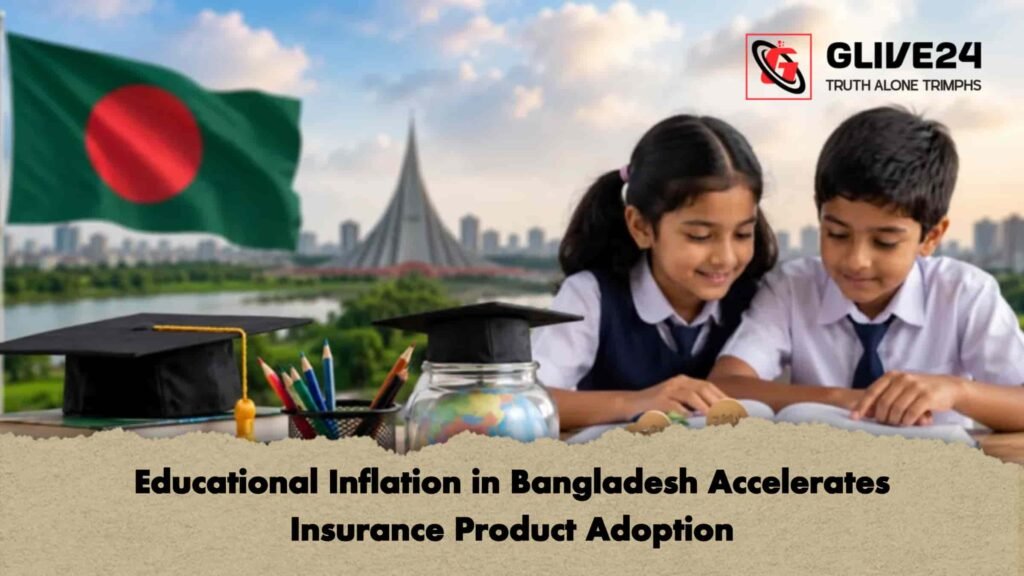
The escalating cost of education in Bangladesh is placing an unprecedented financial burden on households nationwide. This sharp upward trend in academic expenditures is primarily driven by three structural factors: high macroeconomic inflation, an increasing urban preference for premium schooling, and the rapid expansion of the private education sector. According to research by the World Bank, families in developing nations systematically bear the largest share of educational costs, creating severe, long-term fiscal vulnerabilities for lower- and middle-income demographics.
Statistical evidence from the Bangladesh Bureau of Statistics (BBS) and UNESCO indicates that private, household-level investments in schooling have risen dramatically. A considerable segment of the population must now allocate between 20% and 30% of their total household income exclusively to education. This fiscal strain is most visible in metropolitan territories. Over the last decade, the proportion of standard family expenditure dedicated to schooling has nearly doubled, rising from a baseline of 6% to 8% to a current level of 12% to 18%.
Analysis of Education Costs and Insurance Penetration
The table below details the current economic indicators affecting educational access and the insurance sector within Bangladesh:
| Structural Economic Indicator | Statistical Baseline / Market Findings |
| Household Contribution to Education | 70% to 71% of total academic costs in South Asia |
| Average Family Income Allocation | 20% to 30% of total income absorbed by schooling |
| Decadal Expenditure Expansion | Increased from 6%–8% to 12%–18% of household budgets |
| Broad Macroeconomic Inflation | Sustained between 9% and 10% across sectors |
| Specific Educational Inflation | Averaging 10% to 15% annually |
| English-Medium Tuition Costs | 15,000 to 90,000+ Taka per month (£100 to £600+) |
| Private Tertiary Institution Fees | 200,000 to 800,000+ Taka per annum (£1,300 to £5,300+) |
| Insurance Market Share of GDP | Positioned at 0.4% to 0.5% nationally |
| Global Insurance Market Average | Positioned above 6% of GDP internationally |
| Secondary Institutional Attrition | Approximately 30% dropout rate driven by finance |
Findings from the UNESCO Global Education Monitoring (GEM) Report alongside various World Bank sector portfolios show that households in South Asian states, including Bangladesh, directly fund approximately 70% to 71% of all schooling costs. This heavy out-of-pocket expenditure deeply entrenches socioeconomic disparities and places low-income families at risk. While general consumer inflation maintains a baseline of 9% to 10%, the specific rate of educational inflation frequently reaches 10% to 15%. As a result, the cost of education is expanding much faster than real wages, forcing citizens to liquidate personal savings or incur substantial debt.
Within this challenging economic climate, education insurance is emerging as an important mechanism for long-term fiscal stability. These specialised financial instruments operate on a framework where guardians pay structured premiums over time to build a guaranteed academic fund for their children. Crucially, if the primary policyholder suffers an untimely demise or permanent incapacitation, many underwriting institutions waive the remaining premium liabilities while continuing to disburse the scheduled tuition payments. This structural indemnity prevents the sudden cessation of a student’s academic journey due to domestic misfortune.
Several domestic corporate entities have developed tailored insurance products to address this rising demand. MetLife Bangladesh operates actively in this space with its “My Child’s Education Protection Plan”, while Delta Life Insurance Company Limited has introduced specialized coverage options for academic tuition. Other prominent underwriters, including National Life Insurance Company Limited and Guardian Life Insurance Limited, are also expanding their portfolios in this sector, driving market competition and product diversification.
Despite these clear benefits, the overall utilization of education insurance in Bangladesh remains marginal. Market reports from the Insurance Development and Regulatory Authority (IDRA) confirm that the total penetration of the domestic insurance industry represents only 0.4% to 0.5% of the national Gross Domestic Product (GDP). This contrasts sharply with the international benchmark, which exceeds 6% of GDP, demonstrating that a vast majority of the population remains entirely exposed to financial shocks without institutional coverage.
Concurrently, the baseline cost of private schooling continues to rise in primary urban hubs such as Dhaka. Monthly tuition fees at English-medium academies regularly span from 15,000 Taka to over 90,000 Taka. When auxiliary requirements—including admission charges, textbooks, private tutoring, and logistics—are calculated, the total expenditure routinely increases by another 25% to 40%. At the tertiary tier, private universities command between 200,000 Taka and 800,000 Taka annually, with premium vocational tracks exceeding these bounds. An assessment by the Asian Development Bank indicates that these high costs threaten to exacerbate educational stratification in the coming years.
To counter these compounding expenses, extensive national and international survey data indicates that Bangladeshi households frequently deplete their savings or turn to high-interest loans to cover emergency overheads, with education constituting one of the largest recurring costs. Consequently, when a family experiences an unexpected reduction or total loss of revenue, educational allocations are typically the first to be compromised.
This financial instability correlates directly with student attrition rates. Data gathered by UNICEF establishes that economic hardship is the single largest driver of school dropouts across the country. The secondary school dropout rate persists near 30%, with a heavy concentration in low-income demographics. The continuity of a student’s educational trajectory becomes highly vulnerable if the family’s primary earner passes away or becomes permanently disabled.
Financial analysts and insurance experts argue that education insurance must be evaluated not merely as a retail financial service, but as a strategic asset for human capital preservation and generational security. It instills disciplined, long-term saving habits while ensuring that a child’s education remains insulated from macroeconomic fluctuations or sudden personal crises. To expand this sector, experts recommend targeted public information campaigns, the design of simplified, low-cost micro-insurance frameworks, and the broader deployment of digital platforms. As educational inflation continues its upward course, structured financial planning and education insurance will remain vital to safeguarding human resource development and long-term economic stability.