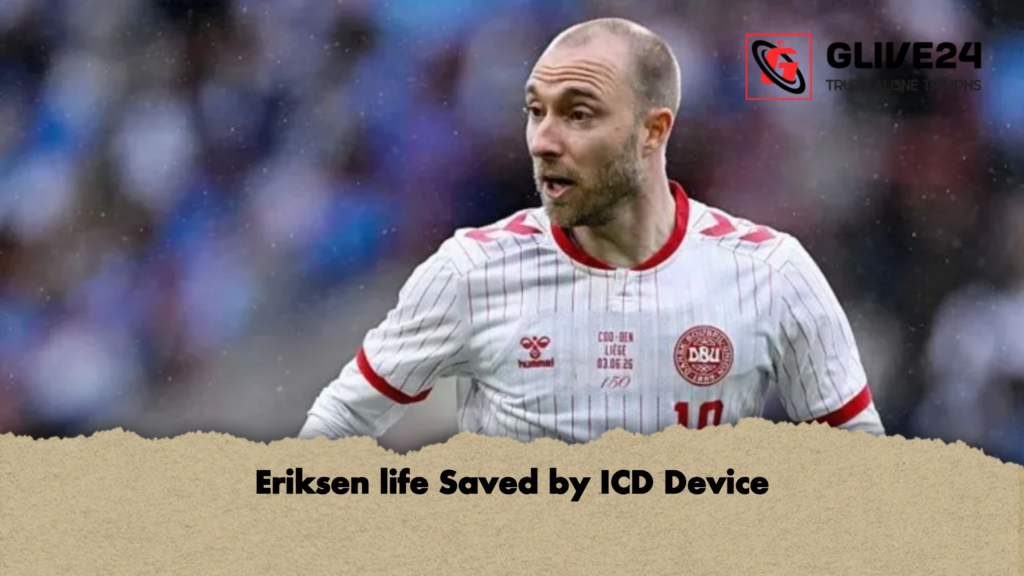
Denmark midfielder Christian Eriksen was rescued from a potentially serious medical emergency during an international match after his implanted cardiac device, known as an implantable cardioverter defibrillator (ICD), activated and helped stabilise his condition. He is currently recovering while spending time with his family.
The 34-year-old midfielder previously suffered a sudden cardiac arrest in 2021 during the UEFA European Championship. Following that incident, an ICD was surgically implanted in his body as part of his long-term medical treatment and precautionary care.
According to reports, during a recent match Eriksen experienced another serious disturbance in his heart rhythm. The ICD automatically detected the abnormal activity and delivered a corrective electrical shock, restoring a normal heartbeat and preventing further complications.
Eriksen stated on social media that his ICD worked exactly as it was designed to do, providing protection at the necessary moment.
Table of Contents
How the ICD works
An ICD is a small life-saving medical device designed to continuously monitor heart rhythm. When it detects dangerously abnormal heart activity, it responds automatically by delivering an electrical impulse or shock to restore a normal rhythm.
Medical specialists have explained that in Eriksen’s case, the device identified a rapid and irregular heartbeat and intervened immediately. This restored normal cardiac function within seconds.
Sports cardiologist Professor Anil Malhotra of Manchester Metropolitan University described the process as similar to restarting a computer system, emphasising that ICDs are highly effective in emergency cardiac situations.
2021 cardiac arrest incident
In 2021, during a Euro 2020 match, Eriksen collapsed on the pitch after suffering a cardiac arrest. He was treated immediately with CPR and a defibrillator on the field, which restored his heartbeat. Medical professionals later confirmed that rapid intervention saved his life.
Following the incident, an ICD was implanted to reduce the risk of future life-threatening cardiac events. The device has now played a direct role in stabilising his condition during the recent episode.
Causes of cardiac rhythm disorders
According to medical experts, irregular heart rhythms can be caused by electrical abnormalities in the heart, inflammation of the heart muscle, structural conditions, genetic factors, infections, or side effects of certain medications.
While such conditions are rare among young athletes, they are not unheard of. Cases involving footballers such as Fabrice Muamba, who suffered a cardiac arrest on the pitch, and Marc-Vivien Foé, who died during a match due to cardiac issues, are often referenced in similar medical discussions.
ICD and professional sport
Research suggests that some athletes with ICDs may return to professional sport under strict medical supervision. However, regulations vary by country. In Italy, for example, players with ICD implants are not permitted to compete professionally.
Eriksen’s future in professional football remains uncertain. Further medical evaluation is required to determine the cause of the recent cardiac rhythm disturbance and assess any preventive measures for the future.
Key statistics
| Category | Details |
|---|---|
| Player | Christian Eriksen |
| Age | 34 |
| First cardiac arrest | UEFA Euro 2021 |
| Medical device | Implantable Cardioverter Defibrillator (ICD) |
| Recent event | Serious heart rhythm disturbance during match |
| Current status | Recovering with family |
A UK-based charity reports that around 12 people under the age of 35 die every week from sudden cardiac arrest, with approximately 80 percent of cases showing no prior symptoms. Medical experts stress that regular health screening and modern cardiac technologies can play a crucial role in reducing such risks.