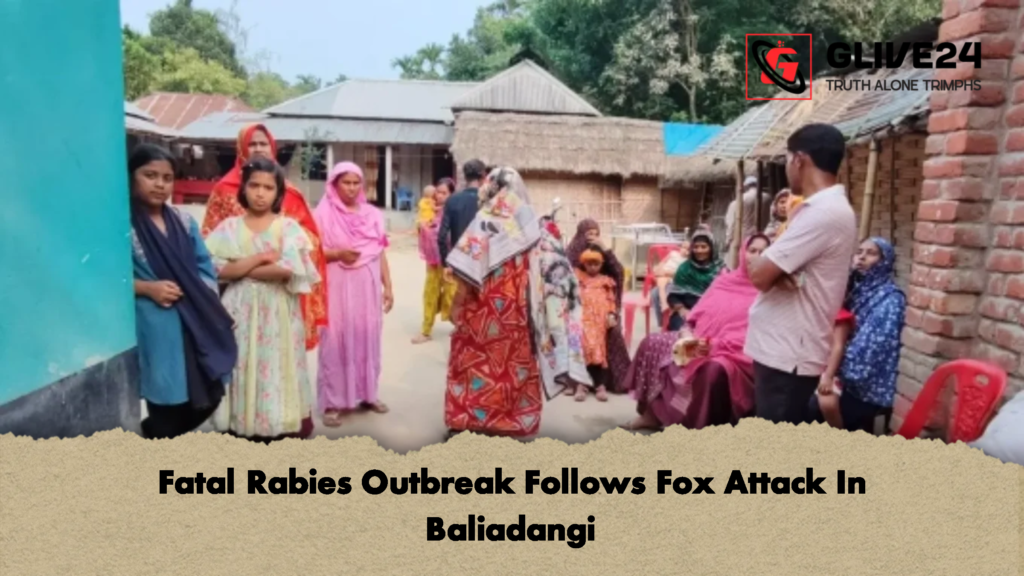
A sense of profound grief and escalating anxiety has gripped the residents of Baliadangi Upazila in Thakurgaon following the tragic demise of a local woman. The victim, identified as Amina Begum, aged 45, succumbed to the horrific effects of rabies on Saturday morning while undergoing intensive treatment at Rangpur Medical College Hospital. This harrowing incident has sparked a wider, more urgent conversation regarding the critical shortage of life-saving vaccines and the rising threat of wildlife encounters in rural agrarian communities across the region.
Table of Contents
Chronology of the Tragic Incident
The ordeal began on 26 March, when Amina Begum, the wife of Moinul Haque from Mondalpara village in the Dhantala Union, ventured into a nearby field to gather grass for her livestock. In rural Bangladesh, such daily chores are essential for the survival of farming households. However, during her routine, she was suddenly and viciously set upon by a wild fox. Following the savage attack, her family acted with commendable speed, immediately seeking the medical intervention required for animal-borne pathogens.
According to her son, Amirul Islam, the family initially transported her to Thakurgaon Sadar Modern Hospital, where she was administered the first two doses of the post-exposure prophylaxis (PEP) rabies vaccine. In a move that underscores the significant logistical hurdles faced by rural inhabitants, the subsequent two doses were reportedly administered at home by a local village medic. For over a fortnight, the family remained optimistic as Amina appeared to be in stable health.
Unfortunately, the insidious nature of the rabies virus—which travels along the peripheral nerves to the central nervous system—meant that the danger was far from over. On the seventeenth day following the initial bite, Amina’s health deteriorated with terrifying speed. She began exhibiting classic, distressing clinical signs of advanced rabies, including hydrophobia, profuse salivation, and frequent bouts of vomiting. Recognising the gravity of her state, her family rushed her to Rangpur Medical College Hospital. Despite the intensive efforts of the clinical staff, the virus had already caused irreversible neurological damage, leading to her tragic death.
Victim Profile and Incident Summary
The following table outlines the key facts surrounding this unfortunate event:
| Attribute | Details |
| Full Name | Amina Begum |
| Age of Victim | 45 Years |
| Primary Residence | Mondalpara Village, Dhantala Union |
| Date of Attack | 26 March 2026 |
| Date of Decease | 18 April 2026 |
| Primary Diagnosis | Rabies (Lyssavirus Infection) |
| Referral Hospital | Rangpur Medical College Hospital |
A Systemic Crisis of Medical Supplies
This tragedy has exposed a glaring and dangerous deficiency in the local healthcare infrastructure. Dr Shakila Akhtar, the Baliadangi Upazila Health and Family Planning Officer, made a startling revelation following the incident. She confirmed that the Upazila Health Complex is currently entirely devoid of rabies vaccines.
Despite repeated and formal official requisitions dispatched to higher administrative authorities highlighting the desperate need for these medical supplies, the facility has received no stock for a considerable period. This vacuum in essential medicine leaves thousands of villagers in a state of extreme vulnerability. As medical experts note, timely and professional vaccination is the only known method to prevent death once a person has been exposed; once clinical symptoms appear, the mortality rate is virtually 100%.
Rising Wildlife Conflict in Maize Fields
The local community in Thakurgaon is currently living in a state of heightened alarm. Residents report that the menace of wild foxes has escalated significantly over the last twelve months. Farmers have noted a direct correlation between the massive increase in maize (corn) cultivation and the proliferation of aggressive foxes. The tall, dense stalks of the maize crops provide ideal cover, hunting grounds, and breeding sites for these animals, bringing them into closer proximity with humans than ever before.
The fear is now so pervasive that labourers and farmers are terrified to enter their fields alone. To mitigate the risk, they have adopted a “strength in numbers” strategy, only working in large groups while armed with bamboo poles for self-defence. Recent reports suggest that Amina Begum is not an isolated case; several other villagers, including vulnerable women and children, have recently been hospitalised following similar predatory attacks. In one particularly gruesome encounter, an individual reportedly suffered the loss of a finger.
Official Response and Community Outlook
Bulbul Islam, the Officer-in-Charge (OC) of Baliadangi Police Station, confirmed that the family had formally notified the police of Amina’s passing. He noted that the family has not lodged any formal complaints, accepting the death as a tragic consequence of a natural wildlife encounter. However, for the wider community, the incident remains a stark and painful reminder of the urgent need for improved wildlife management and the immediate restoration of vaccine supplies to rural clinics to prevent further avoidable loss of life.