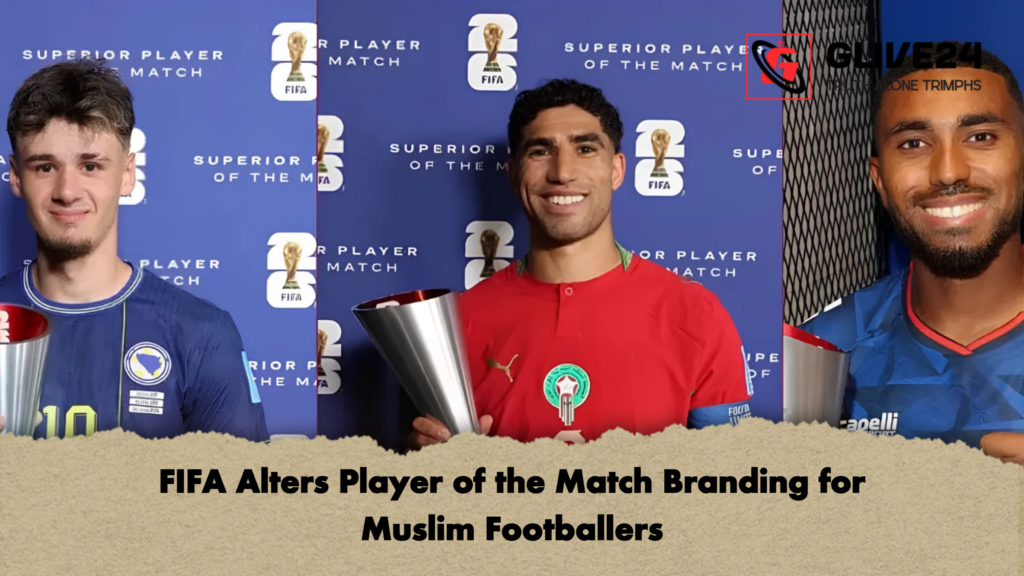
FIFA has introduced a significant policy change to its post-match presentation protocols to respect the religious beliefs of Muslim footballers. The global governing body for football has modified the branding displayed during the Player of the Match presentations, ensuring that athletes are not forced to advertise alcohol companies.
The issue originally gained widespread attention during the 2018 World Cup in Russia. Following a stellar performance against Uruguay, Egypt’s goalkeeper, Mohamed El-Shenawy, made headlines by refusing to accept the tournament’s official man of the match accolade. His refusal stemmed directly from the fact that the award was sponsored by a major multinational alcoholic beverage manufacturer, conflicting with his Islamic faith.
Balancing Commercial Sponsorships and Religious Values
In the current edition of the World Cup, the Player of the Match is chosen via an online poll conducted among global football fans. The presentation of this award is facilitated by the commercial brand Michelob Ultra. Under standard tournament regulations, the chosen player poses for official photographs holding a trophy in front of a promotional backdrop prominently displaying the sponsor’s corporate logo. These photographs are subsequently distributed across FIFA’s official social media channels.
Because Islam strictly prohibits the consumption and promotion of alcohol, posing alongside an alcoholic beverage brand presents a severe moral and religious dilemma for Muslim athletes. Furthermore, many Islamic nations maintain stringent statutory laws regarding the marketing and advertisement of intoxicants. To accommodate these diverse cultural and religious sensitivities, FIFA decided to implement a subtle yet impactful structural change to the presentation ceremony.
Institutional Adaptations and Widespread Acclaim
Whenever a Muslim player is voted the top performer of a fixture, the corporate branding of the alcohol supplier is systematically removed from the interview backdrops. This newly integrated protocol has already been utilised by several high-profile players during the current tournament, including Canada’s Ismaël Koné, Qatar’s Mahmud Abunada, and Ismael Saibari.
Instead of showing the corporate sponsor, the backdrop for these specific players displays the neutral phrase “Superior Player of the Match” alongside the official tournament emblem. Whilst the physical silhouette of the trophy remains identical to preserve structural continuity, all alcohol-related typography is omitted.
This is not the first time elite footballers have taken a stance against commercial promotions. During the 2022 World Cup in Qatar, French forward Kylian Mbappé purposefully concealed the alcohol sponsor’s logo with his hand whilst posing for his Player of the Match photographs. Mbappé had previously made it clear that he would not participate in marketing campaigns that endorse gambling or alcohol to impressionable youth.
Domestic leagues have also begun adapting to these changing dynamics. In the English Premier League, traditional post-match celebrations that involved gifting champagne to players have been heavily modernised. Clubs now frequently utilise non-alcoholic alternatives to maintain inclusivity for all squad members. FIFA’s practical approach to cultural diversity and player welfare has drawn widespread praise across digital platforms, with fans and pundits commending the organisation for its progressive stance.