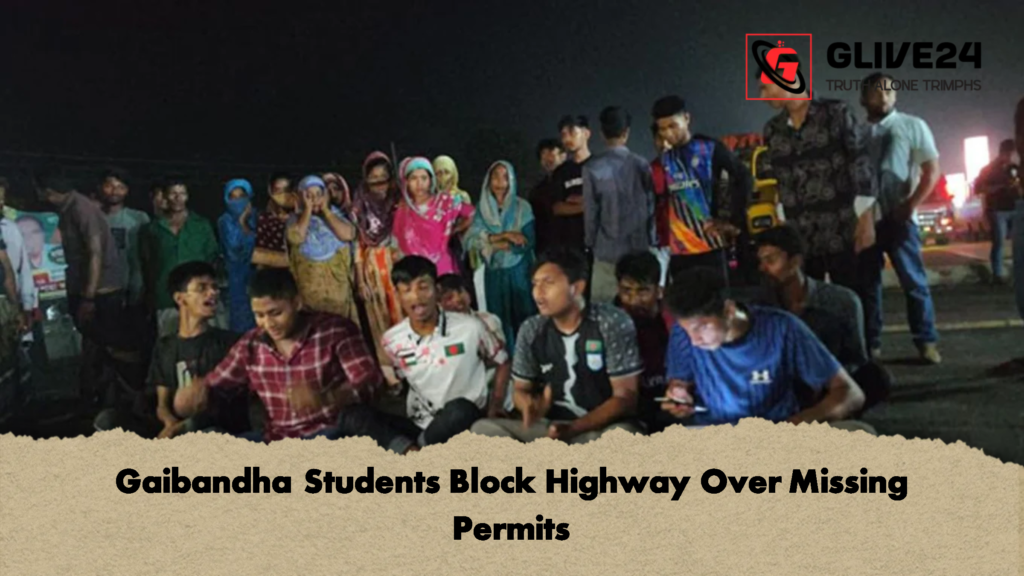
In a dramatic escalation of frustration just hours before the commencement of the Secondary School Certificate (SSC) and equivalent examinations, dozens of students in Gaibandha took to the streets to protest against institutional negligence. The demonstrators, primarily from Gridharipur High School in the Palashbari sub-district, resorted to blocking the vital Dhaka-Rangpur Highway on Monday evening after failing to receive their mandatory examination admit cards.
Table of Contents
A Crisis on the Eve of Examinations
The SSC examinations, a critical milestone in the Bangladeshi education system, are scheduled to begin nationwide on the morning of Tuesday, 21st April 2026. However, for forty candidates at Gridharipur High School, the eve of their academic future was spent in a state of high anxiety and public protest rather than final revision.
According to the aggrieved students, they had been visiting the school premises since the morning, hoping to collect their permits. They alleged that the Headmaster consistently procrastinated, offering various “flimsy excuses” and vague explanations for the delay. As the day progressed into night without any resolution, the students and their parents reached a breaking point, leading to the spontaneous blockade of the northern region’s most significant transport artery.
Impact on Regional Connectivity and Logistics
The blockade commenced at approximately 8:30 pm, causing immediate and severe disruption to the national infrastructure. The Dhaka-Rangpur Highway serves as the primary corridor for cargo and passenger transit between the capital and the northern districts. Within an hour, hundreds of vehicles were stranded on both sides of the protest site.
| Event Detail | Information Summary |
| Institution Involved | Gridharipur High School, Palashbari |
| Number of Affected Students | 40 Candidates |
| Location of Protest | Dhaka-Rangpur National Highway |
| Primary Grievance | Non-issuance of SSC Admit Cards |
| Duration of Blockade | 1 Hour (20:30 to 21:30) |
| Key Official Involved | Upazila Nirbahi Officer (UNO) |
The gridlock affected long-haul lorries carrying perishable goods and passenger coaches, highlighting the desperate measures students felt forced to take to ensure their academic future was not jeopardised by administrative failure.
Administrative Intervention and Crisis Resolution
As tensions flared and the traffic congestion stretched for several kilometres, local administrative officials were forced to intervene. The Upazila Nirbahi Officer (UNO), representing the local government executive, arrived at the scene at approximately 9:30 pm to negotiate with the desperate students and their guardians.
The UNO provided a formal, public assurance that the administrative hurdles preventing the issuance of the admit cards would be resolved immediately. He guaranteed that no student would be deprived of the opportunity to sit for the examination on Tuesday morning. Following this high-level commitment, the students agreed to vacate the highway, allowing the local police to begin the arduous task of clearing the massive vehicular backlog.
Institutional Negligence and the Human Cost
The incident has sparked a wider debate regarding the accountability of school administrations. Parents at the scene expressed their profound outrage, questioning how a school could fail to secure the registration and admit cards for its pupils so close to the national deadline.
“This is not just a clerical error; it is an assault on the mental well-being of our children,” stated one guardian. “Instead of resting and preparing for their first major examination, they are standing on a dark highway begging for their basic rights.”
While the immediate crisis has been averted by the UNO’s timely intervention, local education authorities have hinted at a potential investigation into the conduct of the school’s management. For the forty students involved, the night will be a short and stressful one as they pivot from the heat of a highway protest to the rigours of the examination hall. This event serves as a stark reminder of the administrative fragility that can occasionally threaten the academic prospects of the nation’s youth.