
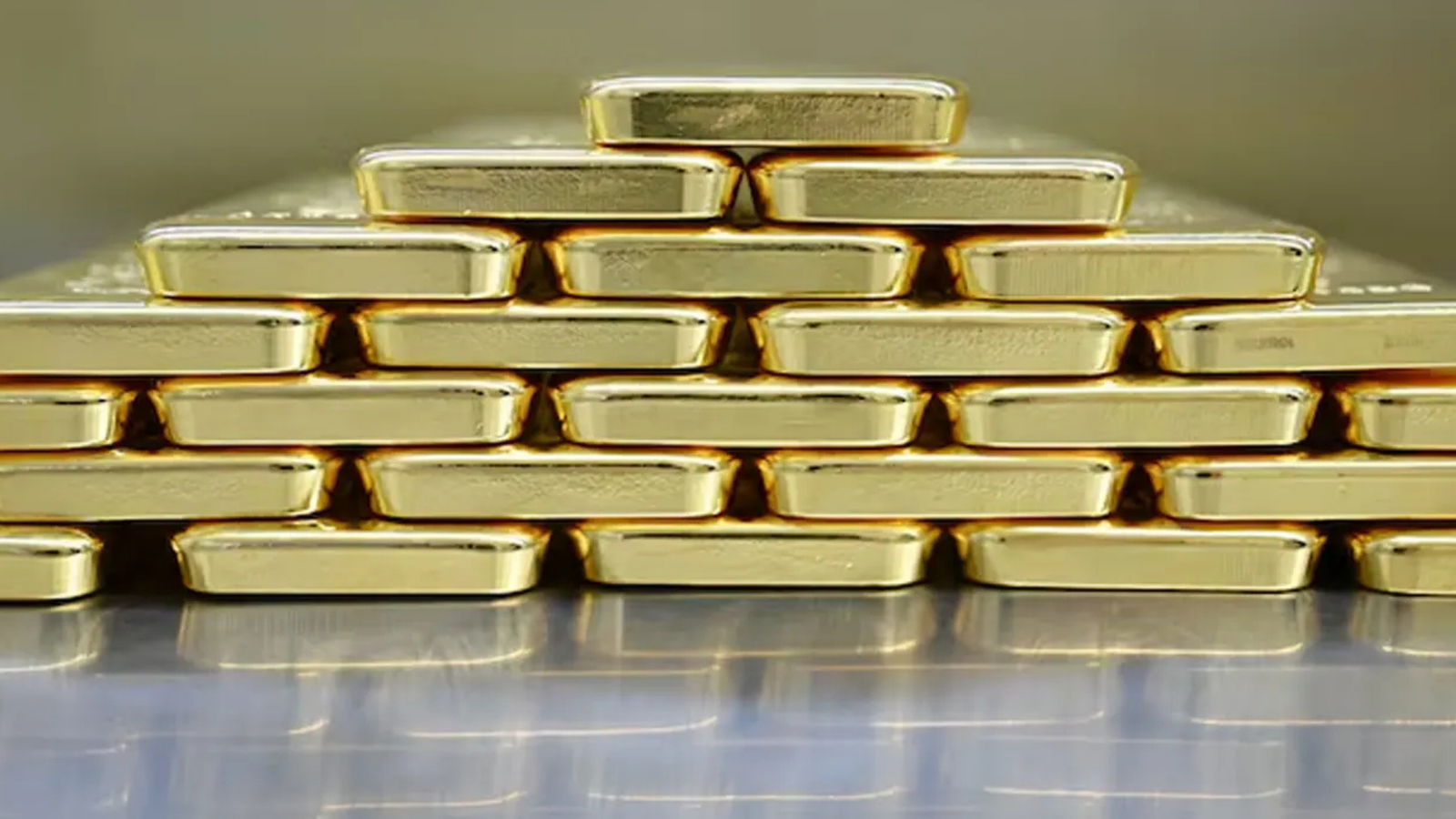
The international gold market experienced renewed volatility on Thursday, keeping investors and market analysts cautious as prices fluctuated throughout the day. After climbing to a two-week high in the previous session, gold opened lower and continued to move in response to global economic signals, reflecting the delicate balance that currently governs the precious metals market.
By midday, spot gold was trading at $4,156.89 per ounce, representing a modest decline of 0.2% from the previous session. Similarly, December futures contracts mirrored this cautious sentiment, slipping by 0.2% to $4,154.40 per ounce. The slight retreat in prices came after the metal had briefly touched a two-week peak, underscoring the market’s sensitivity to geopolitical developments and monetary policy speculation.
Market participants are closely monitoring developments in the United States, particularly regarding the Federal Reserve’s potential move on interest rates in December. Speculation over a possible rate cut tends to create downward pressure on gold, as lower interest rates can bolster alternative assets and influence currency movements. This uncertainty has contributed to the cautious trading observed on Thursday.
Carsten Menke, an analyst at Julius Baer, noted that the gold market is still seeking stability following dramatic price movements in October. “After the major drop in October, the current price adjustment has not fully stabilised yet,” Menke explained, highlighting the market’s ongoing vulnerability to both domestic and international economic indicators.
Gold reached an all-time high of $4,381.21 per ounce on 20 October, but has since retreated by roughly five percent. Despite this decline, prices remain comfortably above the psychologically significant $4,000 mark, suggesting that long-term investor confidence in the metal has not entirely eroded. Analysts argue that while short-term fluctuations are likely, gold continues to serve as a hedge against inflation and economic uncertainty.
The effects of these international price movements were also felt in Bangladesh’s domestic gold market. On Thursday, 27 November, the Bangladesh Jewellers Association (BAJUS) updated local gold prices, reflecting a modest increase after a brief correction the previous week. Industry insiders noted that while international fluctuations influence domestic rates, local demand, currency exchange rates, and logistical factors also play a significant role in pricing.
The recent volatility underscores the ongoing interplay between global macroeconomic developments and precious metal markets. Investors are advised to remain vigilant, as gold prices are likely to continue responding to central bank announcements, inflation data, and geopolitical tensions.
For Bangladesh, the slight uptick in domestic gold prices serves as a reminder of the country’s connection to the global market, with local buyers and investors adjusting their strategies in response to international trends. While the short-term outlook may be uncertain, long-term confidence in gold as a safe-haven asset persists, reflecting its enduring value in both global and local financial landscapes.